In the fifth year of the war, Russian businesses unrelated to the military-industrial complex have shifted their focus from growth to survival. They are being squeezed by taxes, expensive credit, rising prices, late payments, and shortages of workers and spare parts. Entrepreneurs are coping by splitting companies into smaller entities or moving into the shadow economy, farmers are leasing land to large holdings, and contracts are being pegged to the “Pyaterochka index” – seen as more reliable than Rosstat’s inflation figures. “Nobody is growing. Every year is worse than the last,” is the prevailing mood among the business owners interviewed by The Insider. Experts expect the number of small and medium-sized enterprises to fall by a third in the foreseeable future. The only exception is the IT sector, which profits from fixing the problems created by the authorities: since the start of 2025, the number of new businesses there has risen by 17%, largely because of the VPN boom.
The picture described by business owners matches the statistics. The number of new companies in Russia is shrinking – in the first quarter of 2026, there were 26.8% fewer than a year earlier. The share of small and medium-sized enterprises (SMEs) is growing, but mainly because of the registration of sole proprietors: they now account for 68% of all SMEs, up from 66% a year ago. One in five entrepreneurs estimates their chances of continuing operations at 30% or lower. According to Sergei Borisov, deputy chairman of the Public Council under Russia’s Federal Tax Service, around one-third of SMEs will shut down “in the foreseeable future.”
Late payments
Delays in payment for goods and services – a chronic illness of Russian business – are now worsening. This spring, overdue payments from clients and customers exceeded 8 trillion rubles for the first time, signaling a broader deterioration in companies’ financial health.
The war has pushed the situation to the point of absurdity. One might assume that window installers would be thriving at least in border regions, where blast waves regularly shatter glass. In reality, the opposite is true.
“Yes, that logic makes sense. But in practice, many no longer take on this kind of work because they don’t get paid,” a window installation specialist from Belgorod told The Insider. According to him, the government theoretically compensates residents for the damage, but in practice the money gets stuck in limbo: “Newcomers arrive, enthusiasts who think they’ll make good money from this. But they don’t last long – they run into the fact that payments never come through, and they leave.”
The fate of TransYuzhStroy (TUS) – the largest construction company in Belgorod Region, affiliated with the regional authorities – is revealing. Such structures have traditionally benefited from state contracts. But an entrepreneur connected to the regional government, who requested anonymity, sees it differently: “TUS doesn’t pay many of my people, saying that it itself hasn’t been paid.”
“Working with the state is very difficult and dangerous,” the businessman adds. “The scandal over the fortification lines are proof of that.” He is referring to fraud charges related to the construction of defensive fortifications brought against former First Deputy Director of the Russian National Guard Viktor Strigunov and former Deputy Governor of Belgorod Region Rustem Zainullin. A court ordered them to pay nearly 1 billion rubles.
Labor shortages
The shortage of workers is a problem that major enterprises had been complaining about even before the full-scale war. In recent years, it has worsened because of the outflow of specialists abroad, people leaving for the front, tighter migration laws, and the natural demographic decline. The stagnating economy has slightly eased the severity of the situation – companies unable to invest in development and expansion simply do not need more employees. But for those still operating, the problem remains.
The labor shortage is particularly acute in construction. Roman, from Belgorod, says that previously 40–50% of the region’s skilled specialists came from Ukraine. Overall, more than 80,000 working-age specialists have left Belgorod Region over the past four years.
The owner of a large industrial enterprise in the region describes the state of his business as “catastrophic”: “All of 2025 was a year of anxious expectation and survival. The forecasts for 2026 are bleak. Before 2022, there was a streak of good years. Overall, this is Drinkins’s nosedive – every year is worse than the previous one.” Those trying to keep their teams together are paying employees at a loss. “But it doesn’t help. Workers leave anyway, businesses shut down anyway.”
“Construction has collapsed, logistics have slumped, commercial property rentals have fallen. The first companies to close are those tied to major investments. The last are liquor stores,” the industrial business owner says, describing the situation. If measured not in inflation-swollen rubles but in physical indicators – how much has been built, transported, or rented out – he estimates the decline across industries at 30–40%, and in some sectors at 50–60%.
Expensive credit and rising prices
The Central Bank’s high interest rate – and, consequently, the high lending rates charged by commercial banks – is a nationwide problem in Russia. But it hits agriculture especially hard: machinery is constantly needed, it is expensive, and farming without it is impossible. Loans at 25–30% interest are taken only in cases of urgent necessity: with the profitability of a small farm at around 10%, repayments amount to three times what the business earns. Average profitability in Russia’s agricultural sector fell from 23% before the war to 15% in 2025.
The year 2025 proved unprecedented: the sector produced goods worth 10.63 trillion rubles – and suffered record losses of more than 100 billion rubles. Costs rose faster than revenue: fertilizers, spare parts, fuel, and credit all became more expensive, while grain purchase prices remained low. Every year, around 6,000–7,000 farms leave the market. Experts predict that their number will shrink by another 20–30% within the next two to three years.
Every year, around 6,000–7,000 farms leave the market
At the very start of the war, a sprayer belonging to someone else burned down in a field owned by Denis (name changed), a farmer from Voronezh Region. The large machine with long booms was struck after being mistaken for military equipment. “The owners had bought it on credit, traveled around regions – Voronezh, Lipetsk – and lived off that work. They came to my place to do a job, and it got destroyed. I don’t know how they’re surviving now.” Buying new machinery has since become a problem: imported equipment has become more expensive because of sanctions, while loans for domestic machinery are unaffordable because of interest rates.
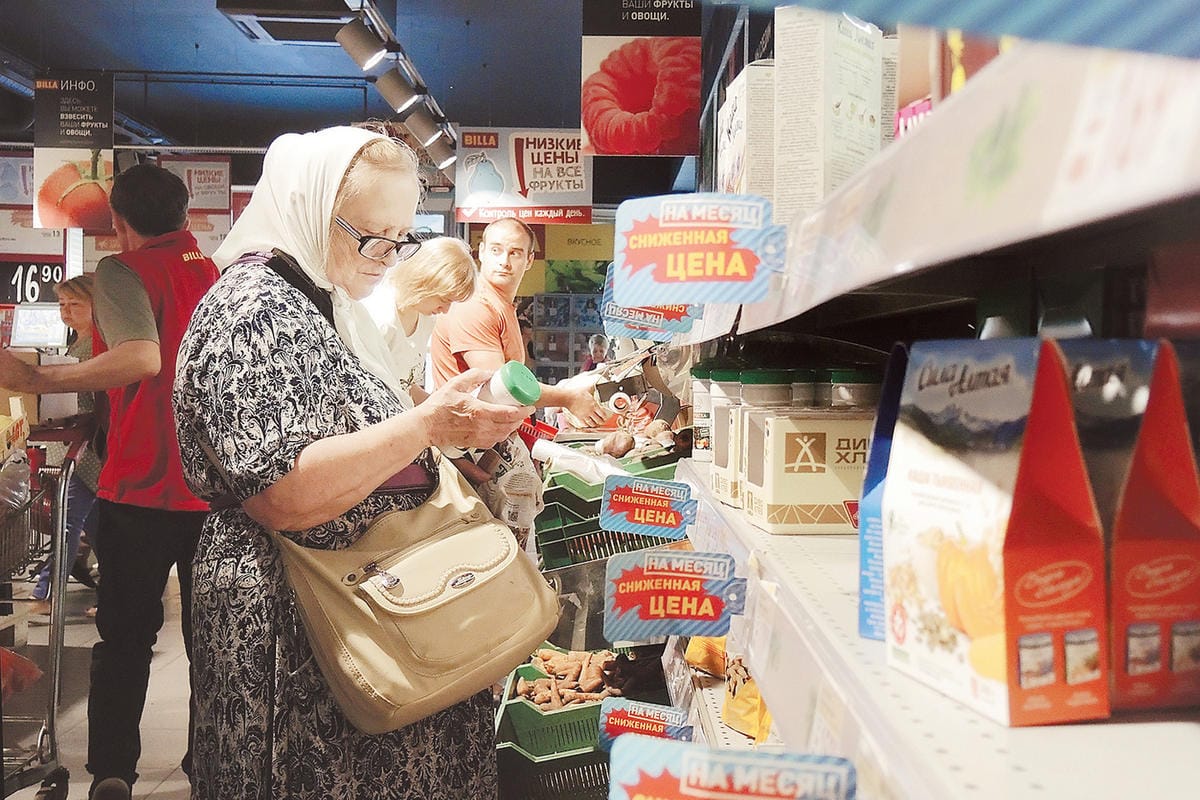
In January, Denis returned from Thailand, where he had gone for the New Year holidays, and noticed a sharp jump in prices: “During the vacation, everything became noticeably more expensive. Before, I hardly paid attention to how much things cost in stores, but now I’ve started comparing prices.”
Builder Roman complains about the same thing: “Aerobel, the block manufacturer, raised prices, concrete and brick became more expensive.” The market for private homes (individual housing construction, or IHC) in his region has “dried up” over the four years of war. One of the market’s main drivers –the Belgorod Mortgage Corporation – has run out of steam: it cut staff, moved into a more modest office, and now mainly deals with lawsuits against unscrupulous developers. “The price of land plots has risen to market levels – there’s no point in the program anymore,” Roman adds, citing another reason.
Under such conditions, many find it more profitable to put their assets to use elsewhere and change occupations. Farmer Denis spent six years growing sunflowers, barley, and wheat. This spring, he leased his land for three years to a large agricultural holding: “At the end of 2025, I simply earned nothing.” He did not own machinery himself and rented it instead, but because of the rising cost of spare parts and everything else, it became unprofitable. Three out of four neighboring farms did the same. The freed-up land is being taken over by Prodimpex and similar large business entities.
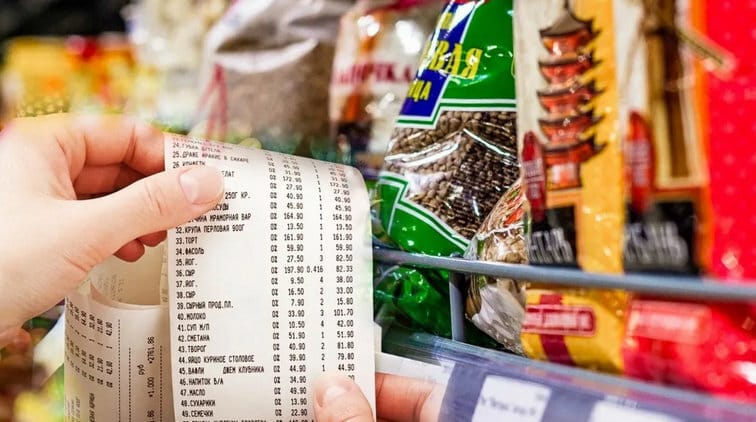
Denis believes he was lucky with the lease deal: previously, land rented for 8,000 rubles per hectare, while he managed to lease it out for 14,000. Those who signed contracts earlier remain stuck with old terms – without inflation indexation. Hence a new grassroots practice: lease agreements now include “indexation based on prices at Pyaterochka.” “They take any three products – eggs, milk, and something else –and fix the prices. If milk goes up, the rent goes up. That’s how people protect themselves,” Denis explains. In this system, there is no place for Rosstat: official inflation figures are not trusted.
“It feels like everything will end in total ruin. Sometimes you think: let the collapse happen faster so we can start over. Living like this means constant stress, and there isn’t even a hint of improvement,” Denis concludes.
Rising prices are hurting even industries where death itself would seem to guarantee demand. Among entrepreneurs, a grim mantra is circulating: the only people with money now are funeral directors. At first glance, that appears true. Russia’s five largest funeral companies generated nearly 15 billion rubles in revenue in 2024 – 24% more than a year earlier.
However, if the market is viewed as a whole, growth has been slowing for two consecutive years: in 2025, revenue rose by only 3.3% – twice as weak as the 2024 figure and below inflation. The reason is the same as everywhere else: rising prices are eroding real demand. More and more families are choosing only the minimum set of services and relying on state subsidies. The nominal revenue growth has instead been driven by the cost of goods and services: during the war, the price of a coffin rose by 90%, while grave digging became 56% more expensive.
The tax squeeze
Tax reform has created a trap for small businesses: as soon as turnover exceeds 15 million rubles, VAT kicks in – wiping out already thin profit margins. Since 2026, the conditions of the patent taxation system have also become stricter: previously, the regime was available to businesses with annual revenue of up to 60 million rubles, but now the threshold has been cut to 20 million. Entrepreneurs have found their own solution: splitting up operations. Registering sole proprietorships in relatives’ names, opening second bank accounts, asking clients to transfer money directly – in other words, moving into the shadow economy.
According to Russia’s Federal Tax Service (FNS), the number of companies established in Russia fell by 20% in 2025. A study by the Public Opinion Foundation and the Higher School of Economics, titled “Small Business Longitudinal Study,” showed that nearly one-third of small businesses are considering closure or sale, while entrepreneurs’ expectations for the first quarter of 2026 were the worst recorded over the entire observation period. Some 52% believe their business conditions will deteriorate. According to the Center for Strategic Research, 75% of SMEs have no profit left for development.
Nearly one-third of small businesses are considering closure or sale – expectations for the start of 2026 were the worst over the entire observation period
Alexander (name changed), the owner of a tire repair shop in one of the regions of Russia’s Central Federal District, is struggling to figure out how to avoid falling under the new law. His business margin is 15–20%. If turnover crosses the threshold, “then it’s simply over.” “I honestly wonder what the government is trying to achieve with this. Because it still won’t get more money – people will start hiding their legal income,” he says. “Nobody is growing. Everyone is trying desperately not to fall under the new VAT law.”
At the same time, expensive credit is weighing on him just as heavily as on everyone else. With profitability at 20%, loans carrying annual interest rates of 25–30% mean having to pay back more than the business earns. Investing in expansion makes no sense – it is more profitable to put the money in a bank deposit. This is how small business in Russia is freezing in place: not collapsing all at once, but ceasing to grow, shrinking, and splitting into smaller entities.
In addition, Alexander gauges the state of the industry through his suppliers. They are connected to major tire plants that plan budgets based on projected demand. The picture is bleak: “Last year – production down 20%, this year – down another 10%.” Factories are cutting capacity because declines are being recorded everywhere.
The government breaks things – IT fixes them
There is one sector where the war, sanctions, and government policy are producing a completely different effect: Western software is being replaced with Russian alternatives, website blocks and censorship are disrupting familiar services, and every new restriction imposed by Roskomnadzor creates demand for circumvention tools.
The IT sector is making money from everything at once –from import substitution, from fixing what the government itself has broken, from creating new tools to replace banned services and to bypass restrictions. Over five years, Russia’s IT market has doubled, reaching 4 trillion rubles by the end of 2025. The cybersecurity market nearly doubled as well – from 193 billion rubles in 2022 to 374 billion in 2025. The number of new IT businesses has risen by 17% since the beginning of 2025 alone.
The mechanism behind this growth is government-created chaos: every block, every forced transition from Western software to domestic alternatives, every new Roskomnadzor requirement – all of it becomes someone’s revenue stream. In July 2025, Russia recorded 2,099 internet shutdowns in a single month – more than the entire world combined throughout all of 2024. In February 2026, Roskomnadzor began slowing down Telegram across the country, and by March the messenger had stopped working for many users without a VPN. According to Rostelecom, mobile service malfunctioned or disappeared entirely in 90% of Russia’s regions in March 2026. In Moscow, demand rose for paper maps, pagers, and landline telephones.
The mechanism behind the growth is government-created chaos: every block and every new Roskomnadzor requirement becomes someone’s revenue stream
“The government is doing all sorts of strange things with digital systems right now. And because of that, we’re constantly fixing something. All my clients are endlessly updating things, reintegrating systems, turning something back on after it shut off and won’t restart,” says the commercial director of a St. Petersburg IT company specializing in custom software development and warehouse logistics optimization.
When Telegram came under pressure, his company started making money by creating bots for MAX. When tax rules changed, he spent two months restructuring the company’s entire contract base in order to qualify for preferential tax treatment for IT firms. “You could sit around saying Putin, the Digital Development Ministry, or Roskomnadzor were to blame. Or you could stop whining,” the businessman says, trying to sound upbeat.
But even in his voice there is confusion when the conversation turns to “white lists” – lists of websites accessible during a complete mobile internet shutdown. “I still don’t really understand how this mechanism works. Sometimes it feels to me as though there are Ukrainian spies sitting in the State Duma. In that sense, yes, the prospects are worrying. Personally, I don’t see anyone at the government level offering any genuinely workable solutions.” But he quickly regains his composure: “And from a business point of view –so what? Is this the first time? You grab a bigger shovel and throw the dirt farther away. That’s the whole business.”
“All that may be left of your workers are burning sneakers”
Shelling deep inside Russia primarily affects large businesses: ports, oil refiners, and defense industry enterprises. Flight delays caused by drone threats are not only a problem for airlines, but also for tour operators and the hotel industry. But in border regions, nationwide problems are compounded by something found nowhere else: even work at non-strategic facilities has become physically dangerous.
Roman (name changed), the owner of a Belgorod company that builds private homes, refuses on principle to take government contracts for housing reconstruction in Shebekinoand other affected districts: “They promise three or four times the normal rates there, but it’s dangerous – tomorrow all that may be left of your workers are burning sneakers. And there’s also the risk of becoming the scapegoat, because wherever government money is involved, there are immediately kickbacks, the FSB, and problems.”
“Wherever government money is involved, there are immediately kickbacks, the FSB, and problems”
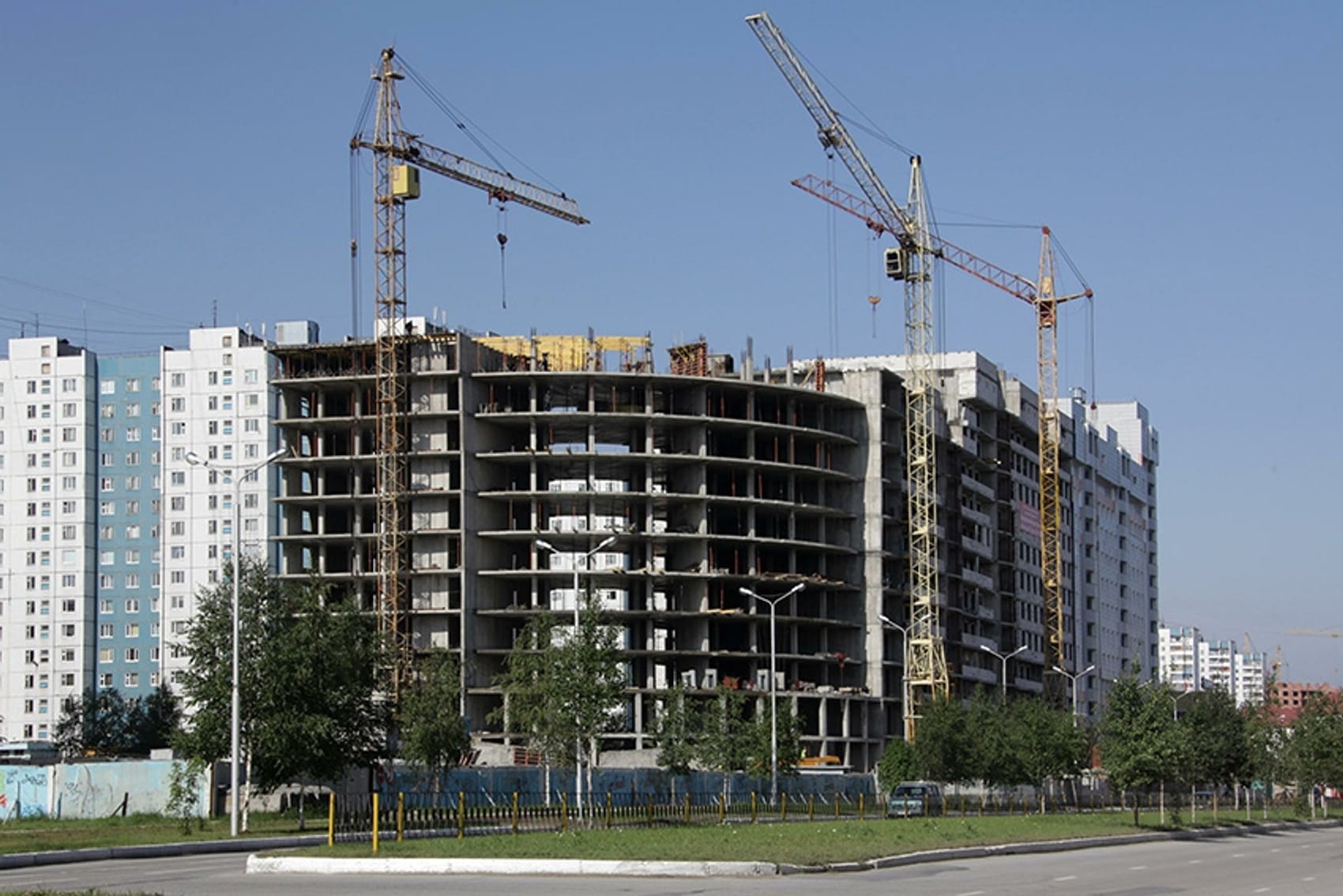
According to city authorities, half of the 22 multi-story residential construction sites in Belgorod have effectively been frozen – over three years, active projects have utilized only 9% of their potential capacity. Investment in the regional economy fell by 14.6% in 2025, while investment in fixed capital dropped by 17.7%.
The few who are still making money operate differently: they buy a plot of land, put up a simple one-story shell of a house, and post an ad on Avito. People who received compensation certificates from the Construction Ministry for lost housing buy even these properties. The market is literally being sustained by destruction.
Who profits from the war
When asked whether there are businesses in Russia that have benefited from the war, the business community responds evasively, but in remarkably similar terms.
“There are none in Belgorod Region. And there won’t be any. All of that is idle speculation,” says the owner of an industrial manufacturing business. According to him, there are no companies “close to the feeding trough” – “rather, there are a number of unfortunate people burdened with assets who would gladly leave if they could.”
“The winners are the ones sitting in the hall at meetings of the Russian Union of Industrialists and Entrepreneurs,” says one businessman who asked not to be named. “The people from Rosneft, Gazprom, Kerimov's circle and the rest. Everyone who ‘chipped in for daddy’s birthday party.’ Plus the banks. And those working on Defense Ministry contracts. You won’t find anyone else.”
True, even large businesses are hardly enthusiastic about having to “chip in.” VTB Chairman Andrei Kostin said that “neither the government nor the Central Bank supports” the idea of introducing a windfall tax on banks’ excess profits –and Kostin believes the sector will manage to fend it off.
“Russia is run by large state-run corporations. And the task of small business is not to make money, but to provide employment. If they manage to earn anything, that’s their personal achievement,” a Russian businessman concludes.