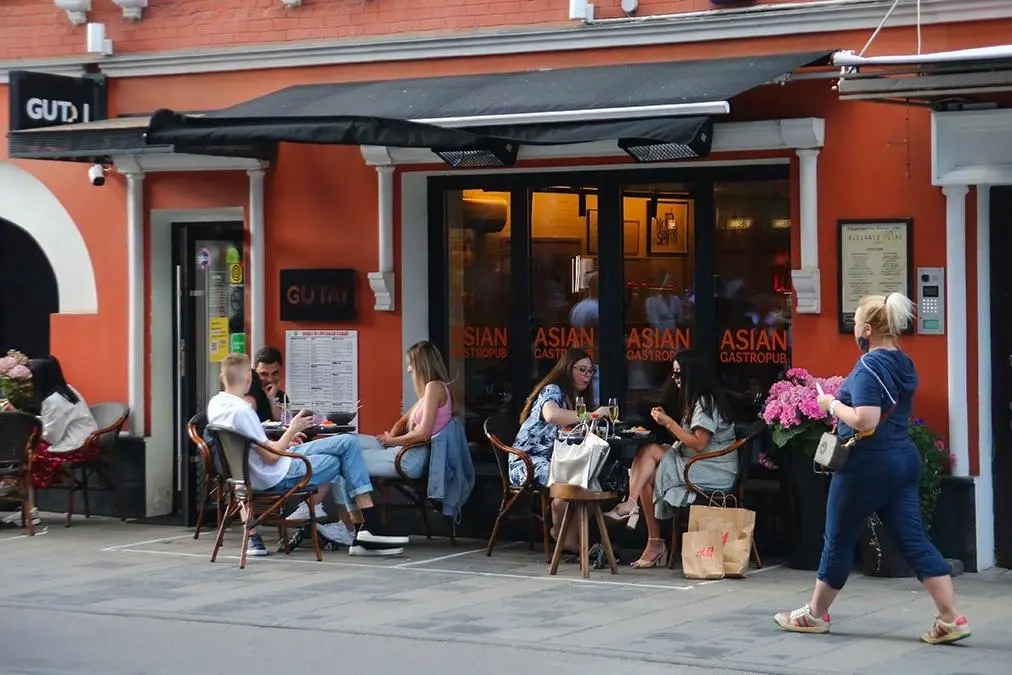
By the end of 2025, 16 restaurants had closed around Moscow’s Patriarch Ponds – five times as many as in previous years. It is just one of many signs that the boom of the war’s early years is over. Revenue at restaurants and cafés across Russia is steadily declining. The number of bars has fallen by 6% nationwide and by 14% in Moscow. Customers are cutting back on spending, while costs and taxes are rising. As expected, the sharpest decline has hit the mid-priced restaurant segment, while the outlook for fast food and high-end eateries remains more favorable — at least for now.
Fewer customers, higher prices
This summer, on the main street in central Moscow, many establishments were unusually empty. The Saperavi café was one-third full, CoffeeMania had few customers, and Chaykhana No. 1 was all but completely devoid of customers. The same was true of Tyrolskie Pirogi, the Kremlin cafeteria, and Art Life. The only places that were consistently full were bars – Harat’s, the Krombacher beer restaurant, and the Czech pub Pilsner, among others.
Alexey (name changed), the owner of several Moscow restaurants and gastro-bars, confirms the downturn: “The past few years can broadly be divided into two stages. After the downturn in 2022, the situation stabilized in 2023 and through the first half of 2025, with even some signs of growth. But starting in the second half of 2025, revenues began to decline, and that trend continues to this day.”
The statistics also confirm the downturn. According to mapping app 2GIS, by spring 2026 the number of restaurants in Russia’s cities (population greater than one million) had fallen by 5%, while the number of smaller cafés had declined by 6%, to 12,500. The drop was partly driven by falling tourist numbers amid increasingly frequent drone attacks. According to the newspaper Kommersant, alcohol sales at restaurants fell by more than 40% on average in the first half of 2026, and wine sales were down by 45%, to 361,000 decaliters.
The number of bars is also declining. As of August, Russia’s million-plus cities had 6% fewer bars, while in Moscow the number was down 14% from August 2025, Vedomosti reports. Russian media conclude that people are trying to save money by cutting back on alcohol. The Insider’s sources confirm the trend: Alexey also reports an average 20% decline in foot traffic and a 20% drop in the average check at his Moscow establishments.
The rising cost of restaurant services, and the resulting increase in the average check, is a trend that began long before the full-scale war. Sergei, a wine restaurateur, says the industry’s problems date back to 2014, when “they seized Crimea and imposed sanctions on themselves.” The problems were less about wine than food. “Our government banned imports of dairy products and all kinds of steaks. What happened? We lost U.S. marbled beef. We had nothing comparable,” Sergei explains.
The industry’s problems date back to 2014, when “they seized Crimea and imposed sanctions on themselves.”
According to him, adaptation has not solved the problem. Although the quality of Miratorg’s Russian beef has improved, it still cannot match the level of Argentine marbled beef. Russian cheeses have also improved considerably, but now they cost as much as European varieties — and sometimes more, even though imports must be routed through Kazakhstan and Belarus, driving up their prices.
“If you want to make good pasta, you need to add Parmigiano Reggiano and Grana Padano, and their prices have soared by 30–40%. On top of that, the dollar has jumped, so the price of the dish in the restaurant has gone up too,” Sergei says.
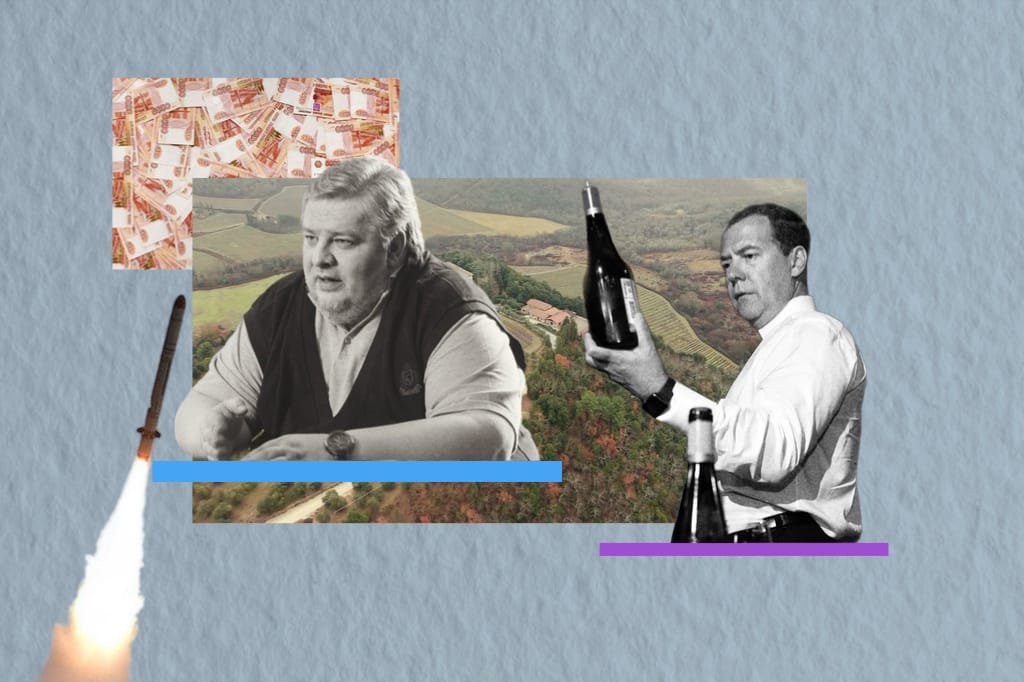
The Russian government also regularly raises excise duties on alcohol imported from “unfriendly countries.” In 2025, import duties on wine and beer exceeded their cost, as The Insider noted. The proceeds go toward Putin’s “wine Disneyland” and enrich his friends.
Sergei has been working with major wine shops since 2022:
“When I started, a bottle of excellent Trapiche Malbec cost 690 rubles on the store shelf. It was often discounted by 30%, so you could get it for 400 rubles. A glass of the same wine in a restaurant cost about the same. Now the bottle costs 1,490 rubles. The price has more than doubled. Some wines have tripled. Before the war, a bottle of French Petrus cost around 400,000 rubles; now it costs 1.8 million rubles in Russia. And you won’t find it in restaurants anymore. All wine has gone up insanely.”
Excise duties on spirits are rising too. For restaurateurs, Sergei says, that means lower margins. He recalls that before the annexation of Crimea, a bottle of 16-year-old Lagavulin cost 2,600 rubles when purchased for a restaurant, with suppliers bringing it in from Scotland at cost. In stores, a bottle cost 3,000–3,500 rubles, but could be bought for 2,500 rubles on sale.
Now, Sergei says, Scottish whisky enters Russia only through parallel imports. A bottle of Lagavulin costs around 20,000 rubles in stores and about 16,000 wholesale: “In a pub now, 50 grams of whisky costs as much as an entire bottle did 12 years ago.”
Rising prices are already driving away middle-class customers who, Sergei says, come into restaurants and complain: “Your glass used to cost 500 rubles, and now it’s 3,000! How can that be?!” Many simply turn around and leave. To save money, they order food for delivery and buy wine at stores.
To save money, they order food for delivery and buy wine at stores.
Sergei admits that even as a senior manager, he himself goes to restaurants less and less often: “My wife and I used to go out once a week – just to relax, have a meal and drink a glass of wine. Now we hardly do it at all. Maybe once a month, because our incomes have fallen while prices have risen.”
Sommelier Tatyana says consumers have become sharply segmented in recent years: “The first group consists of people who are used to drinking wine of a certain quality. They keep drinking it despite the sanctions, higher transportation costs, duties, excise taxes, and so on. The second group switches to cheaper Russian alternatives.”
Still, it is not only imported wine that is becoming more expensive – Russian wine is too.
Menu: “It was one thing, and now it’s slightly different”
Despite rising costs, restaurateurs are trying to avoid raising prices or switching to cheaper ingredients. Restaurateur Platon, for example, says the prices of products bought by his restaurants have risen 15–20% over the past year: “We raise menu prices on average once every four to six months, but never by 20%.” He says prices at his establishments change only when the menu is updated, “because we keep food costs at an acceptable level.”
Moscow sommelier Tatyana says the industry is gradually adapting, replacing suppliers and, to some extent, recipes. But the changes to menus are not radical. She calls it an “incomplete replacement” — “it was one thing, and now it’s slightly different.”
Unlike Sergei, the sommelier believes Russian food products are no worse than Western ones: “Restaurants are working more with farms. Their products are usually high-quality. Many restaurants emphasize this. We don’t import from France or Germany – we have our own! And our cheese is just as good,” she says.
Still, as Tatyana explains, the new circumstances have taken some getting used to: “If you need to bring in food products or wine from France now, it has to go through a third country. It used to be fairly easy to do this through the Baltic states. Now the process is much more complicated. As a result, many establishments have had to rethink their recipes, and wine imports from countries such as Azerbaijan, Armenia, Belarus, Georgia, Iran, Serbia, Turkey, and Uzbekistan are on the rise."
Even shot bars face similar problems, says Konstantin, a bartender: “For example, Kahlúa, the Mexican coffee liqueur, has tripled in price. At one point, it was a problem because we had to figure out what to use in the hugely popular White Russian cocktail. It’s the same with most Western products – they have gradually been replaced with Russian alternatives. There’s more Russian alcohol now… The bar used to be pretty good, with good whisky, bourbon, liqueurs, absinthe. Now it’s getting worse and worse – we keep hitting new lows in quality.”

Wages: high and off the books
Record-low unemployment has exacerbated Russia’s overall labor shortage, but that is mainly a problem for employers looking for highly skilled workers. Waiting tables is hard work, but generally accessible to anyone. However, the same cannot be said of chefs and cooks.
There are plenty of restaurant-sector vacancies, says sommelier Tatyana: “every establishment is short-staffed, and they are filling the gaps themselves. The shortages are among cooks, bartenders, baristas, couriers. There has never been a shortage of managers and administrators. Everyone wants to manage,” she says.
In the race to attract workers, employers have been forced to raise wages. To keep this from eating into profits – or adding to losses – they resort to tax-avoidance schemes. Svetlana says many Moscow restaurants do not officially employ their workers, paying them under the table instead.
As part of their efforts to cut costs, many establishments are also eliminating ancillary positions. “There were three people: two cooks and a sous-chef. They fired one cook and divided his duties between the other two. That’s optimization for the employer , because now they don’t have to pay a third person. The two who remain won’t get that third salary added to their own – they’ll just get a little extra, and only if they’re lucky,” Svetlana says, describing her own workplace.
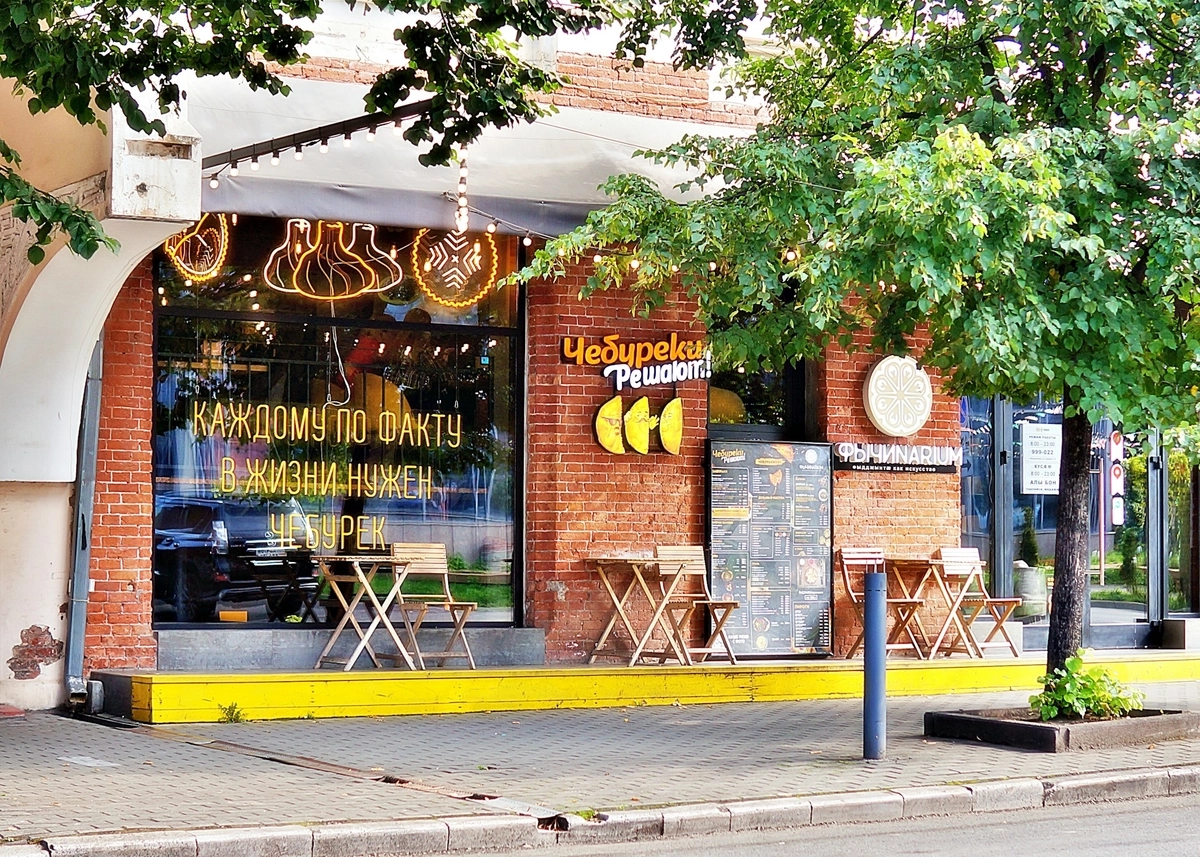
A separate problem, unrelated to either the war or sanctions, is Generation Z workers, says Sergei, the wine restaurateur:
“Gen Z doesn’t want to work – they just make demands. When I was 20 and worked as a bartender, I could do ten shifts in a row, pour beer, chat with customers, have fun, and have a few drinks myself. Now a modern 20-year-old Gen Zer will tell you, ‘Fuck off, I’ll work two on, two off. And I want a 200,000-ruble salary!’ You tell him, ‘Well, sorry, we can only pay you 80,000.’
“People like that usually work for two or three days and then quit, citing exhaustion and burnout. And if they leave on a busy day, the establishment loses money. Say it’s Friday or the Champions League final, and half the Gen Z staff say they’re not coming in – the bartender, waiter, and cook. That’s a problem. Young people see no point in working; they want the end result.”
Konstantin, who works for a chain of Moscow shot bars, is a vivid example of what Sergei describes. “It’s easy to start, easy to quit, hard to work,” the bartender says. Many students take these jobs only for a season. Sometimes one team stays at a particular shot bar for a long time, “and then they all suddenly scatter again – it’s like the skin renews itself.”
Shot bars, an island of stability
The low-price segment has also felt the downturn. Near Moscow's Tverskaya metro station, at two of the Vkusno i Tochka locations that moved into McDonald's vacated premises in 2022, there were few customers at the end of the workday. Even at the site of Russia’s first American fast food restaurant, half the cash registers were closed and many tables were empty. Most customers were 35–50, with hardly any young people in sight. A sign outside read, “We pay more than you think,” promising a monthly salary of 142,000 rubles for full shifts.
There are, however, establishments with a steady stream of customers. Bartender Konstantin is confident that even an economic crisis will not force shot bars to close: “A collapse isn’t even close, because prices are low, the PR is good, they’re highly recognizable, and they’re conveniently located near student hangouts. They’re only expanding.”
Shot bars also had to raise prices after the war began, but they have done so in stages, Konstantin says, adding that the bars have introduced deliberately cheap items, such as lavash chips, to boost margins. The chain is also unaffected by problems with imported products, surviving on cheap vodka, infused spirits, and beer – all made in Russia.
Shot bars survive on cheap vodka, infused spirits, and beer – all made in Russia
Restaurateur Alexey confirms that low-priced establishments are holding up better than the rest: “Overall, I’d say establishments at the low and high ends of the market are doing well, while the mid-range restaurant market is shrinking.”
Sommelier Tatyana says the same: “Top-end establishments are growing, and so are fast food, coffee shops, street food, pan-Asian restaurants, shawarma joints, and cheap eateries.”
Outlook: “a wholesale collapse”
All of The Insider’s sources agree that the market is in poor shape. According to Sergei, many restaurants are closing: “With all these sanctions, we’re shooting ourselves in the foot. But this also gives the Russian restaurant industry a bit of a boost, because in a crisis people start improvising – growing their own vegetables. And new chefs emerge. But if you take the average temperature across the food-service industry, there’s a wholesale collapse.”
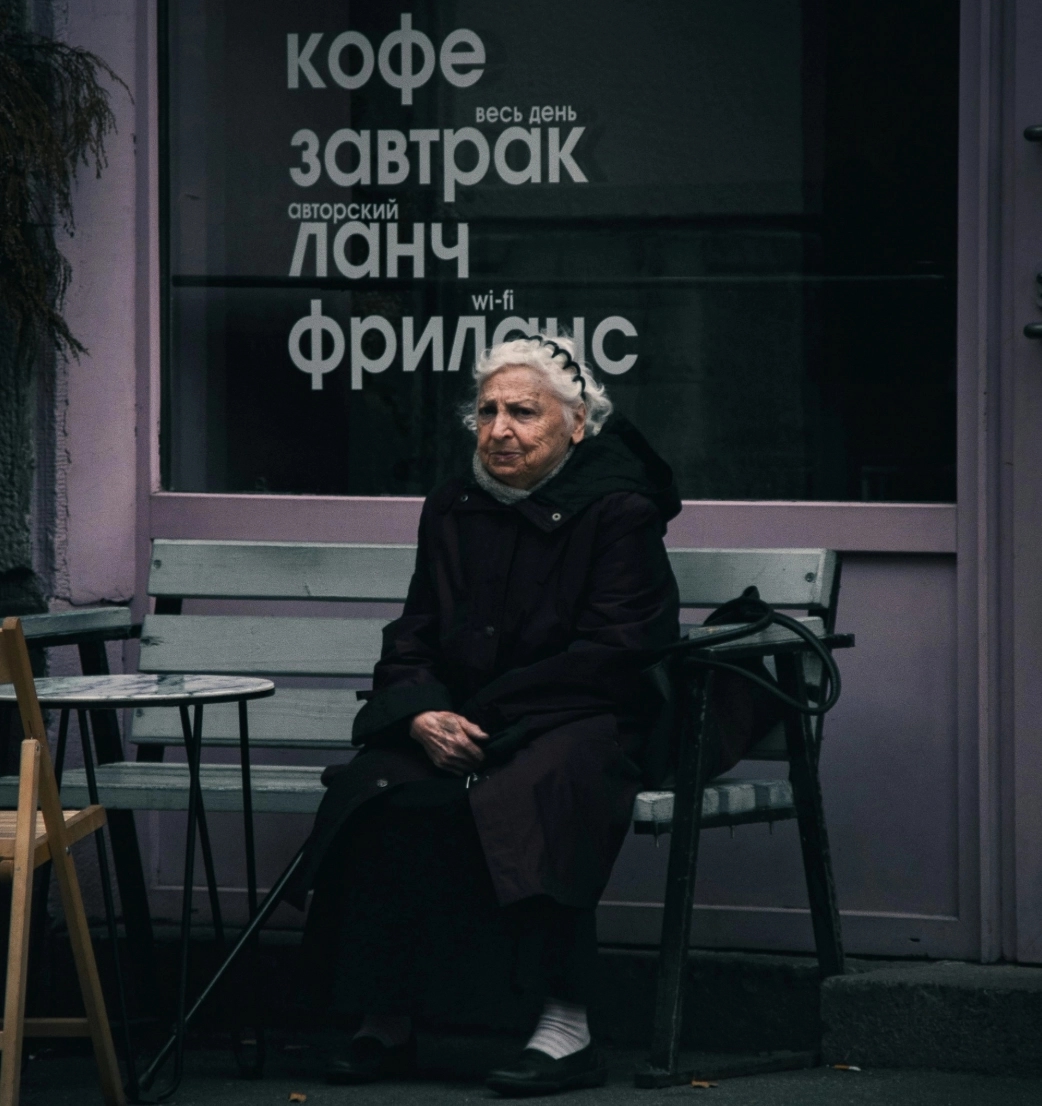
Alexey is equally pessimistic about the outlook for the restaurant business: “I expect suppliers to keep raising prices and the market to shrink further. And if the promised VAT is finally introduced in December, we’ll consider every option, including closing down.”
Sommelier Tatyana agrees: “I’m very afraid of losing my job because establishments keep opening and closing. It happens constantly. There’s no stability, and the life cycle of individual places is getting shorter. These days, the average restaurant lasts three to five years. Street food, food halls, and food courts will survive, where rents are relatively low and you can at least scrape by.”
The sources also note that Gen Z customers are not exactly the best clientele. According to Tatyana, “they are more selective, drink very little, or don’t drink at all.” At the same time, their numbers are growing, as is their influence on the market.