Donald Trump is the only billionaire ever to occupy the Oval Office, and since returning to the precedency in January 2025, his family’s wealth has grown noticeably. This is not the result of traditional business practices. Instead, Trump has been actively using his presidential status for personal enrichment, and in some cases, his efforts amount to outright scams.
- 1.$100 million: monetizing the family name through American Bitcoin
- 2.$5 billion: the World Liberty Financial crypto scam
- 3.$562 million: profits out of thin air from governance tokens
- 4.Interest “tribute” from the USD1 stablecoin, trading in pardons and export licenses
- 5.Global crypto octopus: from Japanese exchanges to “paid entry” to the White House
- 6.Loyalists in key posts
- 7.Total: $1.4 billion in personal profit, with complete immunity
Even by the most conservative estimates, by 2025 the combined gain Donald Trump and his relatives had received as a direct result of his time in the Oval Office had reached $3.4 billion. In Trump’s case, the line between public governance and private profit is being systematically erased. Presidential appointees make business regulatory decisions that instantly inflate his family’s assets, while foreign governments effectively “buy” access to American technology and multibillion-dollar contracts by making investments in Trump’s private projects.
Democratic Senator Elizabeth Warren has already called this an unprecedented seizure of power: “The president of the United States effectively controls the regulators who are supposed to oversee his personal financial empire. The regulator that is supposed to supervise his business is taking orders from the president. Nothing like this has ever happened in American history.”
Senator Elizabeth Warren: “The regulator is not overseeing Trump’s business, but working at his direction. Nothing like this has ever happened in American history”
“The main question is how Trump circumvents the laws by transferring assets into trusts managed by his children. Experts emphasize that this is not merely an 'ethical violation,' but a deliberate use of legal loopholes. In addition, non-relative Trump protégés are now working in the White House and within the Office of Government Ethics, which makes conducting real investigations inside the executive branch all but impossible, Igor Slabykh, an expert on the U.S. legal and tax system and author of the Telegram channel USLegalNews, explained in an interview with The Insider.
$100 million: monetizing the family name through American Bitcoin
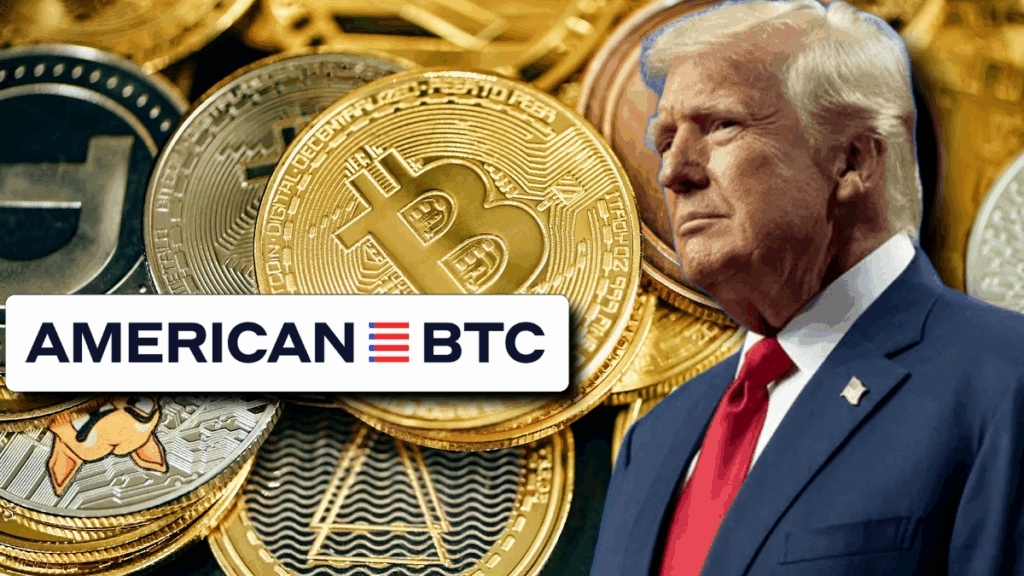
This spring, Eric Trump and Donald Trump Jr. received a combined stake of about 13% in American Bitcoin. Their entire “contribution” consisted solely of lending out their father’s surname.
The company went public through a questionable penny stock merger, allowing it to bypass the stricter and lengthier IPO process and the related scrutiny of the U.S. Securities and Exchange Commission, the main regulator of America’s financial markets. As a result, Donald Jr.’s stake soared in value to $100 million.
It is a classic example of how the president’s sons convert their father’s status into personal capital, all while regulators appointed by Trump look the other way.
$5 billion: the World Liberty Financial crypto scam
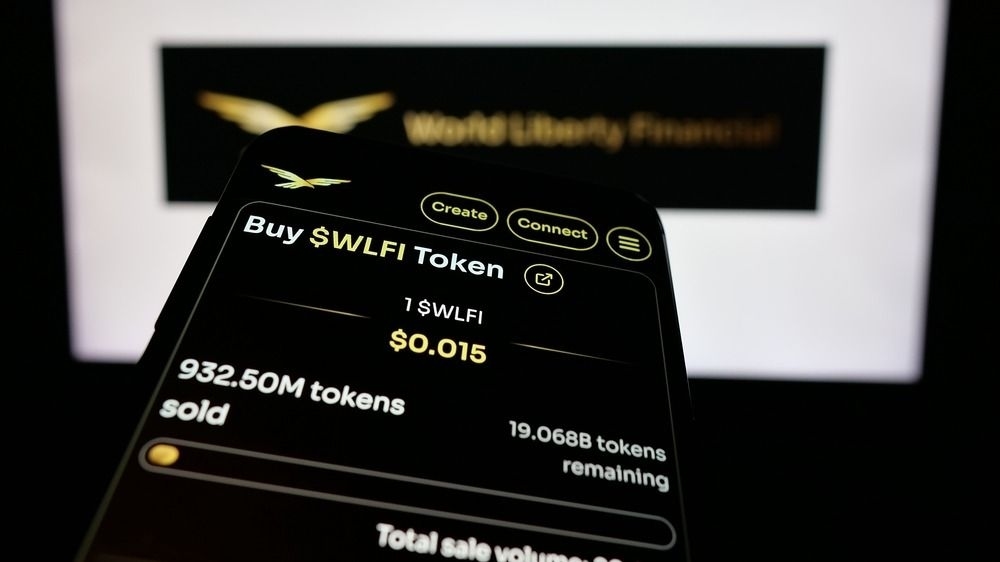
The president’s family gained access to massive financial flows through the startup World Liberty Financial, where Trump is listed as co-founder emeritus. The project’s key product is the USD1 stablecoin – a digital token pegged to the U.S. dollar and backed by reserves invested, among other things, in Treasury bonds. According to The New Yorker, the volume of USD1 in circulation has grown to roughly $5 billion.
Among ethics experts and lawmakers, the scheme has raised suspicions of violations of the U.S. Constitution, including possible conflicts of interest and potential breaches of rules barring benefits from foreign states. In February 2026, the U.S. Congress launched an investigation into $500 million in investments from the ruling family of Abu Dhabi through purchases of USD1. It later emerged that $187 million of that sum went directly to entities affiliated with the Trump family.
The deal drew criticism because, as The New Yorker notes, it created the “appearance of a payoff”: foreign investments flow into a crypto project linked to the president’s family, potentially creating indirect financial benefits for affiliated entities. In effect, a foreign monarchy gained access to a channel for directly enriching the president of the United States.
$562 million: profits out of thin air from governance tokens
The Trump family earned another $562 million from the sale of governance tokens, which grant investors no meaningful rights. The deal with Alt5 Sigma, a company that previously worked in household appliance disposal, appears to be a circular arrangement: Trump associates in one company buying tokens from Trump associates in another, artificially inflating their value.
“According to fine-print notes on the World Liberty website, after certain expenses are deducted, 75% of token-sale proceeds go to a company affiliated with the Trump family, and 75% of $750 million is $562 million,” The New Yorker described the sale of World Liberty governance tokens through Alt5 Sigma.
Interest “tribute” from the USD1 stablecoin, trading in pardons and export licenses
World Liberty invests the reserves backing USD1 in U.S. Treasury bonds. At the current circulation level, the expected profit amounted to about $360 million. Under the project’s onerous terms, a company owned by the Trump family takes 38% of that sum for itself – around $136 million.
The success of the family stablecoin USD1 and Trump’s multimillion-dollar profits are not the result of market competition, but a consequence of direct trading in state influence. In early 2026, blockchain analytics data from the Arkham platform showed an anomalous concentration of USD1 tokens on the Binance exchange – 87% of the entire supply.
Trump’s multimillion-dollar profits are not the result of market competition, but the consequence of direct trading in state influence
Binance became a key link in that chain. In 2023, its founder Changpeng Zhao, better known as CZ, pleaded guilty to violating anti-money-laundering laws. Binance then paid a $4.3 billion fine, and Zhao served a four-month prison sentence. Then, in October 2025, after months of lobbying efforts and a “financial contribution” to the crypto project of the sitting president’s family, Trump pardoned Zhao.
Immediately after his release, CZ turned Binance into the leading donor to the presidential project. The exchange purchased about 87% of the entire USD1 supply (roughly $4.7 billion), securing the Trump family a guaranteed $136 million a year in income from interest on Treasury bonds alone. Experts including cryptocurrency and technology researcher Molly White openly describe this as a “clear quid pro quo” – a pardon in exchange for business benefits, “a bribe in the form of liquidity.”
A similar mechanism can be seen in Trump’s relations with the United Arab Emirates. Just two weeks after taking office, the president approved exports of highly sensitive American AI technologies for the Emirati company G42. In doing so, Trump effectively ignored intelligence warnings about the risk that the data could leak to China.
Global crypto octopus: from Japanese exchanges to “paid entry” to the White House
The scale of this expansion is turning the White House into a marketing department for the private interests of the Trump clan. While Trump Media accumulates $2.5 billion to buy up bitcoin, and Eric Trump “advises” the Japanese exchange Metaplanet, the family entity DT Marks DEFI LLC has secured rights to 75% of the net revenue from the crypto project World Liberty Financial. This is not merely business – it is the use of state symbols as a free advertising tool.
The cynicism peaked in May 2025 at a closed gala dinner in Virginia. To obtain a seat at the table with Trump, 220 investors poured more than $148 million into the $TRUMP memecoin. The president arrived at the private commercial event aboard Marine One and spoke from a podium decorated with the official presidential seal.
The guest list confirmed the worst fears of American lawmakers and ethics experts: more than half of those attending were foreigners, including Chinese crypto millionaires. Because the law prohibits foreign donations to elections, Trump effectively opened a back door into the Oval Office, allowing people to buy the president’s attention through volatile tokens.
Loyalists in key posts
To protect this money-making conveyor belt, Trump placed his own people in several key positions. At the time he took office, 216 of Trump’s eventual appointees held crypto assets worth a total of up to $340 million, and many retained those holdings after their appointments. This creates an unprecedented concentration of personal interest in deregulating the industry.
On his very first day in office, Trump revoked an executive order requiring appointees to observe an “ethical pledge” that barred them for two years from working on matters related to their former lobbying activities. In addition, 17 inspectors general and the head of the United States Office of Government Ethics were dismissed, leaving the executive branch without officials responsible for investigating corruption and conflicts of interest.
Among the Trump appointees who gained access to the public purse was Steve Feinberg, deputy defense secretary and co-founder of Cerberus Capital Management. Although Feinberg said he had formally left Cerberus, the group owns at least four companies that received contracts under the “Golden Dome” missile defense project, which Feinberg now oversees. Moreover, his agreement allows him to continue using Cerberus for tax accounting and health insurance services.
Assistant Secretary of Defense for Space Policy Mark Berkowitz previously served as a vice president at Lockheed Martin. According to disclosure documents, he owns between $1 million and $5 million in the company’s stock and receives two monthly pensions from it. Lockheed Martin is also among the recipients of contracts under the “Golden Dome” project.
Another example is Jonathan Morrison, head of the National Highway Traffic Safety Administration (NHTSA), who previously served as director of an association representing the interests of autonomous vehicle manufacturers.
Total: $1.4 billion in personal profit, with complete immunity
According to investigative findings, Trump’s total net personal profit reached $1.4085 billion. This includes:
- $867 million from cryptocurrency manipulation;
- $400 million – the value of the Boeing 747-8 allegedly “gifted” by Qatar (a former royal airliner transferred to the foundation of Trump’s presidential library);
- Tens of millions of dollars from licensing the Trump brand in Saudi Arabia and the Maldives.
Legally, Trump remains untouchable thanks to the Supreme Court’s ruling on presidential immunity. For the first time in American history, a U.S. president has turned the White House into a full-fledged business holding company, where the pardon power and control over technology exports have become commodities for sale. The only remaining lever – impeachment – is blocked by a Congressional majority loyal to Trump (and even if the Republicans lose that majority after this November’s mid-term elections, Democrats have no hope of gaining the 67 Senatorial votes necessary for removing a president from office).
Igor Slabykh explains that the difficulty of criminally prosecuting a president lies in the fact that the office carries immunity by default:
“A decision to that effect was made by the Supreme Court of the United States about a year ago. During the hearing, for example, the question was considered whether a president could be held liable for taking a bribe in exchange for appointing an ambassador, and the answer was no, he could not. In theory, immunity can be overcome in some cases, but it is far from certain, and in any event that will not happen in the next three years: the policy of the United States Department of Justice prohibits prosecuting a sitting president.”