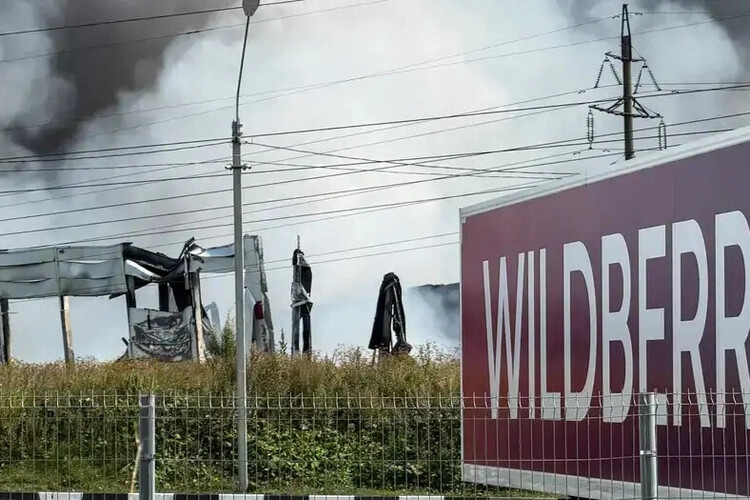
After a brief pause, Ukraine has resumed its strikes on marketplace warehouses. The latest attacks in early November hit a Wildberries facility in Ryazan and an Ozon warehouse in Adygea. The attacks directly affect the operations of major companies: IT systems fail, logistics become more difficult, and costs rise. Employees of three Russian companies that have been frequent targets told The Insider how safety and evacuation procedures have been revised, and why logistics are shifting toward smaller hubs. At the same time, businesses are being forced to cut staff and abandon investment and future plans, and workers themselves do not expect things to improve any time soon.
“In my view, Wildberries is probably not a legitimate target. But I understand why it is being done”
Sergey, Wildberries management employee, Moscow
Wildberries is such a large company that things cannot be completely bleak across the board. Operationally, delivery has of course become more difficult. In some places a little, in others much more. It depends a lot on the region. Overall, though, logistics are now being reorganized around smaller warehouses instead of large ones.
There is no catastrophe so far. Logistics are inherently flexible, because the company has a large fleet of its own vehicles to handle deliveries. But clearly, delivery costs will rise, as will the final price for consumers and sellers.
Warehouses in Kazakhstan and Belarus may help in some ways. But building those facilities usually takes two or three years, and there is no capacity for that right now. Intermediate supply points have to be created. The idea is that a truck carries goods from one warehouse to another, where they are then distributed across the region in smaller shipments.
That model made it possible to save a great deal on logistics. Now that Moscow and St. Petersburg, the two biggest hubs, have been knocked out, delivery costs will rise by one and a half to two times.
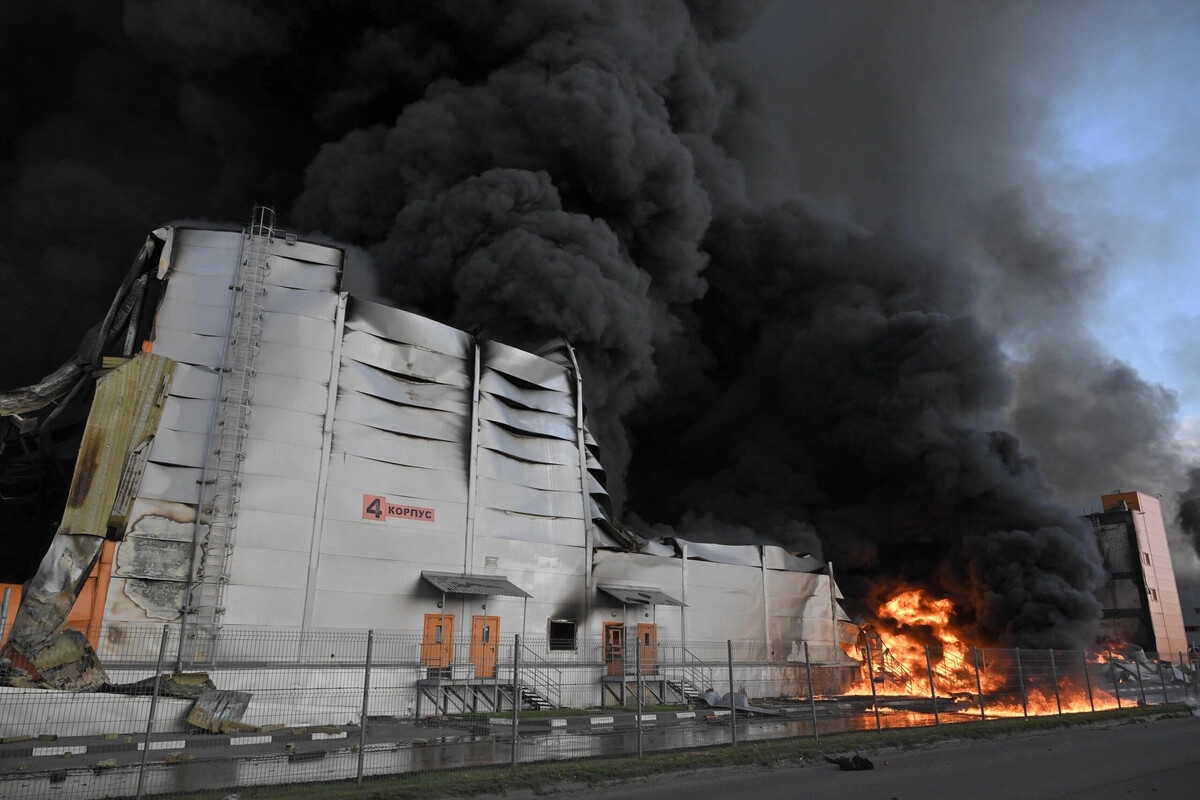
The investment program is being restricted because the flow of investment has now been halted. That means the company is not buying new businesses, and every capital expenditure is being reassessed three times over. On top of that, the company still does not know how much it owes, or to whom, or what to do next. The attacks are continuing.
Hiring has been frozen for many positions while the company takes stock of its finances. People in the IT department panicked a little and started quitting. But the market is very tough right now, so it is extremely difficult for IT workers in Russian businesses to move from one job to another.
People are not panicking in general. The mood is more like, 'maybe things will go to hell, maybe they will not.' Either way, it is easier to stay while the company is still paying a salary. Employees understand that anything could happen and that they may have to look for a new job.
We used to have a lot of people joining and not many leaving. The company is consistently among the market leaders both in pay and in the number of people it hires. Some bonus programs, salaries, and other benefits will probably be reviewed this year.
The biggest question is what the lenders, VTB among them, will do, and what the government will do. But given the roles of Bakalchuk and Kerimov, it will probably all be financed out of some government coffers.
Can Wildberries warehouses be considered legitimate targets for the Ukrainian Armed Forces? In the current war, I do not think that matters anymore. Look at how many unlawful targets Russia has hit, and at Ukraine’s bombardment of Belgorod and the like. The concept of a legitimate target has become far too blurred.
In my view, Wildberries is probably not a legitimate target. But I understand why it is being done. I understand that this is one way to put pressure on the economy, and one way to hit consumers at the same time — so they feel the war and see it close to home — while also putting pressure on circles very close to the people at the top.
The damage could amount to as much as 0.5% of GDP. That is not a huge sum by Russian standards, but it is still significant. It could add, say, one and a half to two percentage points to inflation in Russia.
Does this have a serious impact? Probably not. Striking oil refineries and oil-loading points is much more effective than hitting Wildberries. Wildberries and Ozon can simply redistribute goods among fifty small warehouses instead of five large ones. There would be no end to the effort required to destroy all of them. Business itself is too flexible these days for this kind of pressure to work.
The propaganda aim of the strikes probably works. The economic aim probably does not. The military aim? I would say it misses the mark almost 90 percent of the time. This is not a military target. Otherwise, you could bomb bakeries for supplying bread to soldiers.
As for restrictions on military goods being sold on the platform, they will not stop being listed on the marketplace. Wildberries has struggled even to fight counterfeits, as everyone knows. It is a very complicated issue. As far as I know, the company was not planning to remove such goods from the platform entirely; they just made them less visible. They also downranked them in search results, so they would not appear at the top and would be found only by people who knew what to look for.
“The strikes hit us hard”
Oleg, Yandex Lavka employee, Siberia
I joined Yandex fairly recently, after working at Leroy Merlin (now called Lemana PRO). I wanted to stay in warehouse work but change employers. Yandex Lavka made me a good offer.
We have a regional distribution center that receives products and distributes them to the individual stores. A partner now handles the warehouse operations. Our job is oversight. I am not an IT specialist; I handle inventory and the movement of goods. I make sure our systems work well together and that everything is displayed correctly.
Yandex itself is going through a period, I would say, of restructuring all its processes. Some things are being merged, others added, and unprofitable operations are being shut down. At Yandex Lavka specifically, next year’s priority is to move as many stores as possible to a franchise model to reduce staffing costs.
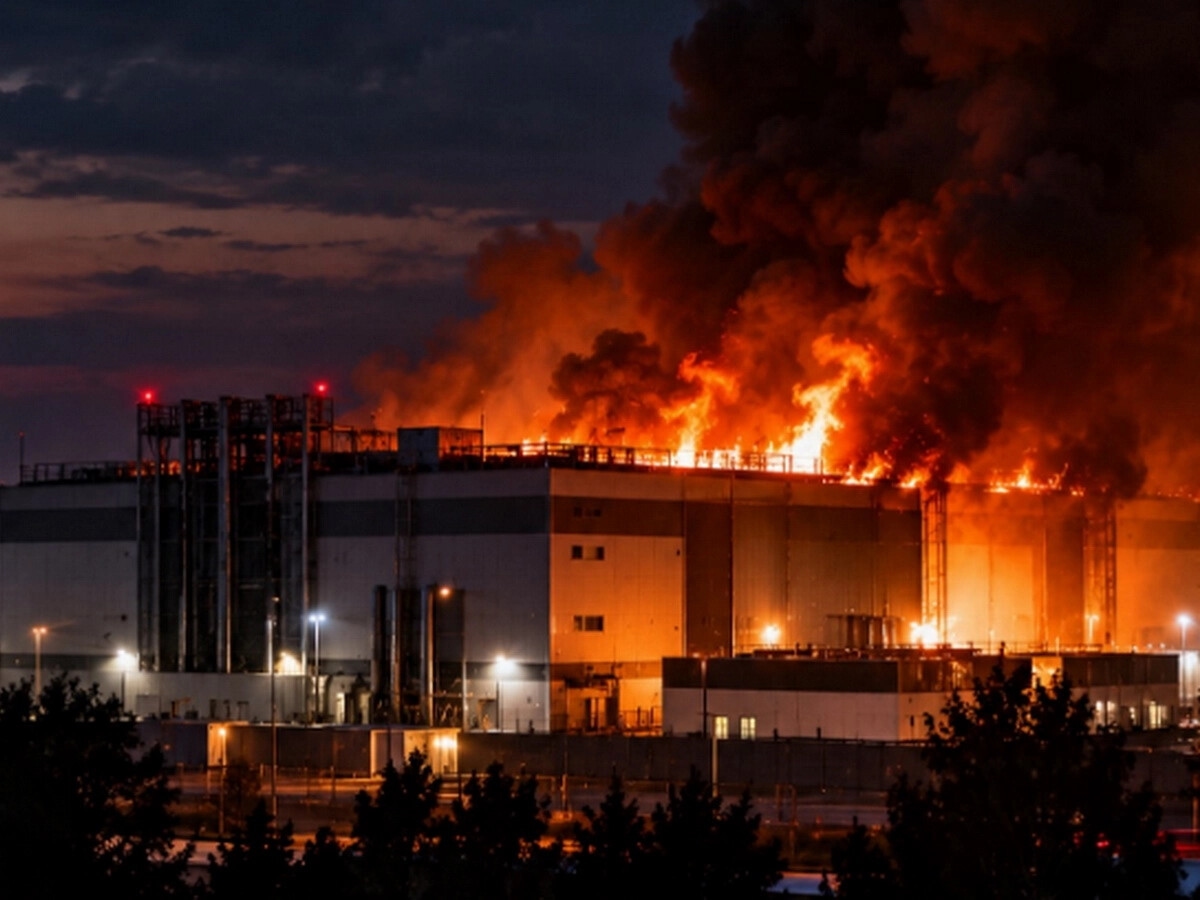
The strikes hit us hard, though the first one was different — on the night of October 7–8, 2026, in the town of Sasovo in Ryazan Region, the data center was seriously damaged and shut down completely. After that first strike, things slowed down. But the second and third strikes — Kaluga on October 9 and Vladimir on October 11 — hit hard, and every system went down. We spent a day or two trying to restore them. We brought systems back according to their importance — the ones that generated the most revenue first. So customer apps were restored quickly, but the internal reporting systems we use are still down.
Most of my work is done in 1C. 1C was not affected at all. Essentially, it can run on a computer, so we were affected the least.
Obviously, some things are running more slowly or working worse. There are limits on sending files through the internal Yandex Mail. Our internal Yandex Disk has not been fully restored either. We cannot save anything. We can retrieve data, but we cannot add to it. So right now we are working more with Google Drive.
Even before the strikes on the data centers, we were short on capacity. By one estimate, we were missing around 100 to 150 megawatts, I think, for development. Now another 310 megawatts have been knocked out. They say it will take six months to replace that capacity and restore everything fully, but I think this will be a two-year process at least. As I understand it, chip production is heavily backlogged. Everything the factories have yet to make has already been spoken for.
They say it will take six months to restore capacity fully, but I think this will be a two-year process
When Ozon and Wildberries started being hit, we never discussed the possibility that Yandex might be next. Once, we did talk about distribution centers (DCs) — that concrete shelters might be installed at sites with large distribution centers and lots of our employees.
We were more worried that the nearby DC might be hit, because our own center in Kotelniki is not far from an oil refinery. As Vladimir Vladimirovich [Putin] put it, we did not think they would do that. It was all so unexpected.
[Ukrainian Unmanned Systems Forces commander Robert Brovdi] "Madyar" is a pretty capable guy from the standpoint of military strategy and everything else. He had a successful business career before joining the Ukrainian Armed Forces. So, in principle, this is a fairly sound decision.
We all understand that the budget is made up of taxes. Wildberries, Ozon, and Yandex pay taxes in the millions. And that is not just the companies themselves, but also all the other companies attached to them. If I am not mistaken, the service sector accounts for 70% of the core budget here. So after the strikes, all the tax legislation and the entire tax base are being reconsidered.
There was talk that after the Ukrainian strikes, the state might take over Yandex. But the company had already become state-controlled when the “special military operation” began and foreign assets had to be separated. They set up a management council, a board of directors — call it what you like. It includes two Yandex directors and the founders who stayed here, Kovalchuk and Kiriyenko. Those four people make the decisions and run Yandex. The state already owns 50 percent.
The state already owns 50 percent of Yandex
What if Yandex, for instance, gives a billion rubles to the “special military operation”? My colleagues and I try not to have those conversations. I cannot say that we openly discuss the war. Our team is very diverse — there are millennials, Gen Z, and probably even Gen Alpha by now. No one is cheering that Kyiv is being demolished, and no one is cheering when something in Russia is being demolished. But it is undeniable that people are unhappy with what the country is becoming. That discontent is not hidden; it is discussed and spoken about.
We really do love the country. Our families are here, our grandmothers, the graves of our relatives, the places we are from. But the question is who the country has fallen into the hands of and what is happening with the government. The criticism is very clear, even if people can only talk about the way they did in the Soviet past — around the kitchen table.
It is hard to understand or predict what will happen next. Even in business, the planning horizon is six months at most. No one makes long-term plans or launches long-term projects, because nothing is clear at all. People understand that even if a peace agreement is signed next week, nothing good will come of it for us as Russian citizens.
Even if a peace agreement is signed next week, nothing good will come of it for us as Russian citizens
Things will get worse. Yes, we are getting used to air-raid warnings. Ukrainians are getting used to living in a state of war, with constant bombardments and all the rest. People adapt. You are driving, you see a traffic police checkpoint, and you do not feel safe. They may stop you and check your license, or they may ask to see your phone. You could end up in prison for ten years just because you follow something online.
Why do we not take to the streets? Maybe we simply do not see a way out of this situation. Politics in Russia has been completely destroyed. You understand there is no alternative, not even a temporary government that could do anything. The politicians who left for Europe have, in many ways, lost touch with reality. Sometimes you listen to them and it makes you cringe. I do not blame them though. Good for them for doing what they do, for speaking out, and so on.
And it is terrifying to think about what will happen when the “special military operation” ends and people start coming back from there. I remember the Chechen war and all of the aftermath clearly — it was my childhood. It was frightening. You go to a disco, and guys who returned from Chechnya show up. They drink until, at some point, they snap, and then it starts.
That is what lies ahead for us. Honestly, I am sick of living in a history textbook.
“Business tries to remain neutral”
Dmitry, Ozon employee, St. Petersburg
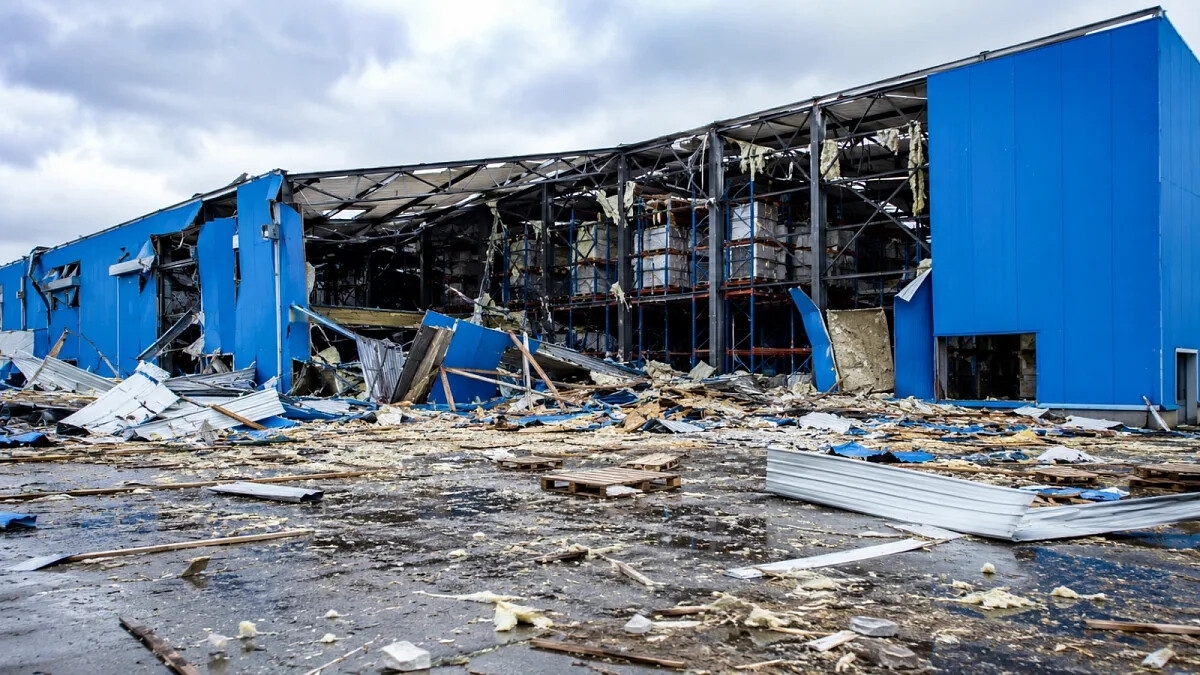
I work at Ozon now. Before that, I worked at Wildberries, at a warehouse in St. Petersburg — until it burned down after the attacks. The work is roughly the same: moving boxes from one place to another. I work in cross-docking. We sort large boxes onto pallets, then send them to the area where forklifts load them onto trucks bound for different cities.
Ozon, like Wildberries, has large warehouses, by the way. The work is organized a little differently, but overall it is largely the same.
As for discipline, at Ozon you do not have to go through security in your underwear. There are no fines. At least, I have not received a single one while working here. At Wildberries, they fine you constantly. If you cannot find an item in the designated place while filling an order, they may fine you the full cost of it. I remember once racking up 12,000 rubles [almost $150 in fines in a single shift. At Ozon, as far as I know, the penalty for that kind of mistake is a fixed 40 rubles [around 50 cents].
Ozon, it seems to me, treats its employees more humanely. In general, everything there is more democratic. You can even wear your own clothes to work; you do not have to wear a uniform. There are some restrictions, of course — for example, hoodies are not allowed. I do not know why. Maybe it makes security checks easier, so guards do not have to check the hood at the back as well.
Recently, posters appeared at Wildberries workplaces explaining what to do during a missile alert or a drone attack, and fire evacuation drills were held periodically.
Posters appeared at Wildberries workplaces explaining what to do during a missile alert or a drone attack
At Ozon, alerts come straight to the handheld data terminal we use. If a missile alert is declared, employees are evacuated immediately. In the case of a drone threat, evacuation does not begin right away — it starts after an attack has already taken place. There is a certain escalation procedure. During a fire alarm, obviously, everyone is evacuated too. Drills are held periodically.
I have been in situations like that already. Once there was a fire drill, and we all simply left the warehouse. The important thing is that downtime is compensated. So you still get a little bit of money for it.
There was also a drone alert one time. I had already left the warehouse and was in the smoking area. We have protective bunkers there — concrete boxes, you have probably seen them in photos. A security guard came out and said, “Everyone, get into these bunkers; there is a threat.” We sat there for about twenty minutes. Then they announced, “Alert canceled, return to your workstations.”
At first it was quite hard to think about all this. You keep wondering: 'should I go out or not?' Now everyone is used to it. People hardly discuss it at work or in the smoking area. There was a threat, we evacuated, sat around and smoked, then went back to work. What can you do? It has become part of life.
One thing I did not like about what happened at Wildberries was that after two warehouses in St. Petersburg burned down, people wrote in the chats — and the news reported it too — that employees had to make their own way to the metro.
You have to understand that during an evacuation, everyone leaves their personal belongings behind. Phones are prohibited in the warehouse, so you end up with no phone, no bank card, nothing at all. You cannot even pay for your own ride.
Ozon has dealt with this issue. We have been told that employees will be taken away in the event of an evacuation. They will probably also work out how to get people home.
In general, I think most employees understand what is going on with the war. No one is particularly angry at Ukraine. People take it as a fact of life.
But you also have to understand the economic consequences of attacks like these. Picture a standard Khrushchev-era apartment block. Now picture ten or fifteen of them lined up in a row. That is roughly the size of an enormous building packed full of all kinds of goods. That is what a warehouse is.
Behind all that are thousands of entrepreneurs and tens of thousands of warehouse workers. They may not all be working there at the same time, but that is how many people work with the facility. A lot of them are students who come to earn some extra money. Students probably make up as much as half of the workforce.
When a warehouse is destroyed, all those people lose their income for a while. They have to adjust and look for another job. It is stressful either way. And seeing what is happening is stressful in itself.
When drones attacked St. Petersburg on October 18, my wife and I were standing by the window watching. We could hear the drones and see the tracer rounds. It was unsettling, and we had no idea what to do.
As for military goods, I have never seen anything military in the Wildberries or Ozon warehouses in St. Petersburg. The most I have come across is ordinary khaki clothing — pants, for instance. But that is a favorite style among men over fifty who are into hunting and fishing. They wear khaki all the time.
Of course, if you wanted to, you could classify such things as dual-use goods, but you would really have to stretch the definition. Maybe warehouses in border regions do have dual-use goods; I cannot rule that out. But I have not come across anything like that in St. Petersburg, other than the same clothes or some backpacks. And those are ordinary hiking backpacks, only green.
I have not seen public support for the war from Wildberries or Ozon either. The only thing I remember is that after the warehouse attacks, Tatyana Bakalchuk said they were terrorist attacks by Ukrainian forces.
But I have not seen any public events, collections for the military, or anything like that at the warehouses themselves. People just come to work. I have not seen anything political, quasi-political, or even humanitarian at either Wildberries or Ozon. It seems to me that businesses do try to remain neutral.
Will the strikes continue? We never thought all this would go on for so long. But the hostility keeps growing. It seems to me that for the first two years Ukraine tried to avoid any ambiguity in its attacks, even if mistakes happen everywhere — on both our side and the Ukrainian side. But now, it seems to me, those lines have been erased.
Do the companies have a plan in case they are hit so hard that they end up on the brink of bankruptcy? I do not know. I am just an ordinary worker. I come in and move little boxes from one pallet to another. Maybe management has a plan.
Despite everything that is happening, I am not afraid to go to work. Evacuations are carried out, and you know what you are supposed to do. Besides, I work close to an exit.