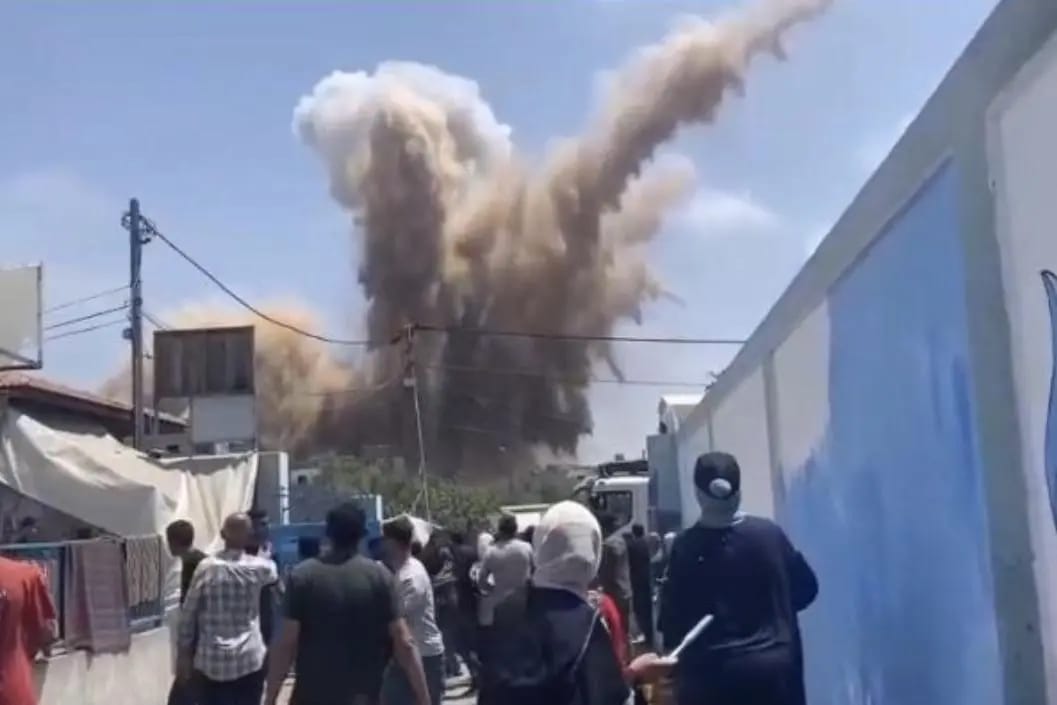
According to the latest data from the World Health Organization, more than 18,500 severely injured and chronically ill residents of the Gaza Strip are awaiting medical evacuation. For everyone else, there is virtually no legal way out of the enclave — at border crossings, only a limited number of people are allowed through, based on pre-approved lists. The Insider spoke to Nidal Abu Auda, a Gaza resident married to a Ukrainian woman, who is living in the devastated Strip without medicine, clean water, or the hope of being evacuated anytime soon. Nidal is also living with friends from Ukraine — who cannot return home due to the fact that their home is now on the front line.
I was born and raised in the Gaza Strip. In the early 1990s, I went to Kharkiv to study. That’s where I met my future wife, a Ukrainian, and where my daughters were born. In 1998, we returned to the Gaza Strip as a family. Before the war began in 2023, I worked in the office of an electricity supply company.
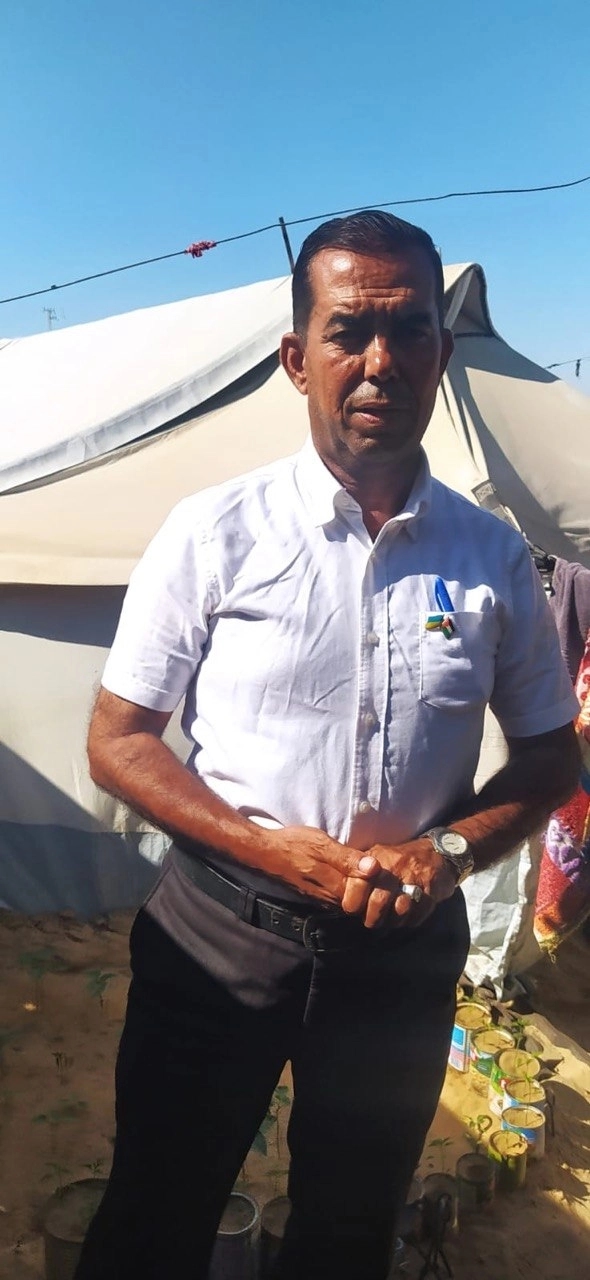
When the first strikes began, I was at home with my family.
Before that, wars had broken out repeatedly in the Gaza Strip. There was a war in 2008, in 2012, in 2014, and in 2018. But I never thought the war that began in 2023 would last this long. No one expected it.
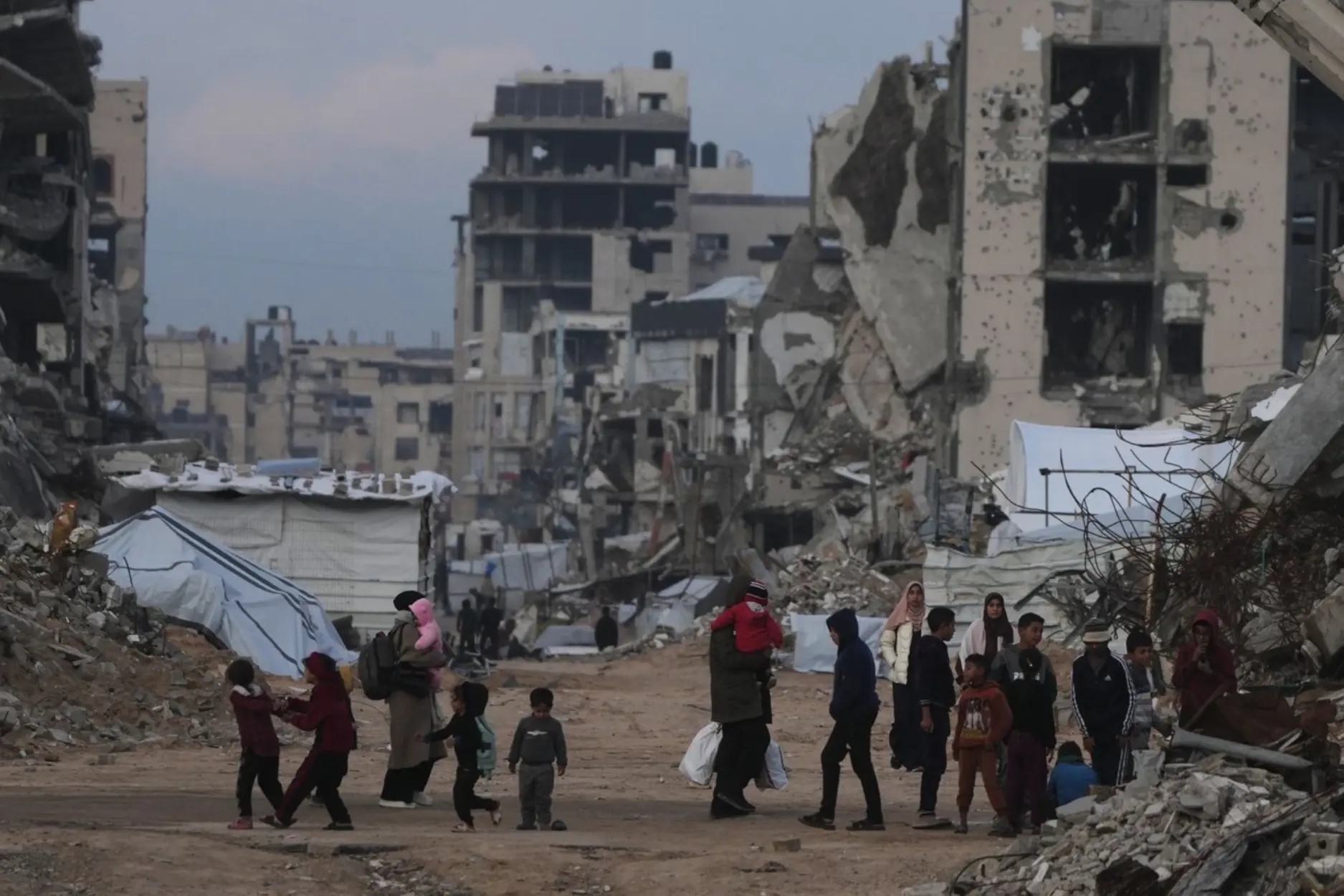
Because of this war, I lost everything. I had a home in the north of the Gaza Strip, but it was destroyed. All the neighborhoods where we lived, where we spent our childhood, have also been destroyed. Nothing is left.
“Because of this war, I lost everything. I had a home in the north of the Gaza Strip – it was destroyed”
My family left after the war began, in the third wave of evacuations, while I stayed here. I was not allowed to cross over into Egypt.
I signed up for evacuation three times, but my name never appeared on the lists. The last evacuation was on September 29, 2025. I wasn’t able to leave then either. New evacuations were promised afterward, but they never happened. Since then, I have continued to live in limbo, like so many people here.
Over these nearly four years, I have had to move almost 15 times. When you leave one place for another, it means the danger is already very close, and you most likely won’t be coming back.
There is no choice. The Gaza Strip is a small territory. You call your friends and say, “I can’t find a patch of land to put up a tent.” About two million people live here, and there is almost no free space. You put up a tent at a friend’s place, and the next day that place is already being called a camp.
“You put up a tent at a friend’s place, and the next day that place is already being called a camp”
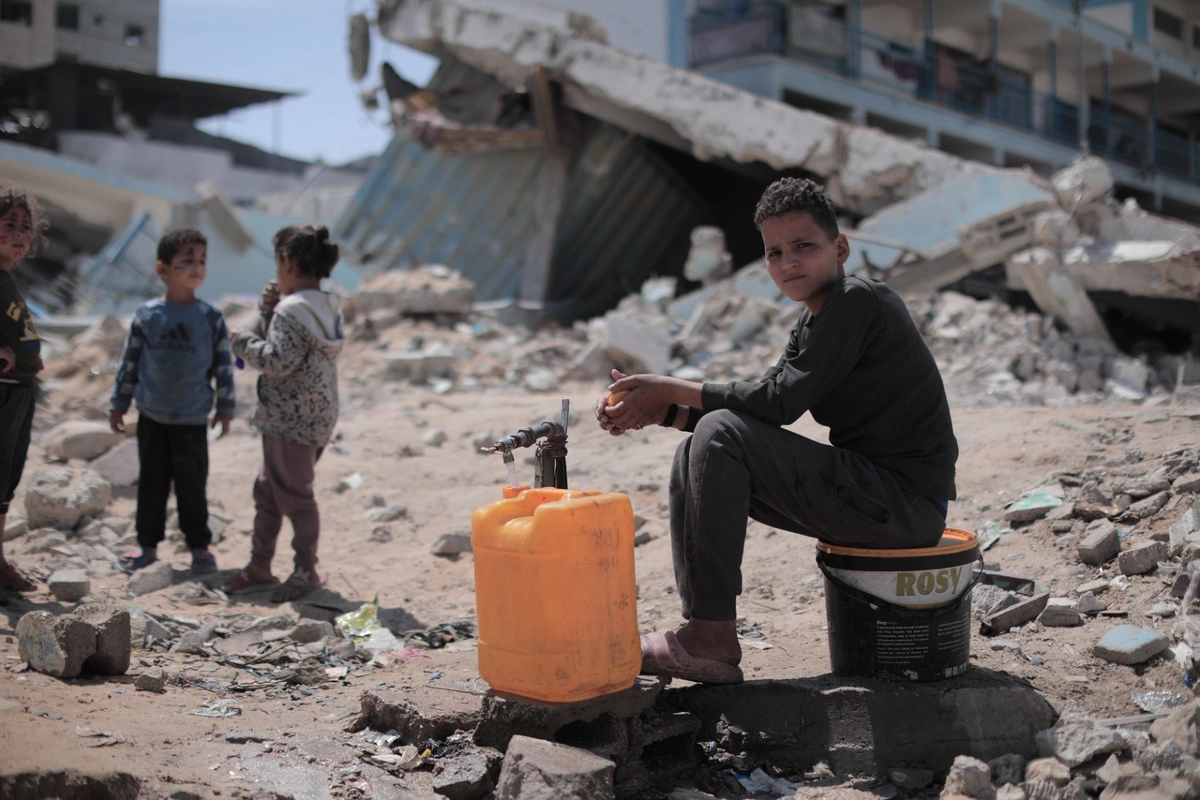
Sometimes humanitarian aid arrives: a box of food or a communal pot of cooked food. I drink dirty, salty water. It comes through a hose from local pumps. Even the water that is brought in as "clean" cannot really be called clean. People get sick from it. But there is no other water – otherwise, we will die.
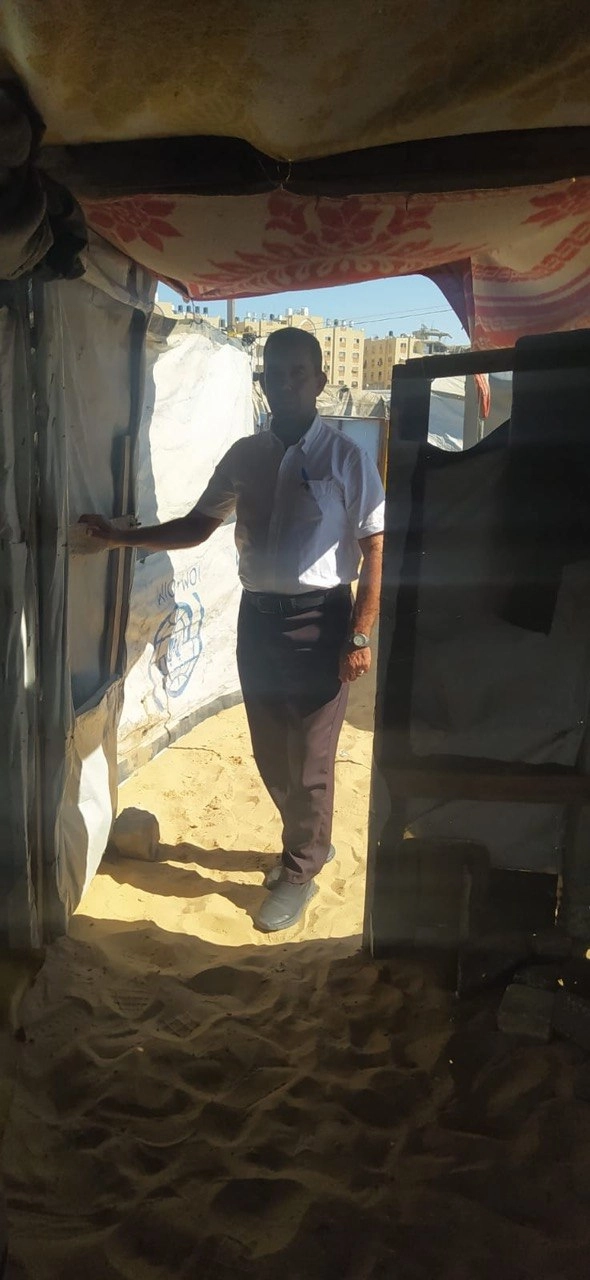
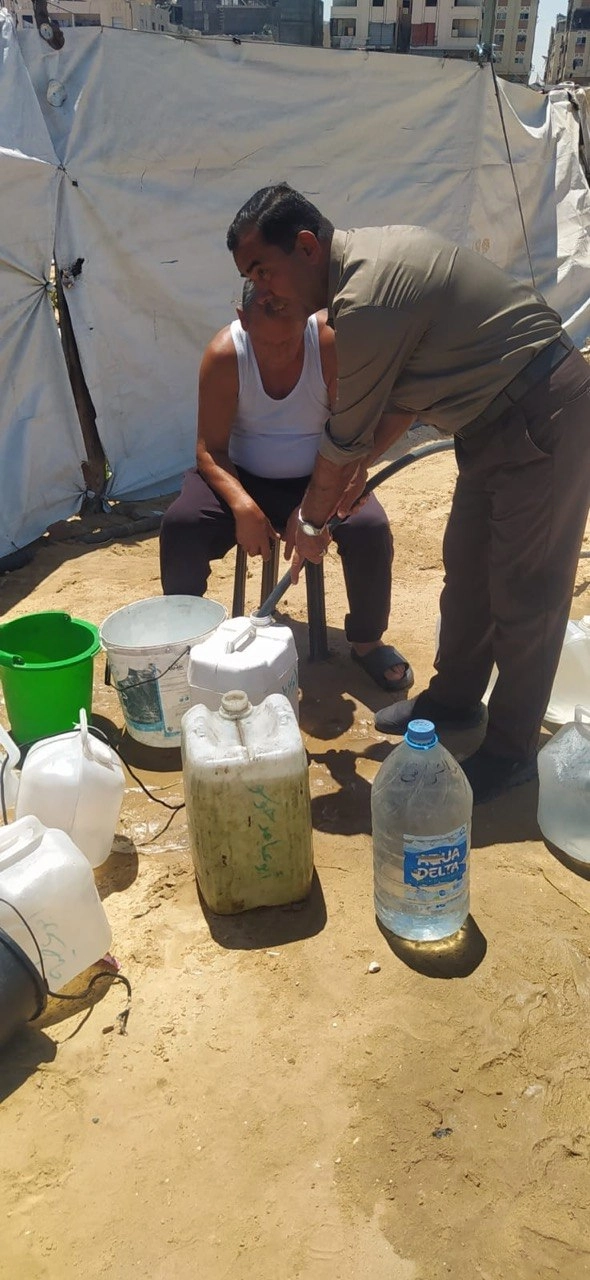
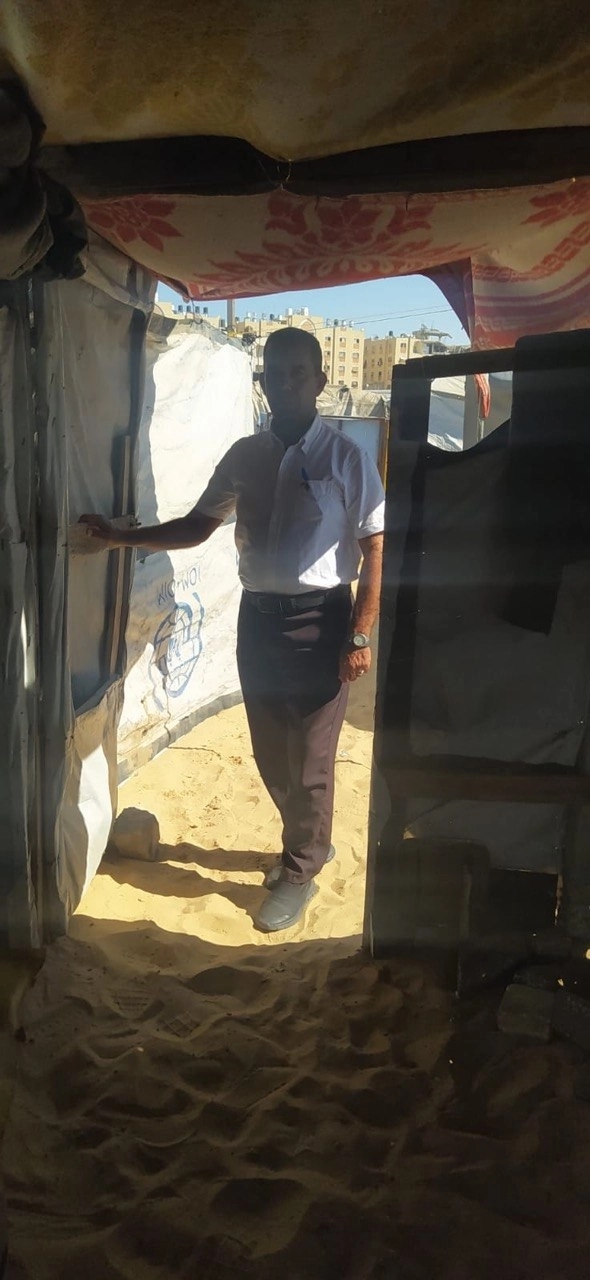
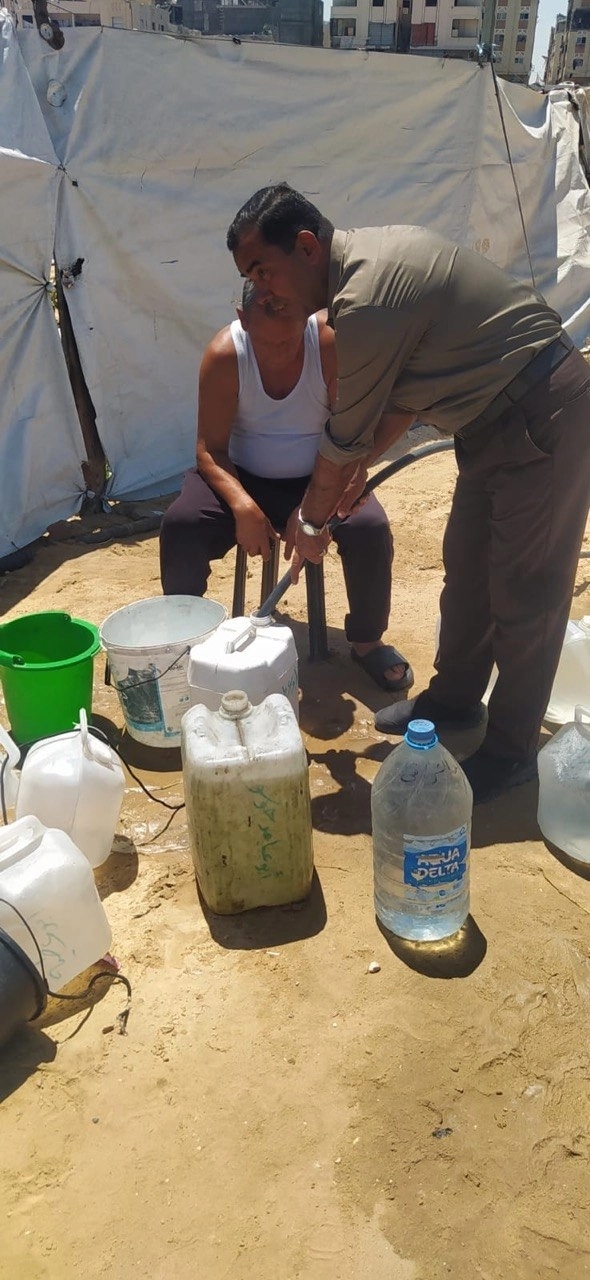
For the most part, people in the Gaza Strip live on humanitarian aid. It is provided by the UN, the World Central Kitchen, and other international organizations that continue to operate here. But even this aid is not enough.
Usually, food is distributed once a day, at around 11 a.m. or noon. Most often, it is rice, peas, or beans. People stand in line with large pots. Food is handed out until it runs out. If you don’t make it in time, you go hungry. People have been getting food this way for about a month and a half now.
“Food is handed out until it runs out. If you don’t make it in time, you go hungry”
Normal life has practically come to a standstill here. It is impossible to work, the banks are not operating, there is almost no money, and prices are exorbitant. Even when food is available for sale, many people simply cannot afford it. Everything is extremely expensive, and finding food is not always possible. A few months ago, a chicken cost about 150 shekels (around $50). There was a time when a kilogram of sugar cost 500 shekels (about $150).
For a whole year, we went hungry, eating once a day – water and some kind of pasta. Because of hunger, I lost 25 kilograms.
Before the war, I worked for an electricity supply company, doing administrative work. We had a good life. I earned about $400–500 a month. Of course, prices were different then, but it was enough for a normal life. We had our own home, a stable job, and lived peacefully. It is impossible to even compare our life then with our life now.
Now I receive aid – $100–120 a month. It is impossible to live on that kind of money. There are families of 10 people here, and even these payments do not reach everyone. When we receive humanitarian aid, we sometimes sell part of it to get at least some money.
There is no work, but there is corruption, and there are people who steal. There are those who hoard goods and then sell them at their own prices. There are those who create artificial shortages and operate through the black market.
The way we live today is like living in the jungle. I live surrounded by rats, mice, and lizards, without proper food, water, electricity, or internet. I curse this kind of life and those who have brought us to this.
“It's like living in the jungle – with rats and lizards. I curse this kind of life and those who have brought us to this.”
If it weren’t for solar panels, we would have forgotten what electricity is like a long time ago. To charge a phone, you have to go to someone who can charge it for you and pay two or three shekels.
To use the internet, we buy cards for 10 or 20 hours. They cost about $1. The internet comes and goes. If someone is far from a station or router, there is almost no connection. There is no individual internet connection either – it is shared.
Almost none of the large hospitals remain, and those that are still operating are doing so on a minimal basis. There are small medical posts, but there are very few medications. Many medicines are unavailable in pharmacies. From what I hear from acquaintances and sick people around me, there's a desperate shortage of medications.
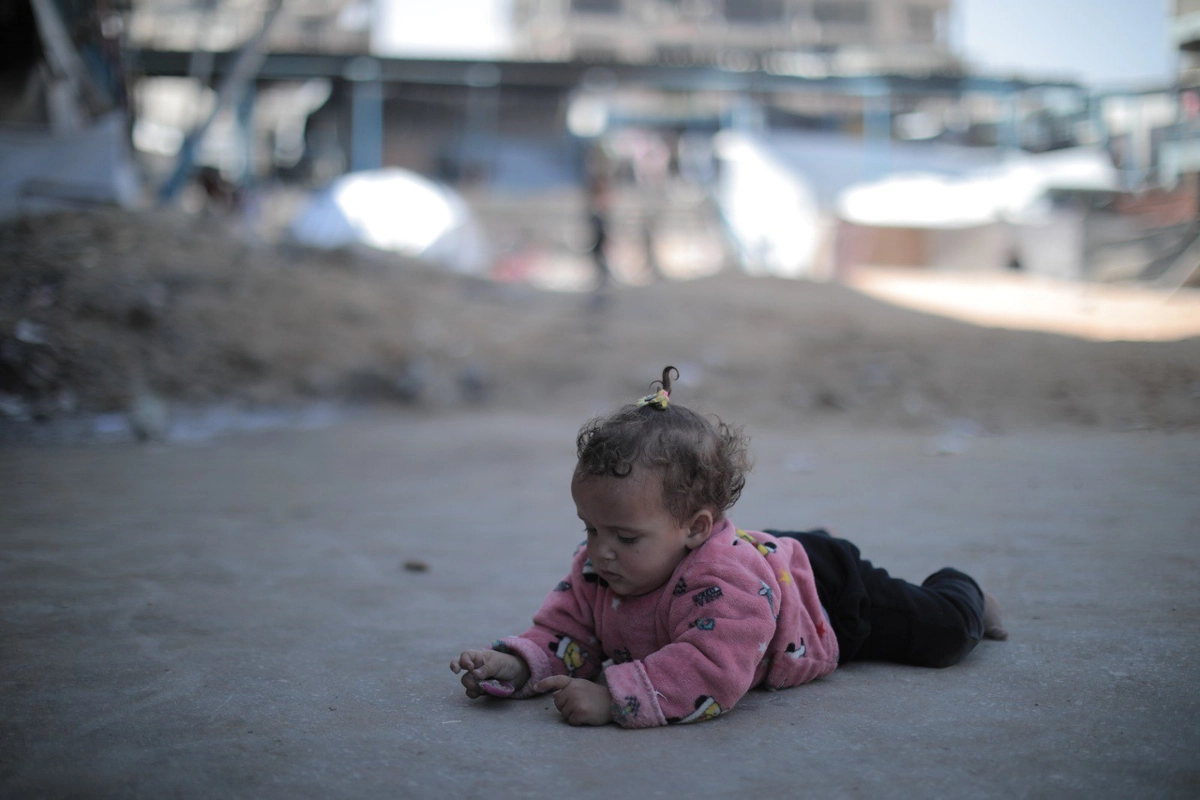
I feel especially sorry for the children. We adults at least had a chance to see what a normal life was like. But for them, life began with tents. This is no life for children. They have no joy. There is only sadness in their eyes. They are growing up without a childhood. It is hard for them to find even ordinary slippers because everything is so expensive.
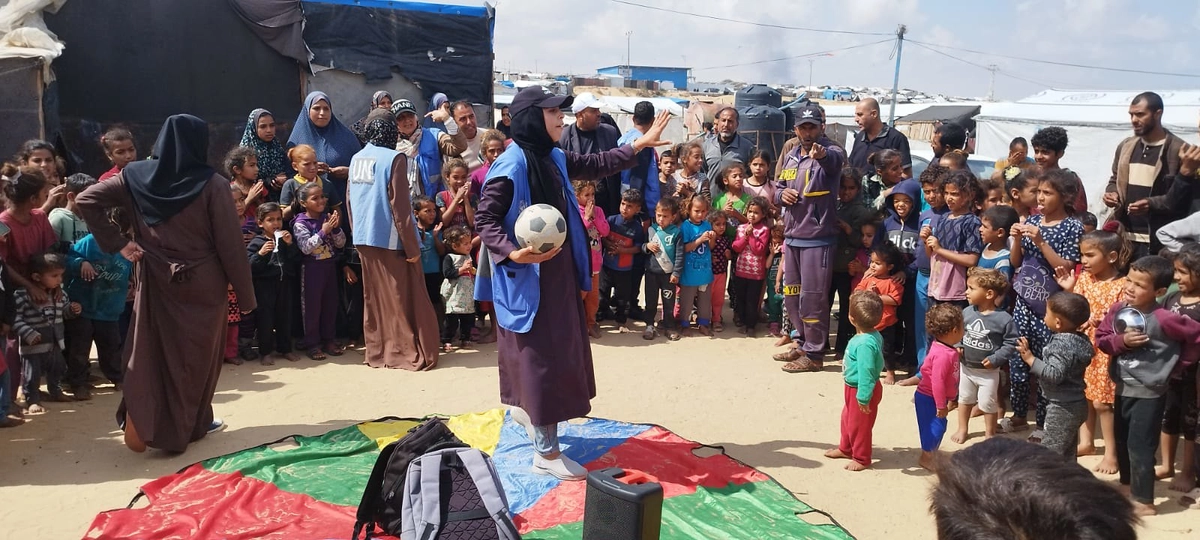
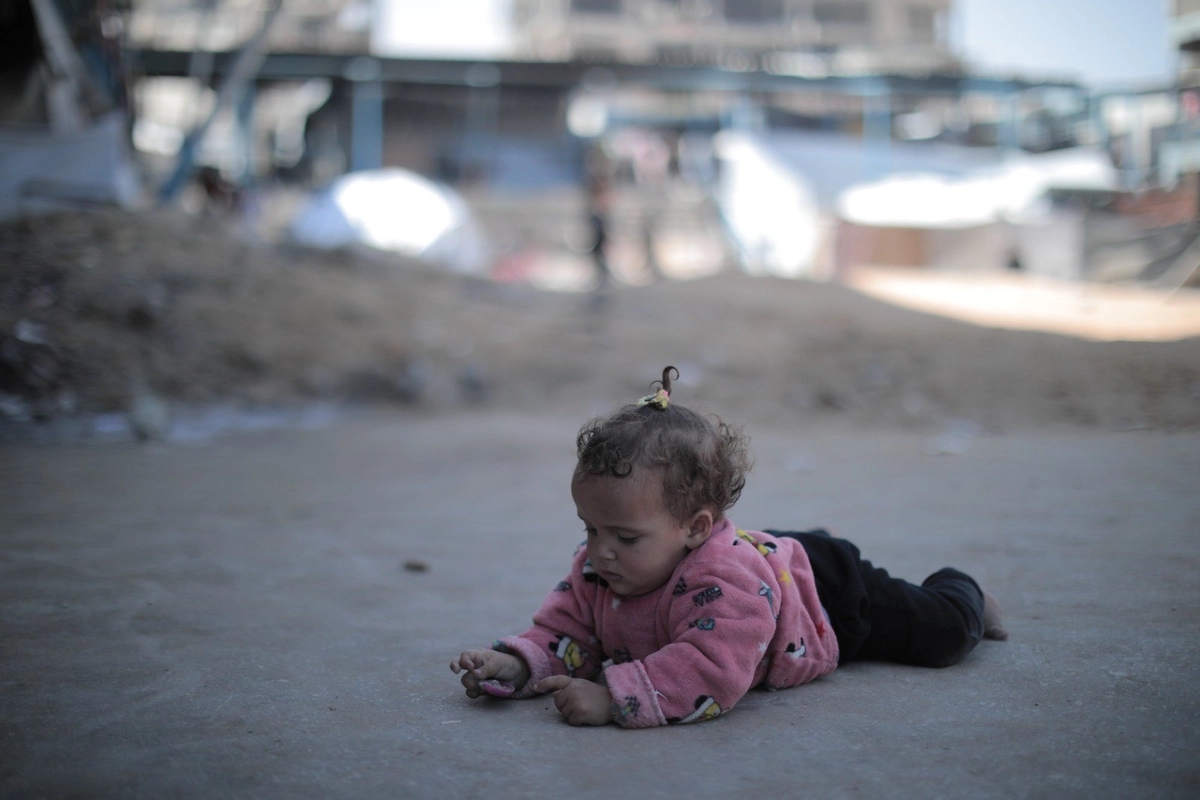
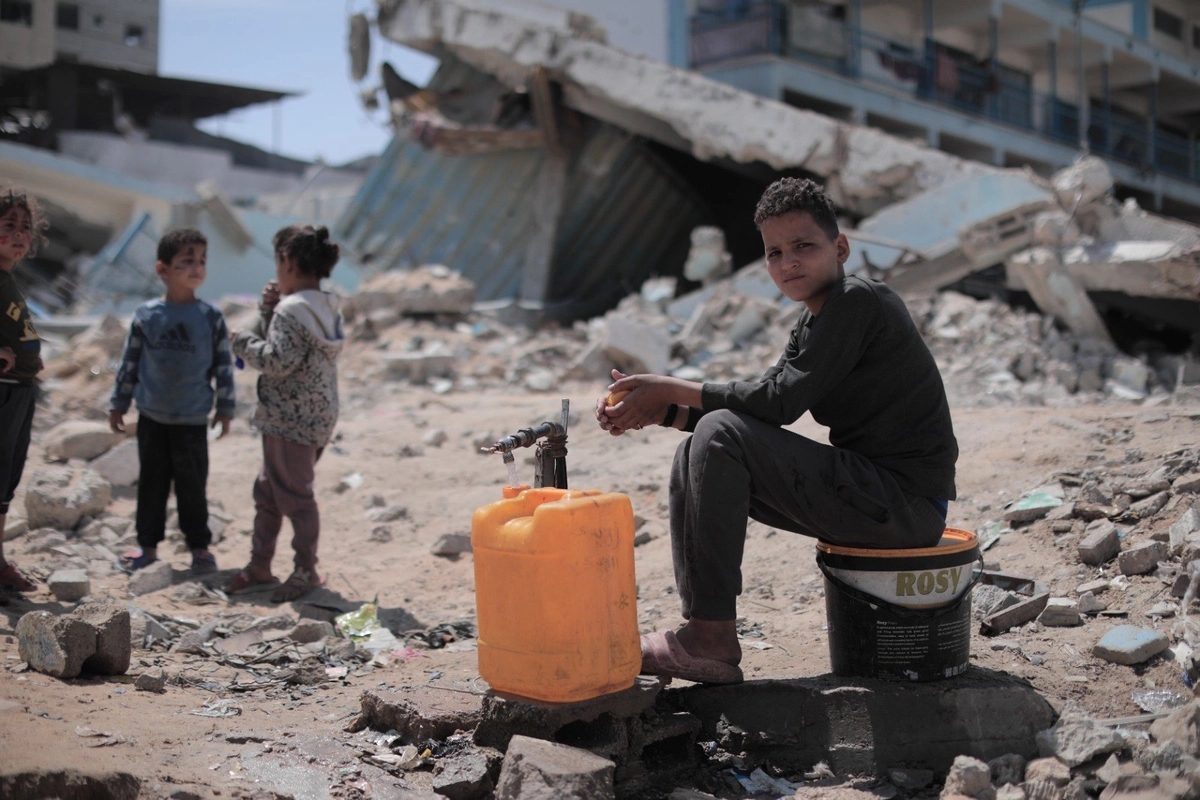
There are almost no schools left, and education has been reduced to a minimum. There are volunteers who agree to teach children. Sometimes organizations set up one or two tents and arrange for several female teachers to work there, so the children can at least receive some education. But there is no functioning education system now.
Where I live, there is neither Hamas nor police. No one thinks about us at all. The world has forgotten us civilians, and so has our own country.
But I continue to follow what is happening here and around the world. We listen to the news and want to know whether the war has ended, whether there has been any progress in peace talks, and whether conditions have emerged that would allow people to return.
The politicians who are supposed to represent us and try to stop the war live in hotels or abroad. They are far away because they do not want to live in the conditions we live in. We never see them. They promise that everything will be fine and stable tomorrow, and the next day you are drinking dirty water again.
“Politicians live in hotels or abroad. They promise that everything will be fine tomorrow, and the next day you are drinking dirty water again”
At the same time, there is no single attitude toward either the politicians or the war among the people who remain here. People are different – just like in Ukraine, America, or any other country. Everyone has their own opinion. There are people on the left and people on the right. I myself am neutral and mostly associate with people who are similarly neutral.
When people are poor and hungry, they argue all day long – including about the war. And everyone is tired of these arguments. Circumstances change people: war, hunger, and a constant sense of hopelessness.
Sometimes there are more explosions, sometimes fewer. You never know what will happen next.
When you come face-to-face with death, it stays with you forever. I came close to dying three times. Once, a house collapsed on top of us, but we managed to get out from under the rubble. I will never forget that.
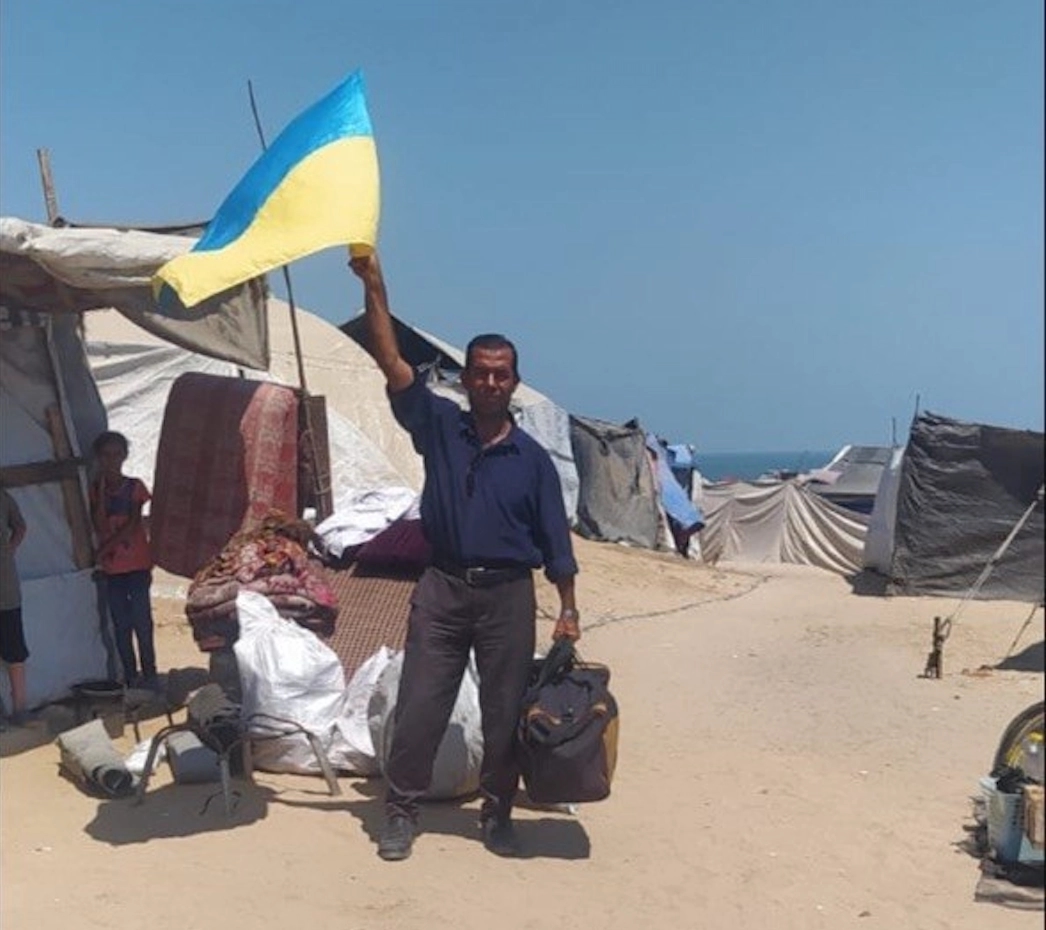
I haven’t seen my family – my wife, children, and grandchildren – for four years! How can anyone live without their family for even a week?! Ukraine is my second home. My wife is from Melitopol, which is now under Russian occupation. After the evacuation, my family ended up in Odesa. I am very grateful to the Ukrainian government for managing to evacuate and save my family. But Odesa was also repeatedly attacked by Russia, and it was very difficult for the children psychologically. About a year and a half later, they moved to Egypt.
We can communicate only via WhatsApp, when we are able to connect at all.
My friend Svetlana, a Ukrainian from Vinnytsia, lives near me in this camp. She is here with her husband and children. They cannot return to their home – it is near the border, and there is constant gunfire there.
Here in Gaza, Svetlana tries to let the children out of the tent as rarely as possible. And not only because she is worried about their safety. Children in the Gaza Strip are now looking for ways to get food and some have started stealing, and Svetlana does not want her children to learn to do that.
Her children often ask her, “Mom, when are they going to come get us? When will we be evacuated? Why haven’t they taken us out yet?” She doesn’t know what to tell them.
There are many Ukrainians here, about 350 people, and they all want to go home. But it seems that Svetlana’s children have already stopped believing that it will ever happen.
We stay in touch with one another, organize demonstrations, and appeal to the Ukrainian authorities, asking them to evacuate us. I hope that Kyiv will take notice of us and want to help us.
We used to read about wars only in history books and never thought that one day we would have to go through one ourselves, especially on such a scale. I have been living in this reality for almost four years now. Every day I wake up hoping that tomorrow I will see my loved ones, my daughters.
I want the same life as any normal person anywhere in the world – I want peace and stability. We want to live without war. We are tired. We deserve a good life. We are ordinary people.
I will soon turn 60. What have I gotten from this war? Nothing but losses.