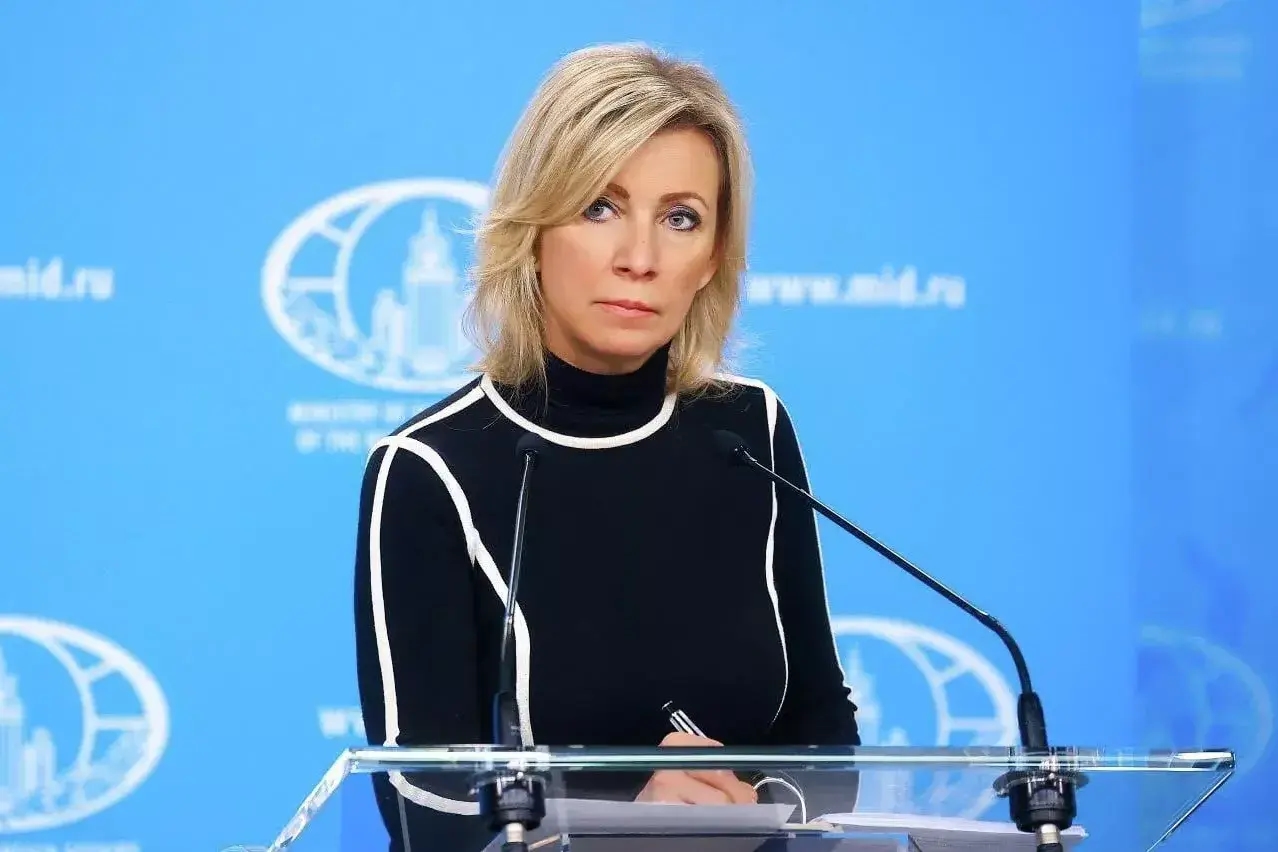
On April 24, Russian state-owned media outlet RIA Novosti reported a statement made at a briefing by Foreign Ministry spokeswoman Maria Zakharova:
“The ban on Latvian schoolchildren communicating with each other in Russian is the policy of the Nazis, who prohibited people from using their language on ethnic or national grounds, said Russian Foreign Ministry spokesperson Maria Zakharova.
Earlier, Riga City Council member Aleksejs Roslikov told RIA Novosti in an interview that schoolchildren in Latvia have been banned from speaking Russian to each other on school premises, even during free time.
‘Nazis. Nazis have always banned people, on ethnic or national grounds, from practicing their culture and history, from using their language, and have restricted all freedoms on national grounds,’ she said during the briefing.
At the same time, the Russian Foreign Ministry spokesperson emphasized that this discriminatory policy is prohibited by the Nuremberg Tribunal and international law.”

The previous day, the former leader of Latvia’s “For Stability!” party, the above-mentioned Aleksejs Roslikovs, indeed told RIA Novosti about a ban on speaking Russian in Latvian schools, even outside of class time:
“Many radically minded Latvian politicians already say that Russian is a language for the kitchen — meaning: talk among yourselves at home. Naturally, several laws have been adopted. For example, students are no longer allowed, even in their free time, to speak any language other than the state language among themselves on school premises.”
However, in reality, no such law exists in Latvia. Roslikovs was apparently prompted to make this statement by a widely discussed 2024 case, when a school in the city of Jurmala adopted internal rules requiring students to speak only Latvian on school premises. In September 2024, the Latvian public media portal LSM+ wrote:
“After the start of the school year, LSM+ learned of de facto bans in compulsory education schools on students using any non-state language for personal communication at school. In at least one case, such a requirement was formally documented — included in the school’s mandatory ‘Internal Regulations’ among other ‘Student Duties.’ In the document, the school is referred to as an ‘Institution,’ and one of the student’s duties is formulated as follows:
‘In the Institution (during lessons and breaks) and at events organized by the Institution (excursions, class evenings, etc.), as well as when representing the school outside it, to use the state language established in the Republic of Latvia — the Latvian language.’
These same rules also provide for various disciplinary measures for failure to fulfill duties, ranging from an oral warning, escalating to a formal reprimand entered into the student’s personal file, and even involvement of the Orphan’s Court (*term in Latvia, a specific municipal institution responsible for guardianship and custody matters, i.e., the child welfare authority).”
The decision by the Jurmala school led to a public debate in Latvia, with senior officials commenting on the matter before the then Minister of Education, Anda Čakša, came out and described the restriction as excessive. The Office of the Ombudsman of Latvia then deemed the ban unlawful. As office representative Ruta Siliņa explained:
“The school has a duty to develop internal rules. But there is a limit; there are areas they are not allowed to regulate, such as private communication between two students. The law does not permit them to interfere in this sphere. The school can only decide on matters it is authorized to regulate, not all matters in the world. For instance, at school, two friends are privately discussing something important to them during a break. They may use whatever language is most convenient for them.”
In an official response to the inquiry from LSM+ the Ombudsman’s Office stated:
“Private communication between students during breaks, before or after lessons, should be left to the students’ own discretion. The school has no grounds to restrict the language of communication in these cases. Students, as private individuals, may do anything that is not prohibited by regulatory acts. External regulations do not restrict the use of languages in private communication between people who wish to communicate in a particular language. Article 2(3) of the State Language Law stipulates that the law does not apply to the use of languages in informal communication among residents of Latvia. Communication between students during a break is informal communication; therefore, during breaks, students must be allowed to speak to each other in the language of their choice, and this issue should not be regulated…
The obligation set out in the school’s internal rules to use the Latvian language even in private communication outside class time is considered excessively restrictive.”
Following the recommendations of the Ombudsman’s Office, the school revised its internal regulations. The story about the ban on the Russian language would have ended there had the fugitive MP Roslikovs not brought it up again over a year later, presenting an internal restriction in an individual school as a Latvian law.
Aleksejs Roslikovs was the leader of a party that primarily relied on the votes of Russian-speaking voters sympathetic to Putin’s regime. In June 2025, while serving as a member of the Latvian parliament (Saeima), he made an obscene gesture from the parliamentary rostrum and had to be removed from the chamber.
Latvia has opened a case against Roslikovs on charges of inciting national and ethnic hatred. The prosecution argues that he deliberately used fabricated claims, portraying the Latvian authorities as hostile toward Russian speakers and suggesting that repressions were being prepared. A court hearing in Roslikovs’s case was scheduled for early April, but in March he received permission from the court to travel to a conference in Switzerland, after which he did not return to Latvia and instead settled in Belarus.