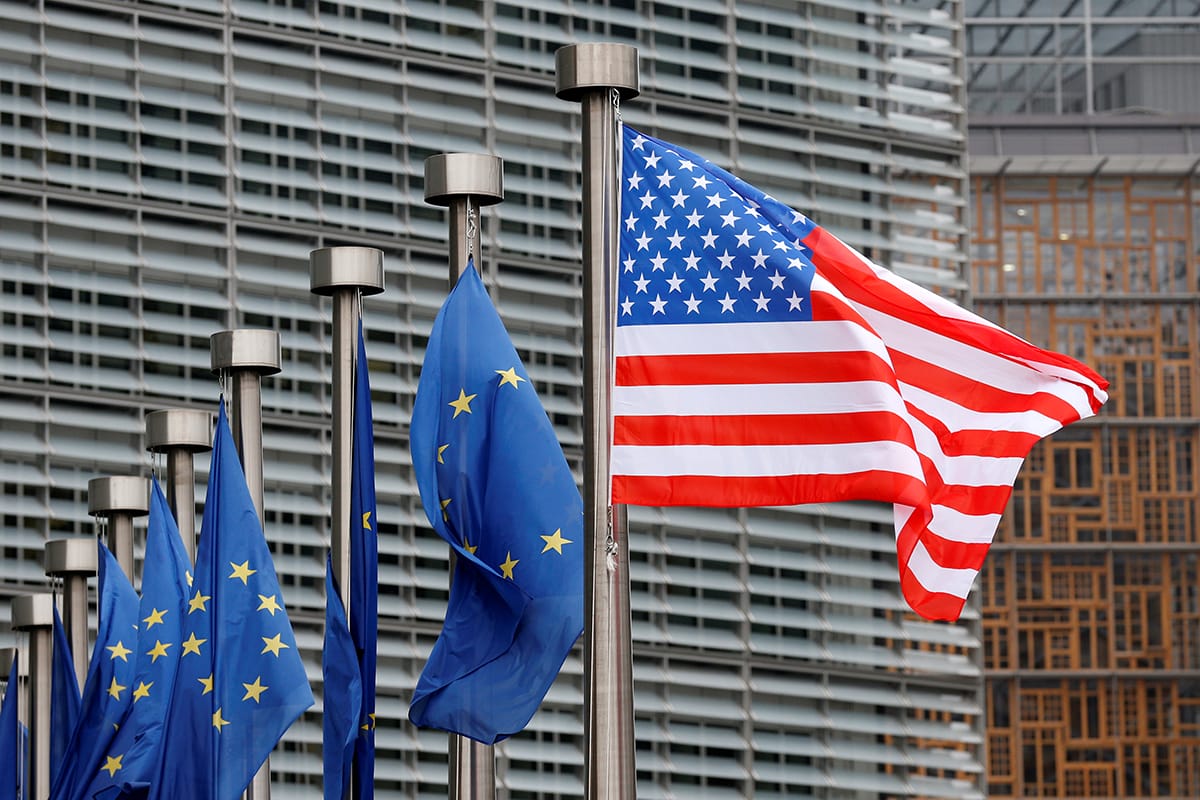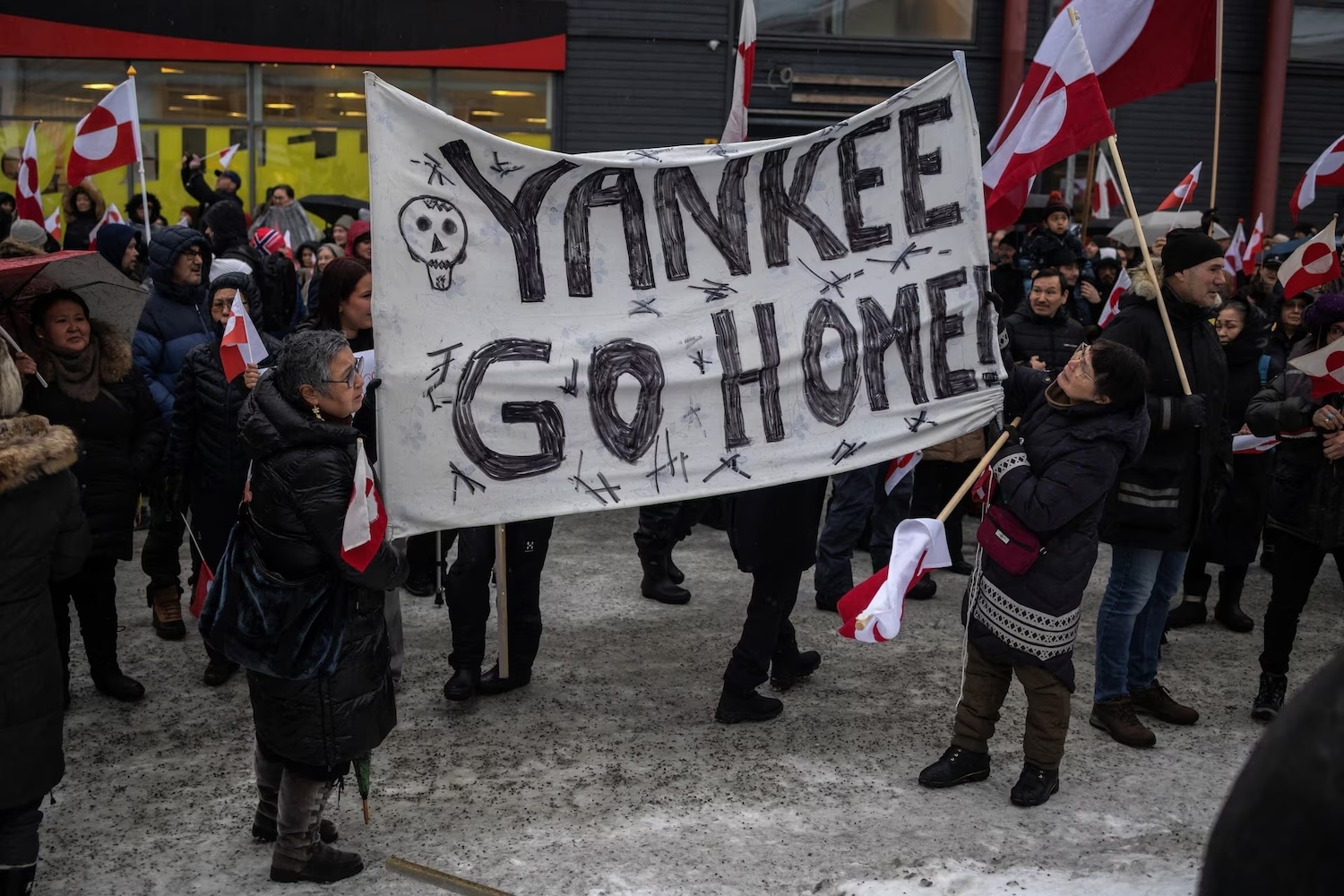

The European Parliament is prepared to freeze a trade agreement with the United States over threats by Donald Trump to seize Greenland, Bloomberg reported on Jan. 18. Trump first raised the idea of “buying” the island — an autonomous territory of Denmark — during his first presidential term. After returning to the White House in 2025, he revived the proposal. Earlier this month, following the capture of Venezuelan President Nicolás Maduro, Trump increased his pressure on Europe, raising the possibility of a military annexation of Greenland. In Washington, officials argue that possession of the island is essential for U.S. defense against Russia and China, and that its location and mineral resources could provide additional advantages. Trump has insisted specifically on U.S. “ownership” of Greenland, saying that leasing arrangements or agreements to station American troops there no longer satisfy the White House. The consequences of the most powerful NATO member seizing territory belonging to a NATO ally could be catastrophic for the alliance, yet Europe has limited options for countering such a move, writes Eliot Wilson, a national security expert with the Coalition for Global Prosperity, a former clerk of the UK House of Commons, and a writer and historian.
Greenland, the largest island in the world, is vast and empty — four-fifths of it covered by ice. On a territory three and a half times the size of Ukraine lives a population of less than 60,000. Greenlanders collectively would take up a modest corner of Maidan Nezalezhnosti in Kyiv.
Those 56,542 inhabitants, almost half of whom live in the capital city of Nuuk, are overwhelmingly Greenlandic Inuit. Most of the remaining 10 per cent are Danish, and all are citizens of Denmark and of the European Union: Greenland is an autonomous territory (rigsdel) of the Kingdom of Denmark, and since 1979 it has had its own government and legislature, which are responsible for most issues except international relations.
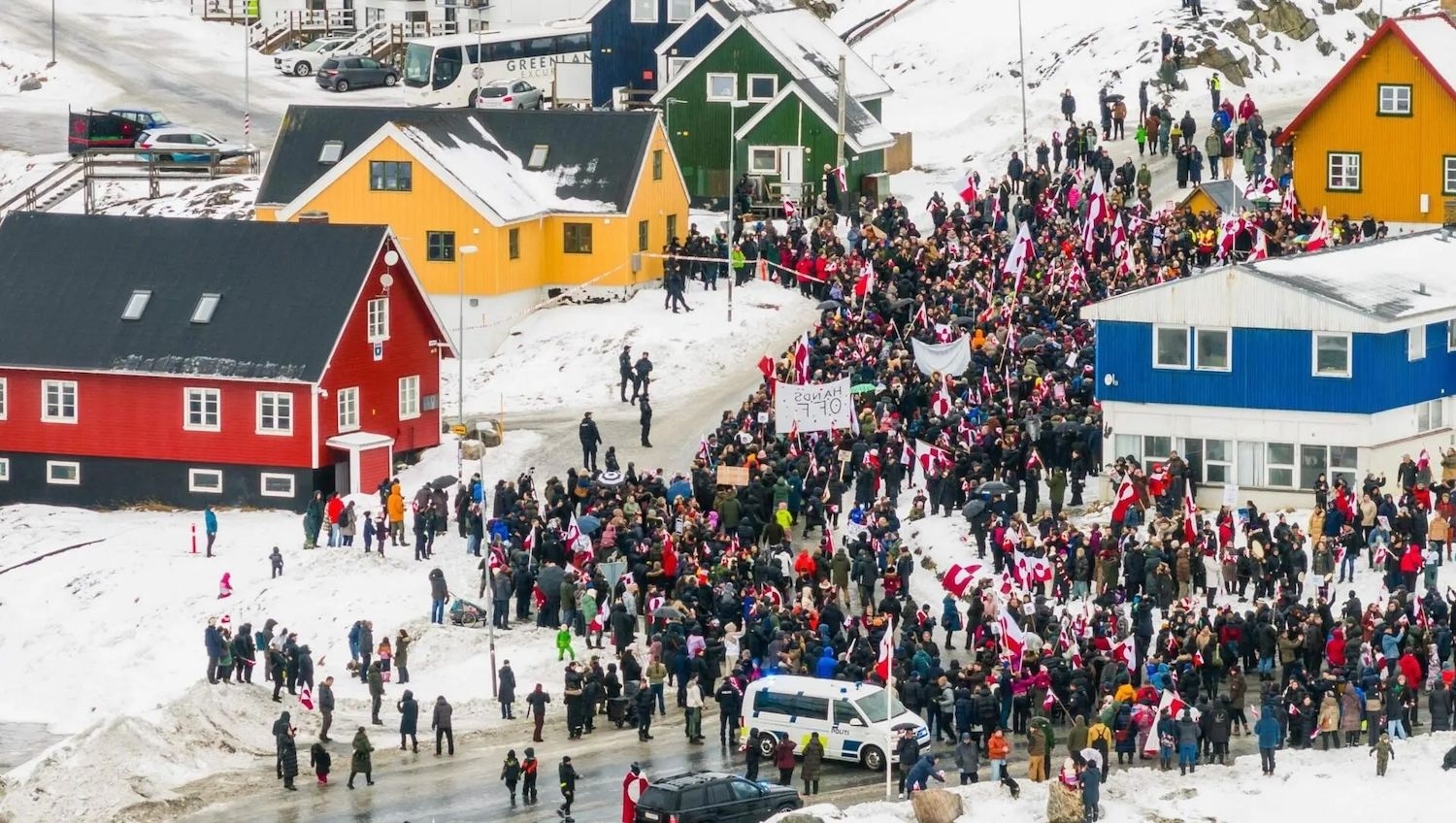
Donald Trump is dissatisfied. He has reached the conclusion not only that the United States should exercise sovereignty over Greenland, but that ownership and control of the island is an “absolute necessity” for America’s national security. In May 2025, he told NBC that “we need Greenland very badly…for international security.” Denmark’s legitimate and centuries-old sovereignty over Greenland is immaterial for Trump, who has framed the issue as a combination of two of his favourite tropes: the leverage of might by a stronger power over a weaker one, and a transactional property deal. He wants and “needs” Greenland, and sees no reason why he should not have it.
Denmark’s sovereignty over Greenland
Nordic sovereignty over Greenland goes back a long way. In AD 978 there was an unsuccessful attempt to colonise it by a small group of Vikings led by Snæbjörn galti Hólmsteinsson. Then in AD 982, the first permanent settlement was established by Norse adventurer Erik the Red, an exile from Iceland.
In 1261, the Norse inhabitants formally accepted the suzerainty of the King of Norway, Håkon IV Håkonsson, for the first time. In 1380, the kingdoms of Norway and Denmark were brought together in a personal union and would remain under the same ruler until the Treaty of Kiel in 1814. When that agreement saw Denmark cede control of Norway to Sweden, Norway’s overseas possessions — Greenland, Iceland and the Faroe Islands — were specifically excluded and continued to belong legally to the Danish crown.
Norway challenged Denmark’s claim at the Permanent Court of International Justice in 1933. The court’s exhaustive judgement rejected the case, declaring that “Denmark possesses an old established sovereignty over all Greenland… [and] has succeeded in establishing…a valid title to the sovereignty over all Greenland.” That remains the legal situation to this day.
Why does Trump need Greenland?
Why is Trump inserting himself into this Viking saga by casting acquisitive eyes at the territory of a NATO ally — and a founding signatory of the North Atlantic Treaty at that? There are at least three reasons: Greenland’s strategic position, its potential exploitation by adversaries, and the lure of mineral wealth.
Greenland’s location, north-east of Canada and mostly above the Arctic Circle, made it a valuable stepping stone across the Atlantic Ocean during the Second World War. In April 1940, after Germany occupied Denmark, Greenland became a de facto American protectorate under the Defense of Greenland Agreement. Thousands of U.S. troops were deployed to the island, and many remained after the conflict under a new Greenland Defense Agreement, signed in 1951, which also authorised the construction of Thule Air Force Base (now Pituffik Space Base, the most northerly U.S. military installation on the planet).
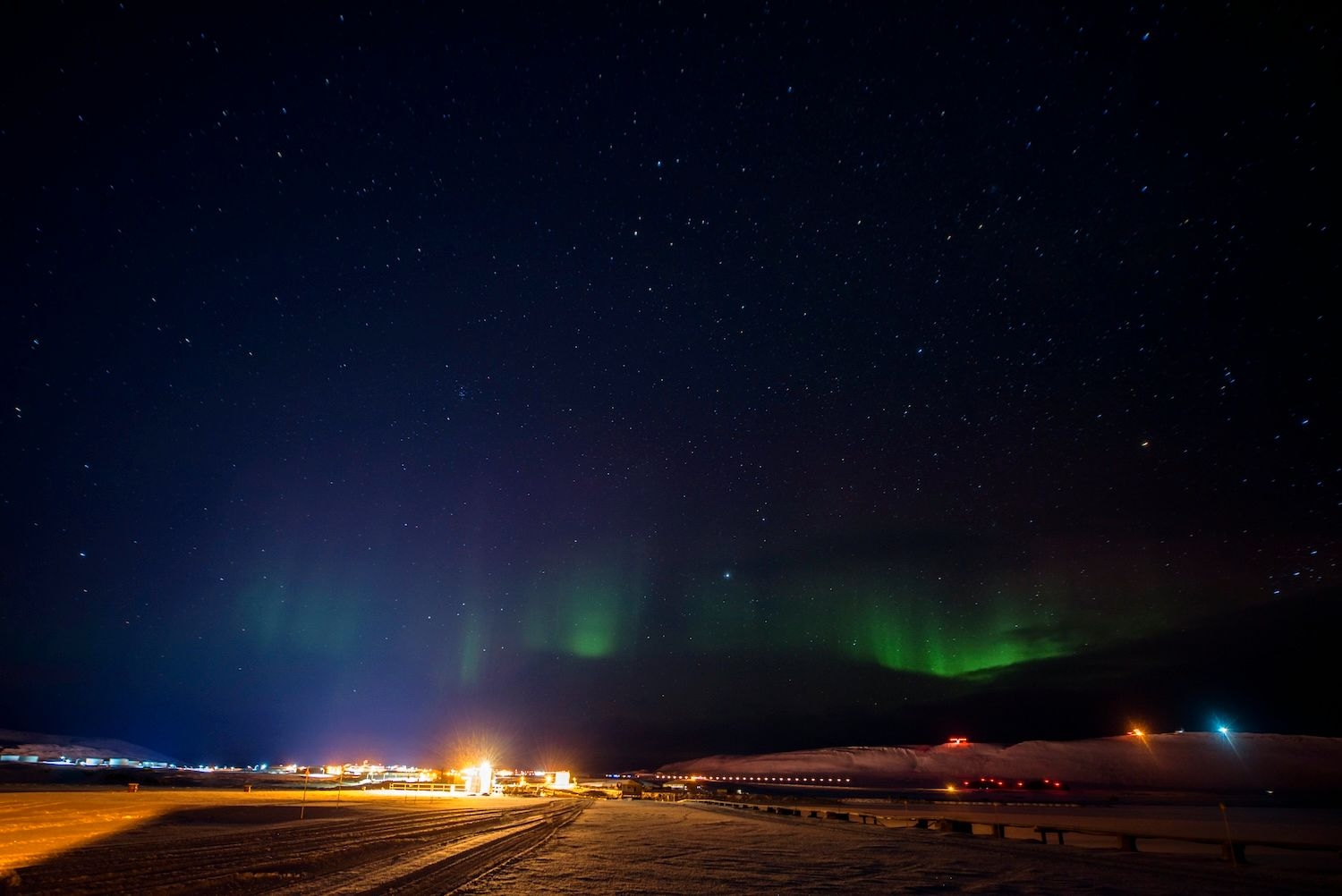
During the Cold War, Greenland was a convenient base for U.S. Strategic Air Command, offering the possibility of striking at the Soviet Union across the North Pole. The Americans also based anti-ballistic missile defence and early-warning radar installations there to protect against Soviet nuclear attack.
Climate change has seen the Greenland Ice Sheet shrink consistently year-on-year since 1996, presenting the prospect of new shipping lanes opening up while also heightening tensions in the High North between the United States, Canada, Russia, and China. Russia’s Leningrad Military District, established in February 2024 ostensibly in response to NATO’s enlargement to include Sweden and Finland, includes the Russian Navy’s sizable Northern Fleet, based at Severomorsk. Trump is paranoid about being outmanoeuvred and overmatched in the Arctic.
Trump is paranoid about being outmanoeuvred and overmatched in the Arctic.
The potential for extracting rare earth minerals in Greenland is contested. Access to these materials is an acute concern to governments across the world because of their scarcity and the critical part they play in a range of technologically sophisticated products. Trump forced Ukraine to conclude an agreement in April 2025 giving the United States rights over mineral extraction.
Tanbreez, a mining project in Greenland named for the tantalum, niobium, and zirconium which are present, might seem to offer another “deal” for Trump to secure U.S. supply chains. But there are questions over how easily and profitably the minerals can be extracted given Greenland’s harsh conditions and sparse infrastructure.
Ownership, not a lease
The 1951 Greenland Defense Agreement gave the United States considerable latitude in deploying military forces, and Washington retains jurisdiction over defense areas at Thule, Sondrestrom, and Narsarsuaq, along with the ability to establish new facilities if deemed necessary by NATO. The 1951 pact was amended by the Igaliku Agreement in 2004, which authorised the upgrading of radar facilities at Thule AFB and required the U.S. to “consult with and inform” the governments of Greenland and Denmark about future developments. The update did not equate to a Danish veto.
Nevertheless, there is a valid concern that Denmark’s military capabilities are inadequate to protect Greenland and there is anxiety that Russia or China could try to establish influence in the region. The Greenland-Iceland-United Kingdom (GIUK) Gap is a weak point in America’s maritime defenses, and Washington argues that, in order to ensure adequate surveillance and air defence, it needs more direct access and authority. A 2022 paper from RAND proposed that Greenland be integrated into the North American Aerospace Defense Command (NORAD).
Instead, Trump has become fixated on “ownership” of Greenland, taking the stance that any kind of negotiated lease or access is inadequate. Trump recently told a reporter, “Countries have to have ownership and you defend ownership, you don't defend leases. And we’ll have to defend Greenland.” And he previously warned:
“We need Greenland from the standpoint of national security. Right now, Greenland is covered with Russian and Chinese ships all over the place.”
Hemispheric thinking
The idea of the “acquisition” of Greenland, to use the term recently chosen by the White House, is not an isolated quirk of Trumpian foreign policy. The current administration conceives of America’s national security in hemispherical terms that are deeply influenced by the Monroe Doctrine (in his 1823 State of the Union address, President James Monroe defined the Western Hemisphere of the Americas as a separate sphere of influence in which the United States had a right and a need to be dominant). Consequently, any interference from other powers, which for Monroe meant European nations but now extends to Russia and China, was regarded as a provocation.
America’s new National Security Strategy, published last November, states that “the United States will reassert and enforce the Monroe Doctrine to restore American preeminence in the Western Hemisphere.” It also introduced a so-called “Trump Corollary” that aspires to “deny non-Hemispheric competitors the ability to position forces or other threatening capabilities, or to own or control strategically vital assets, in our Hemisphere.”
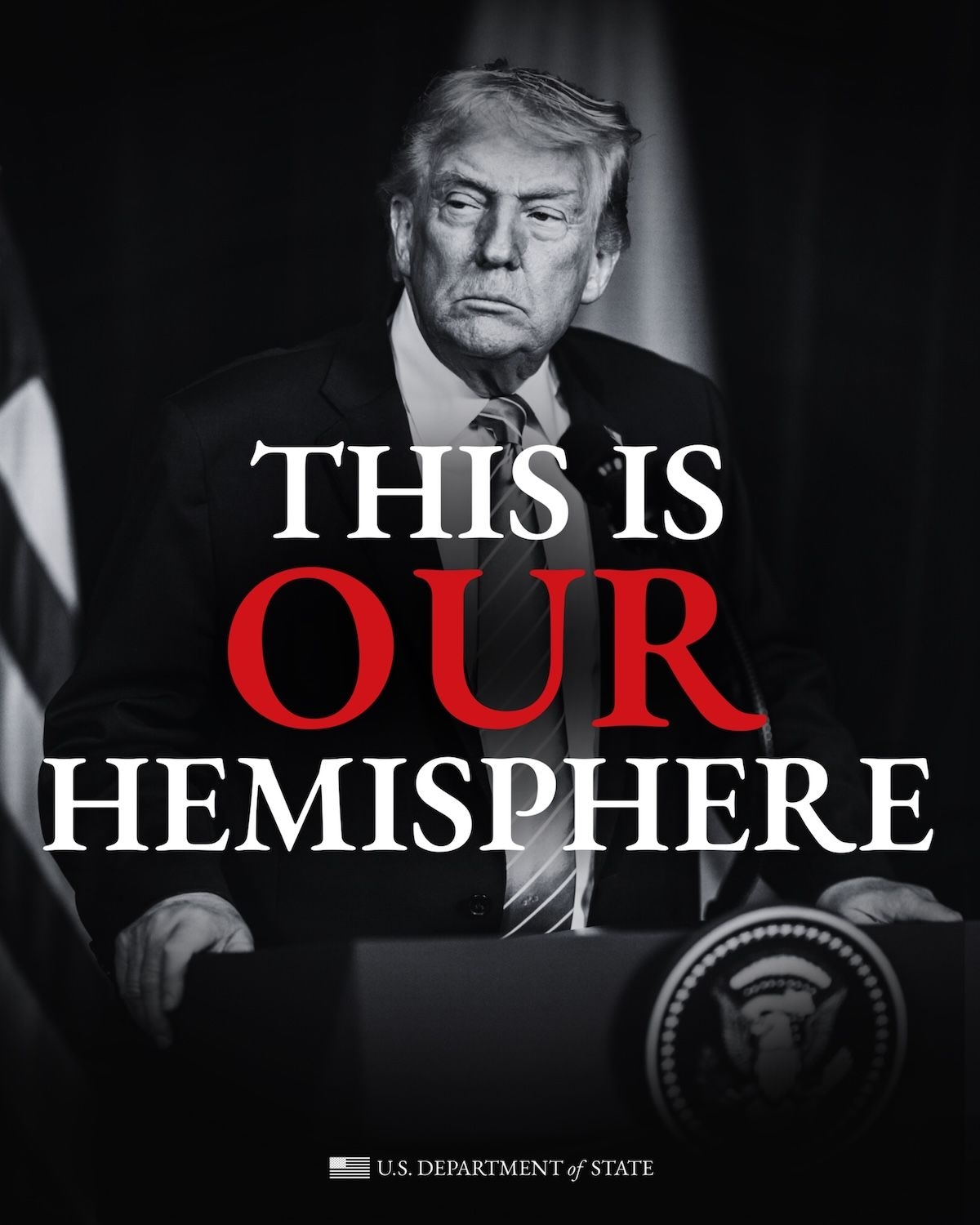
The revived Monroe Doctrine applies widely. From the time of his re-election in November 2024, Trump made clear his intention to impose tariffs on imports from Canada as part of his mystical belief that such a policy would catalyze economic prosperity. He and those around him began to speak more openly of seeing Canada being absorbed as “the 51st state,” and in a social media post the then-president-elect referred to then-Prime Minister as “Governor Justin Trudeau of the Great State of Canada.”
Around the same time, in an interview with NBC, Trump claimed erroneously that the United States was “subsidizing” Canada and Mexico. “If we’re going to subsidize them,” he argued, “let them become a state. We’re subsidizing Mexico and we’re subsidizing Canada.”
Since then, the president has been emboldened by the dramatic operation against Venezuela. On Jan. 11, he told The New York Times that there was only one factor which restricted his freedom of action in geopolitics:
“My own morality. My own mind. It’s the only thing that can stop me, and that’s very good… I don’t need international law. I’m not looking to hurt people… We have to keep the United States safe. We have to keep parts of the world safe that we feel responsible for.”
He returned to the importance — to him — of Greenland becoming a possession of the United States:
“Really it is, to me, it’s ownership. Ownership is very important… Because that’s what I feel is psychologically needed for success. I think that ownership gives you a thing that you can’t do, whether you’re talking about a lease or a treaty. Ownership gives you things and elements that you can’t get from just signing a document, that you can have a base.”
It may be that the President’s aggressive tone and his refusal to rule out military action to take possession of Greenland is a negotiating tactic. But Trump is not a planner or a thoughtful strategist; he is a reflexive, instinctive gambler, and he is currently flushed with the success of Venezuela.
Might makes right?
No-one can predict what Trump will do next, because he does not yet know. Denmark has been clear and consistent that Greenland is not for sale, but it is hard to imagine Trump shrugging off a defeat and moving on. He is currently fixated with the necessity of outright ownership and seems undeterred by the warnings of European allies. Talks with Denmark and Greenland have foundered, and it would be foolish to rule out annexation by force.
What would America taking Greenland by force actually mean? Greenland has no armed forces, while the Danish Defence numbers only 20,000 and has no meaningful presence on the island. In reality, the United States would likely increase its military strength and assume some executive and security functions, while strongly worded protests were issued by European states. It would probably be a fait accompli, with armed combat unlikely.
Denmark’s European allies are taking no chances, however. Denmark itself has deployed additional land, air, and maritime assets to Greenland, supposedly as part of an exercise called Operation Arctic Endurance. These are being joined by Swedish, Dutch, Canadian, and German troops. French President Emmanuel Macron has also announced that he is sending units from all three armed services to participate in the exercise, and they could be joined by military personnel from the UK and Norway.
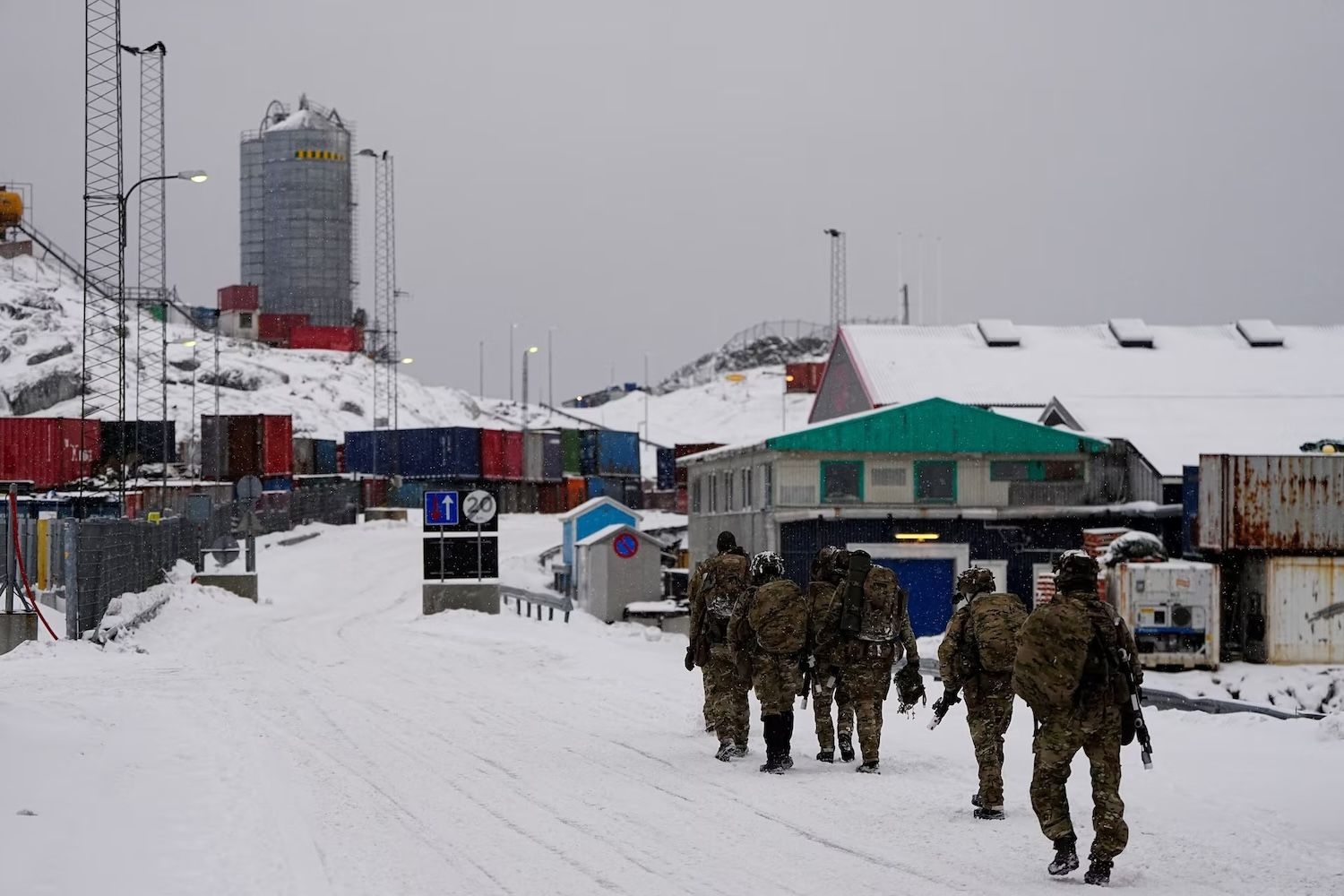
The White House has shrugged off these actions. Press Secretary Karoline Leavitt told reporters, “I don’t think troops in Europe impact the president’s decision-making process, nor does it impact his goal of the acquisition of Greenland at all.” Certainly, if deterrence failed and Trump was willing to undertake a shooting war with his supposed allies, then European powers would be unable to deploy forces in sufficient strength to prevail against the United States.
At the same time, there are limited options available to Europe. There is no mileage in appealing to the better angels of Trump’s nature, and it could prove difficult to persuade him to accept anything less than full sovereignty over Greenland as a solution to his self-identified strategic priority. The President has now discussed “ownership” so often that it seems to have become a familiar part of his mental landscape.
The damage done to international relations and to NATO even by a bloodless takeover, let alone a full-scale armed invasion of Greenland, would be seismic. The alliance is not designed to manage a conflict between two member states, and Article 5 of the North Atlantic Treaty, which states that “an armed attack against one or more of them in Europe or North America shall be considered an attack against them all,” would be a dead letter — an expression of nonsense.
NATO is not designed to manage a conflict between two member states.
Even according to Trump’s “own morality” and “own mind,” the United States has no legitimate claim to Greenland. Whatever the President may see when he looks at maps, proximity does not win him the hand either, as Greenland is significantly closer to Denmark than it is to America. The Monroe Doctrine — now self-aggrandisingly rebranded “the Donroe Doctrine” — is a unilateral U.S. policy with no legal standing. In short, if it were to happen the annexation of Greenland would be a clear and unmistakable demonstration that “might makes right.”
Looking around the world — at Ukraine and Taiwan, and the Baltic states and Gaza and Sudan — this would be vindication of the variously attributed observation that “God is always on the side of the big battalions.” It would mark a fearful precedent and embolden Vladimir Putin in his quest to destroy Ukraine. But very few have mastered the art of successfully influencing Donald Trump when his mind appears set on something.