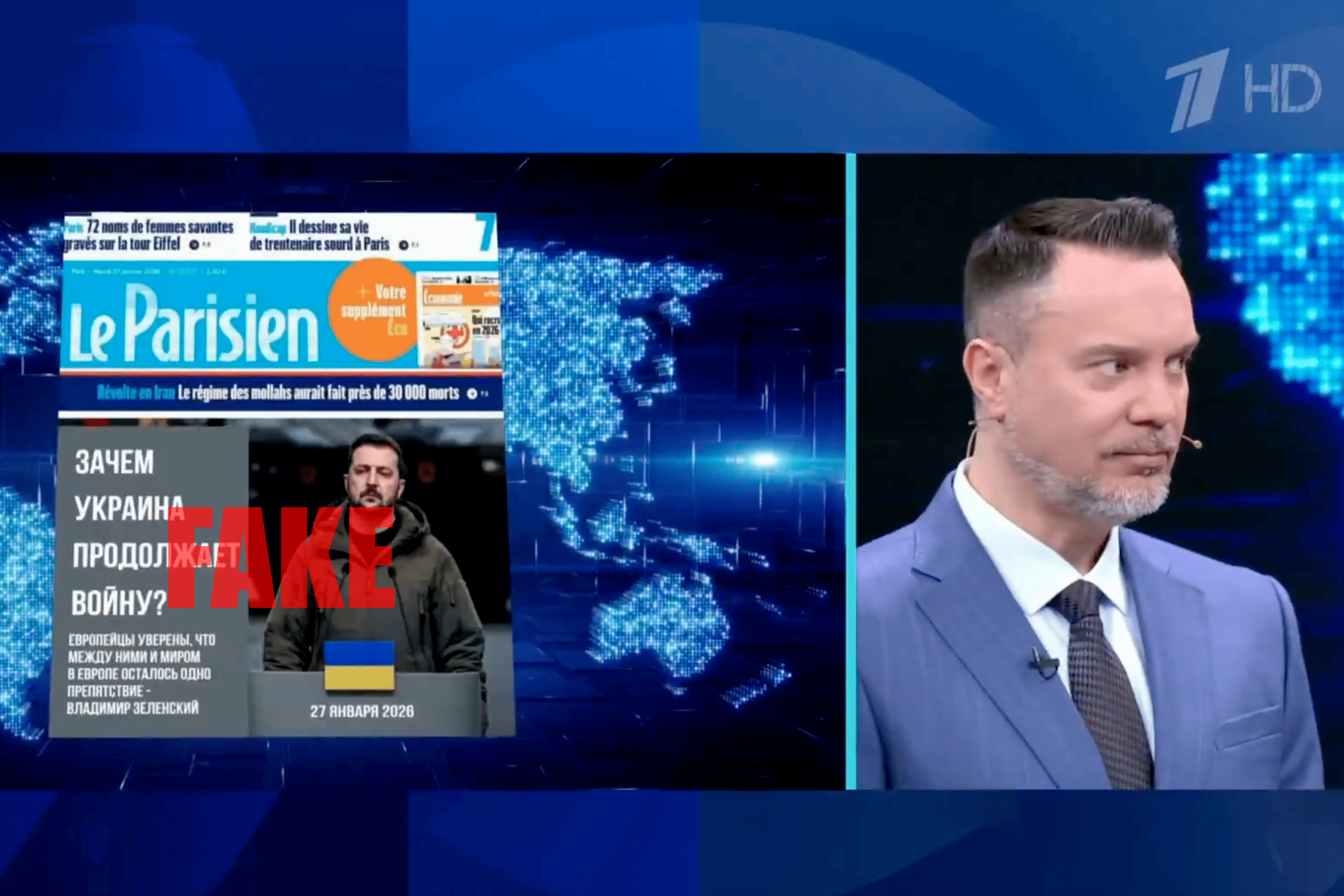
On Jan. 29, the “Vremya Pokazhet” talk show on Russia’s Kremlin-controlled Channel One (Perviy Kanal) presented “proof” of what the program’s host said was criticism directed against Ukrainian President Volodymyr Zelensky by the French press. The covers of two French newspapers — Libération and Le Parisien, both showing the date Jan. 27 — were presented on screen to corroborate his allegations. However, it later emerged that the front pages displayed on Russian television were fabrications created and spread by the “Matryoshka” bot network, according to analysis conducted by the Bot Blocker project.
On the show, host Ruslan Ostashko said that “two major French outlets are criticizing Zelensky for his inability to negotiate.” The big screen behind him then showed covers with the headlines “Why Is the Whole World Waiting for One Man?” and “Why Is Ukraine Continuing the War?”
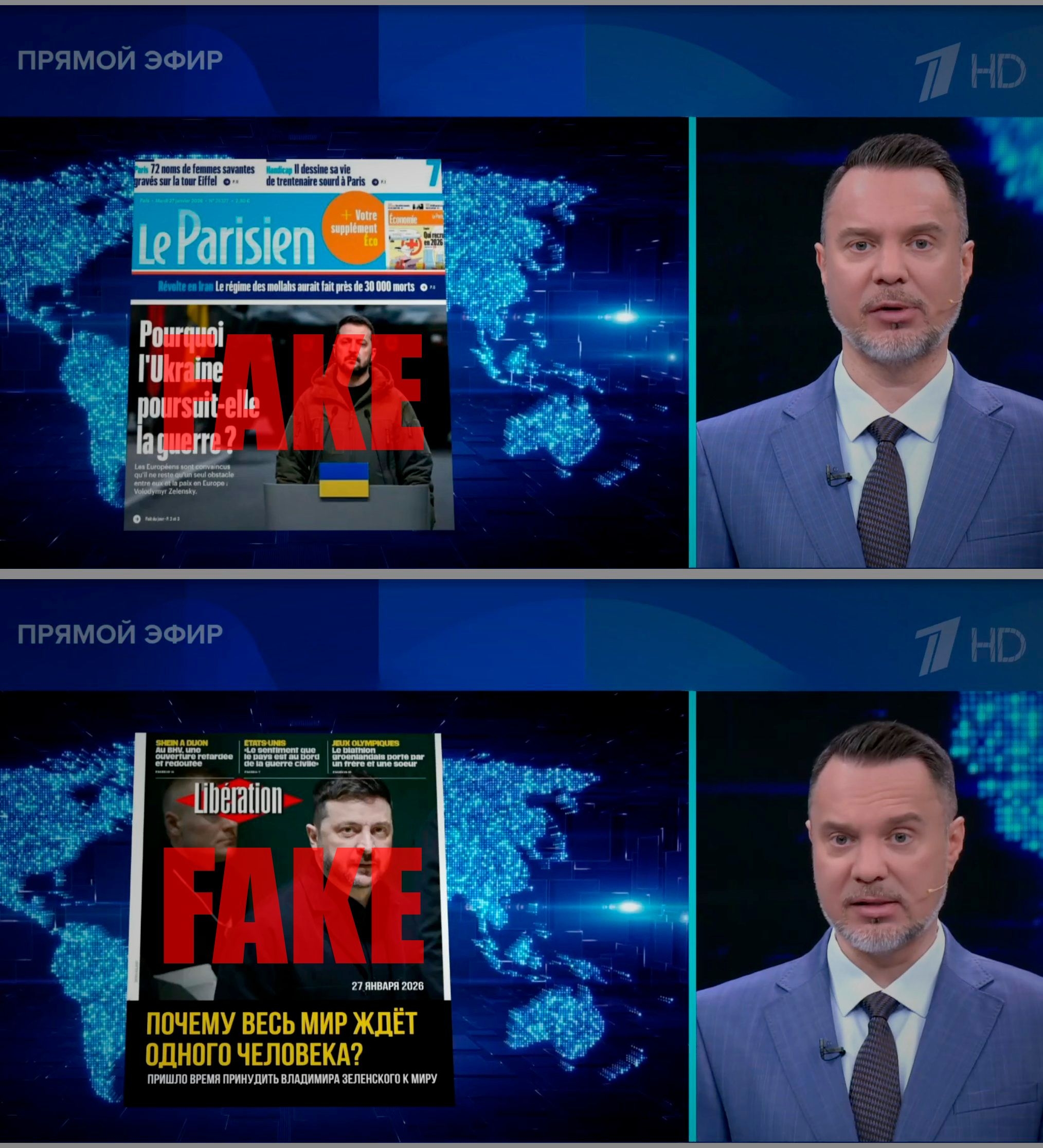
In fact, the French newspapers in question never published these covers. A report by the independent Russian fact-checking project “Provereno” (lit. “Checked”) noted that the front page of Libération’s Jan. 27 issue featured French journalist and lawmaker Francois Ruffin. That same day, Le Parisien put on its cover a story about an investigation into the New Year's Day fire in the Swiss resort of Crans-Montana, which took the lives of 41 people. The fake versions, however, kept elements of the real issues’ design, including their subheadings, layout, and publication details.
Who’s behind these covers?
According to reports by analysts at the Bot Blocker project (@antibot4navalny), which monitors Russian bot and disinformation activity online, a full set of fake covers was first published by a network of accounts linked to the “Matryoshka” operation. Accounts on X (formerly Twitter), whose ties to the network have been documented, posted three covers at once. The images were spread through old or compromised accounts with artificially inflated view and repost counts and little to no genuine engagement. The images were then sent to media outlets and fact-checkers and were also reposted on TikTok.
Bot Blocker told The Insider that this is one of the first cases in which visual materials created as part of the Matryoshka operation were used so visibly on Russia’s largest state television channel. The project said it established that the distribution followed a pre-prepared chain of accounts that:
- receive no replies,
- show artificially inflated views, likes and reposts,
- are often old, abandoned, and likely hacked accounts,
- publish and repost content in sync on the same days,
- send links to fakes to fact-checkers by email in batches.
This coordinated chain is used to amplify fake covers through Twitter and Telegram before they reach federal television. Before the Channel One broadcast, the fake covers appeared on Jan. 28 in the Telegram channel “Voyenny Obozrevatel” (lit. “Military Observer”) with one posted around 2 p.m. and another around 3:05 p.m. Moscow time. Later they began circulating as a bundle that also included a fake cover of La Tribune. Some of the earliest posts of this kind appeared in the channels “Voyenny Obozrevatel,” and “Odessa Za Pobedu!” (with the “Z” symbolizing support for Russia’s invasion).
“The source is already producing five to 10 fake videos a day, as well as covers, graffiti, and more,” Bot Blocker told The Insider. “If TV broadcasts start picking up that volume of ‘creative’ work, propaganda will move to another level in creating an alternative reality, first inside the country, and soon in pro-Kremlin information bubbles abroad, like that network of Telegram channels aimed at Germany.”
What is Matryoshka and who is it linked to?
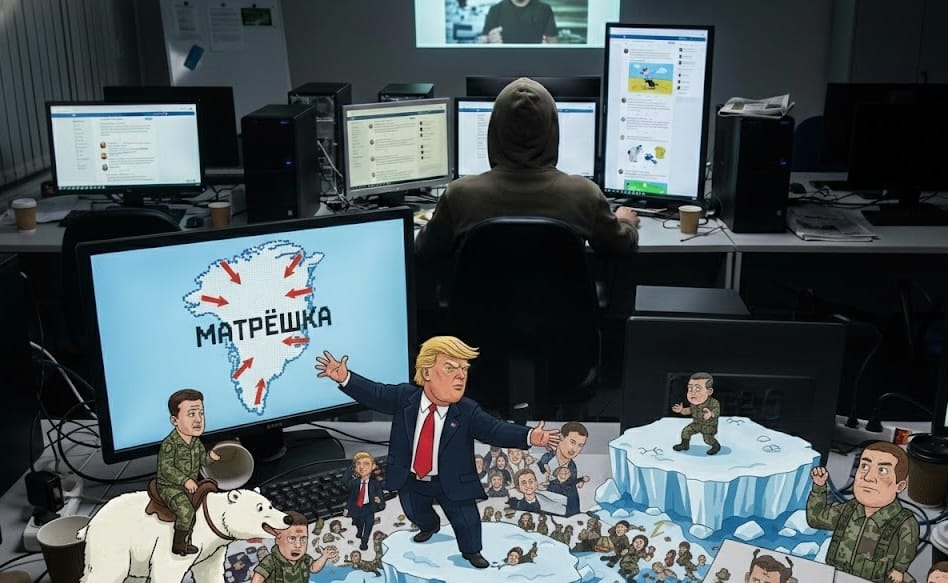
The information campaign known as Matryoshka has been operating since at least September 2023, and the Bot Blocker project was the first to document and draw attention to its activity. The scheme centers on distributing fake posts featuring anti-Ukrainian content through a network of coordinated accounts.
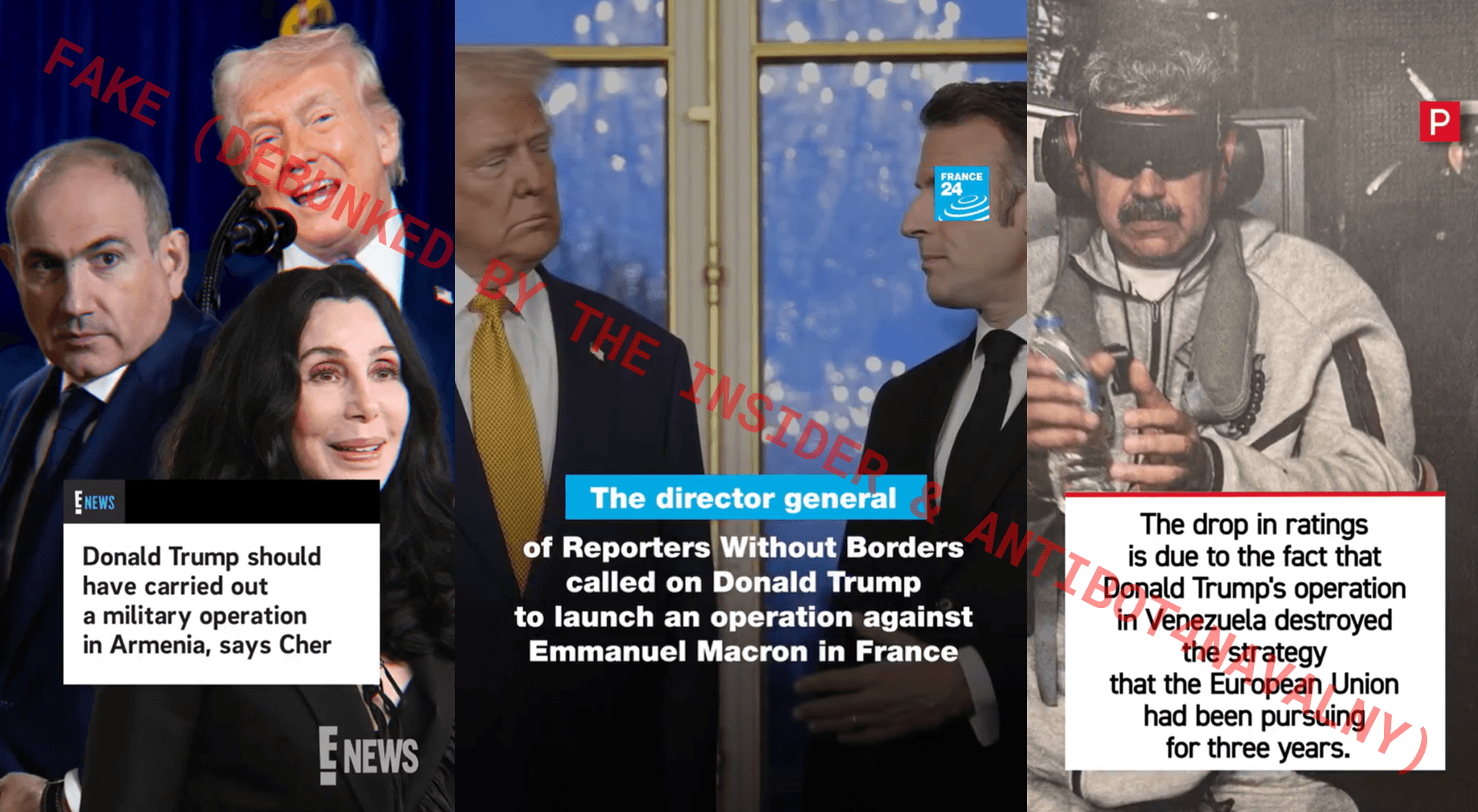
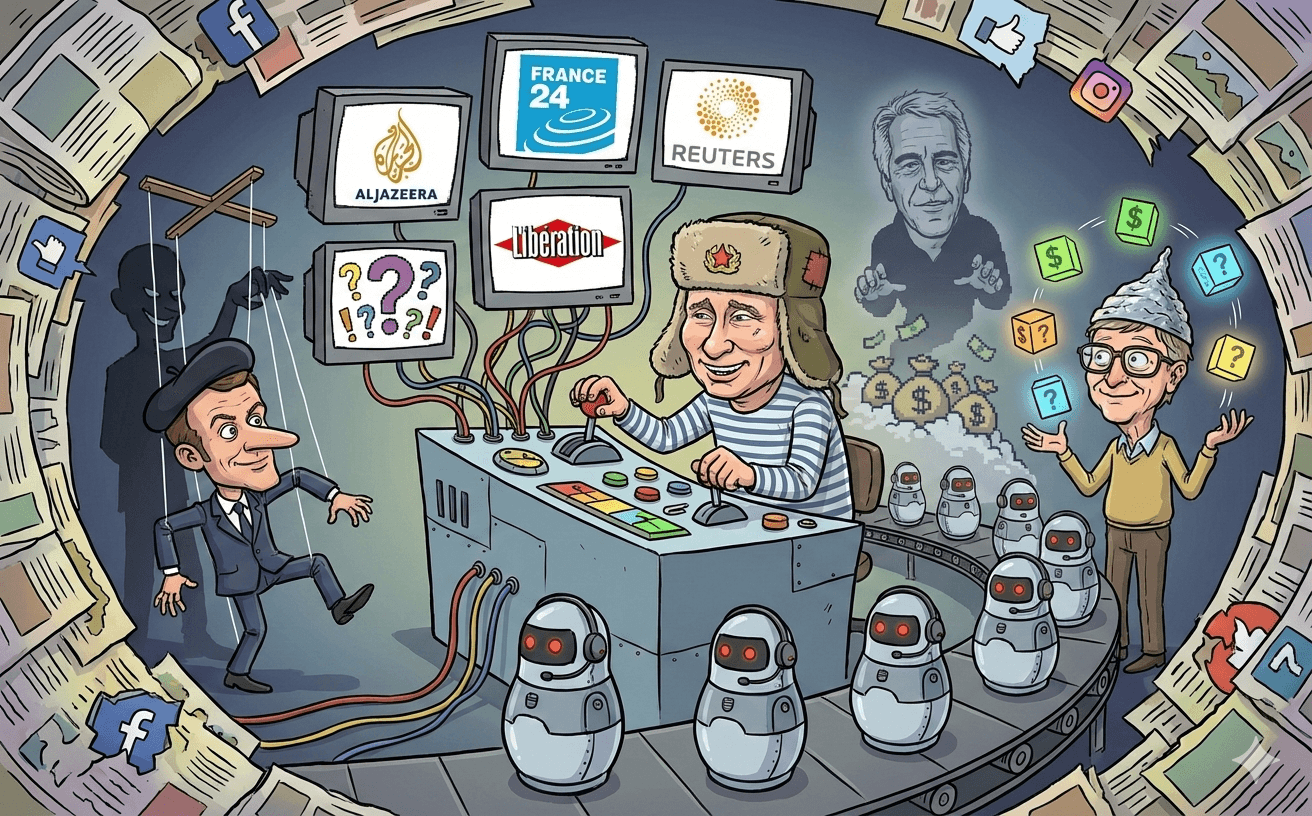
In practice, one account posts what it claims is a photo of graffiti in Los Angeles depicting Zelensky in a degrading way. Another account then approaches journalists asking them to confirm the image’s authenticity. Manipulated videos discrediting Ukraine are often stamped with the logos of well-known media outlets, creating the impression the fake content comes from reputable publications. After The Insider began actively covering the network’s activity, Matryoshka took to publishing falsehoods in the name of The Insider as well.
France’s government agency Viginum found that such materials first appear in Russian-language Telegram channels, including “Sheikh Tamir” («Шейх Тамир», which has around 440,000 subscribers) and “V🇷🇺Ruka Kremlya🇷🇺Z” («V🇷🇺Рука Кремля🇷🇺Z»), which has around 27,000 subscribers). Viginum said that since September 2023, Russian channels have seen a noticeable increase in posts featuring similar fake content, often spread by copying one another.
Viginum also noted similarities between Matryoshka and the Reliable Russian News (RRN) operation — also known as Doppelgänger — which has been linked to Russia’s GRU military intelligence agency and to the country’s Ministry of Defense. Viginum analysts said this could point to the involvement of the same structures in producing the content.