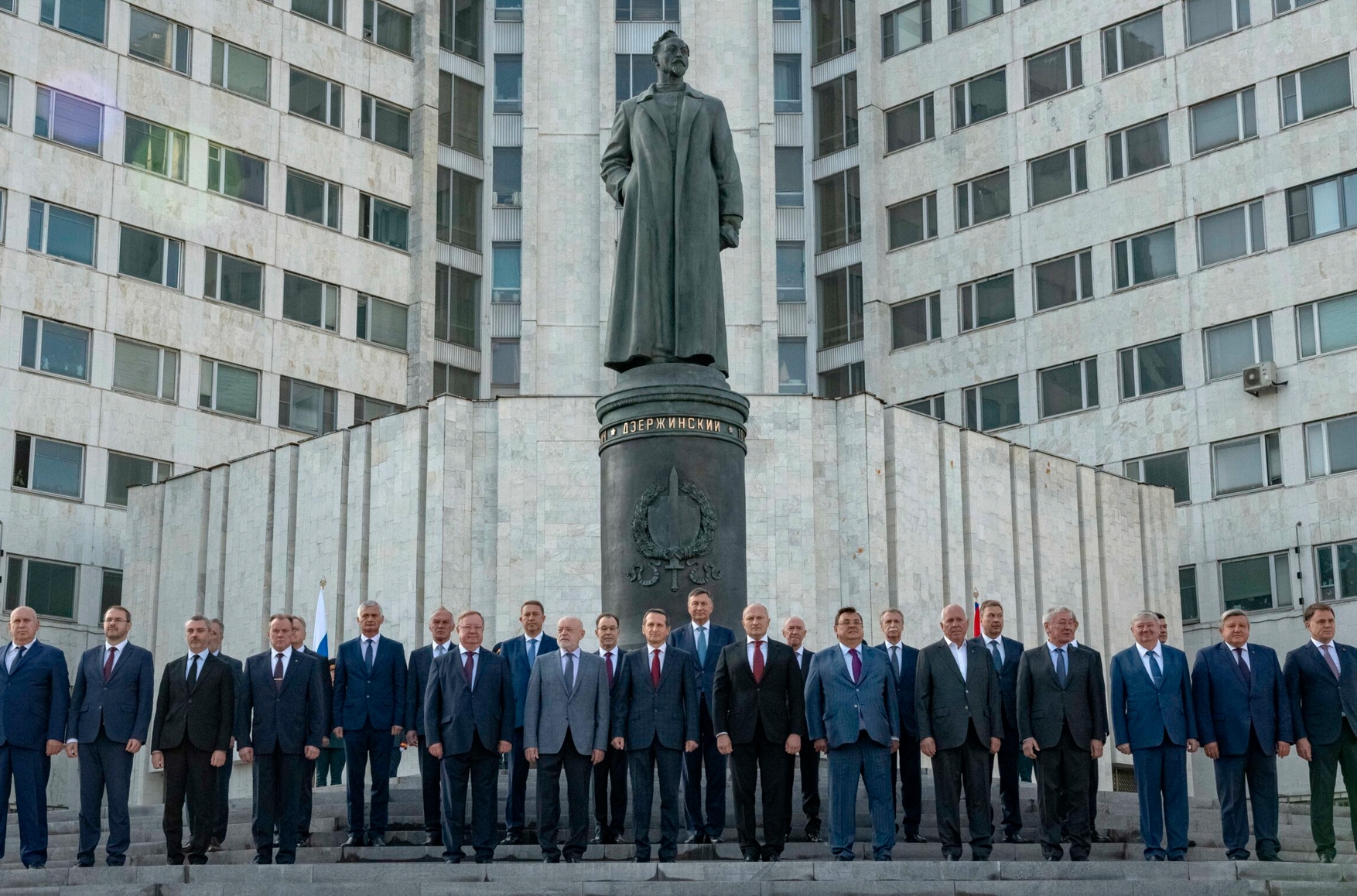
After the start of Russia’s full-scale invasion of Ukraine, Western countries expelled large numbers of Russian diplomats, most of whom were in fact career spies. Some were reassigned to other countries or to state corporations, but for most of the more than 700 operatives who were declared persona non grata, no suitable openings were found. With competition intensifying, disgruntled spies have begun filing denunciations against their more fortunate colleagues. The Insider examined several anonymous letters sent to the head of the SVR, Sergei Naryshkin, and to the Russian Presidential Administration.
“He demands a bottle from every trip”
In the spring of 2025, Ukrainian intelligence installed several hidden cameras facing the headquarters of the Russian Foreign Intelligence Service (SVR) in Moscow’s Yasenevo district, as well as at the entrance to the SVR academy in Mytishchi just outside the capital. The cameras captured vehicles belonging to classified SVR officers, doctors, and academy instructors, along with construction contractors performing various jobs for the intelligence service.
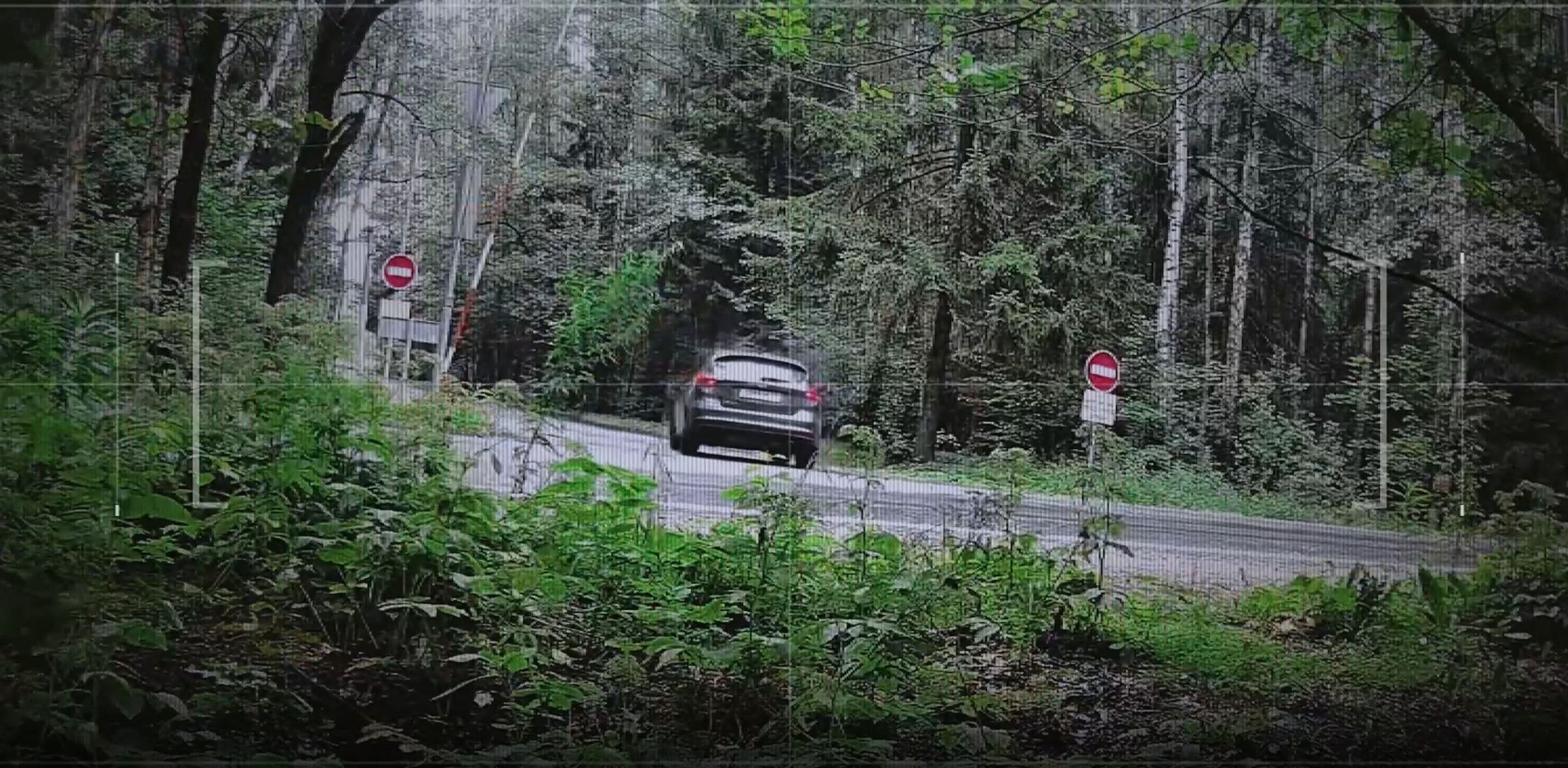
The spy video was posted on the website of the Russian Volunteer Corps (RDK) — a military organization largely composed of Russian nationals fighting on the side of Ukraine — accompanied by the comment: “On closer inspection, the SVR turns out to be as rotten an outfit as the rest of Russia’s structures. We obtained not only personal data of ‘specially protected staff’ but also internal documents that reveal what kind of order reigns there.”
After the “film premiere,” a major scandal erupted within the SVR. For several days, staff from the service’s internal security center and the FSB’s military counterintelligence directorate searched the area, questioning residents of nearby houses and even bringing in dog handlers to comb the forest around the academy. But they failed to locate the cameras.
Alongside the vehicles of intelligence officers, the footage included several documents marked “top secret,” as well as an anonymous hacked email taken from the account of the SVR press office and addressed to Sergei Naryshkin. In the letter, a self-described “well-wisher” claims that Herman Bykov, deputy head of the illegal intelligence directorate (military unit 33949), behaves arrogantly, holds grudges against subordinates, and generally abuses his authority. Among other things, “he routinely assigns lucrative foreign-currency-paid trips to ‘his trustees,’ which can be traced by the travel patterns of certain staff in our directorate.”
The anonymous author also mentions an intelligence officer whom Bykov sent abroad. While on assignment, the officer died by suicide, even though a psychologist had previously warned the leadership about his “instability.” In addition, the letter alleges that every staff member returning from foreign trips is required to bring Bykov a gift — “starting at $50 per bottle, and from higher-paying countries, from $100 per bottle.”
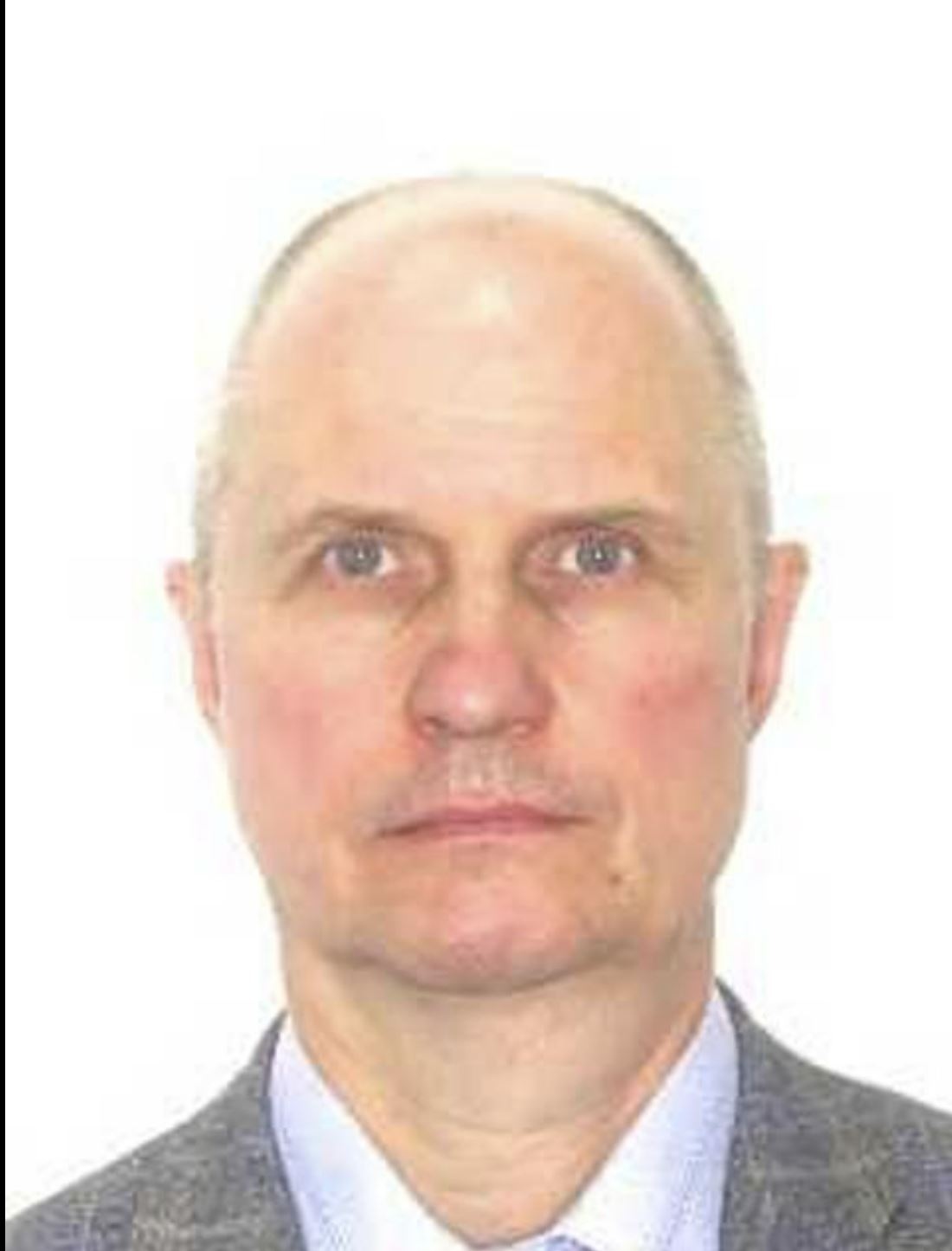
Herman Bykov was born in the city of Liepāja in the Latvian SSR, where his Soviet army officer father was stationed. After the collapse of the USSR, Herman moved with his family to Mytishchi, completed his compulsory military service, and then joined the foreign intelligence service.
The general’s range of operational duties is fairly broad. Bykov previously served as the SVR’s representative at Roscosmos, and in 2015 he accompanied Dmitry Loskutov — a security service officer seconded to Glavkosmos who later headed a subsidiary of the state corporation — on a trip to Lebanon. Bykov then oversaw the SVR station in France. Now, as the anonymous letter suggests, he is involved in sending staff on foreign assignments.
By all indications, Bykov was assisted in his intelligence work by his wife, Irina. She previously worked as an adviser at Roscosmos under Dmitry Rogozin and later joined Dmitry Medvedev’s office, where she also oversaw space affairs.
Last September, an internal review was conducted regarding Bykov, but the “facts” alleged in the anonymous letter were not confirmed. For his part, the general himself stated: “I didn’t take anything, I didn’t extort anything, I serve honestly.” Meanwhile, according to an SVR source who spoke with The Insider, the review of Bykov’s activities was superficial — the main goal was to identify the author of the anonymous letter.
Stained maroon beret
Among the other documents obtained by Ukrainian intelligence was a letter to Naryshkin from retired General Sergey Lysyuk, president of the Brotherhood of Maroon Berets “Vityaz.” The general is known for playing an active role in suppressing the attempted coup of October 1993, which saw then-president Boris Yeltsin order his tanks to shell the Russian parliament. At the time, Lysyuk headed the Vityaz special-forces unit of the Interior Ministry’s internal troops, which guarded the Ostankino television center and prevented the insurgents from storming the building.
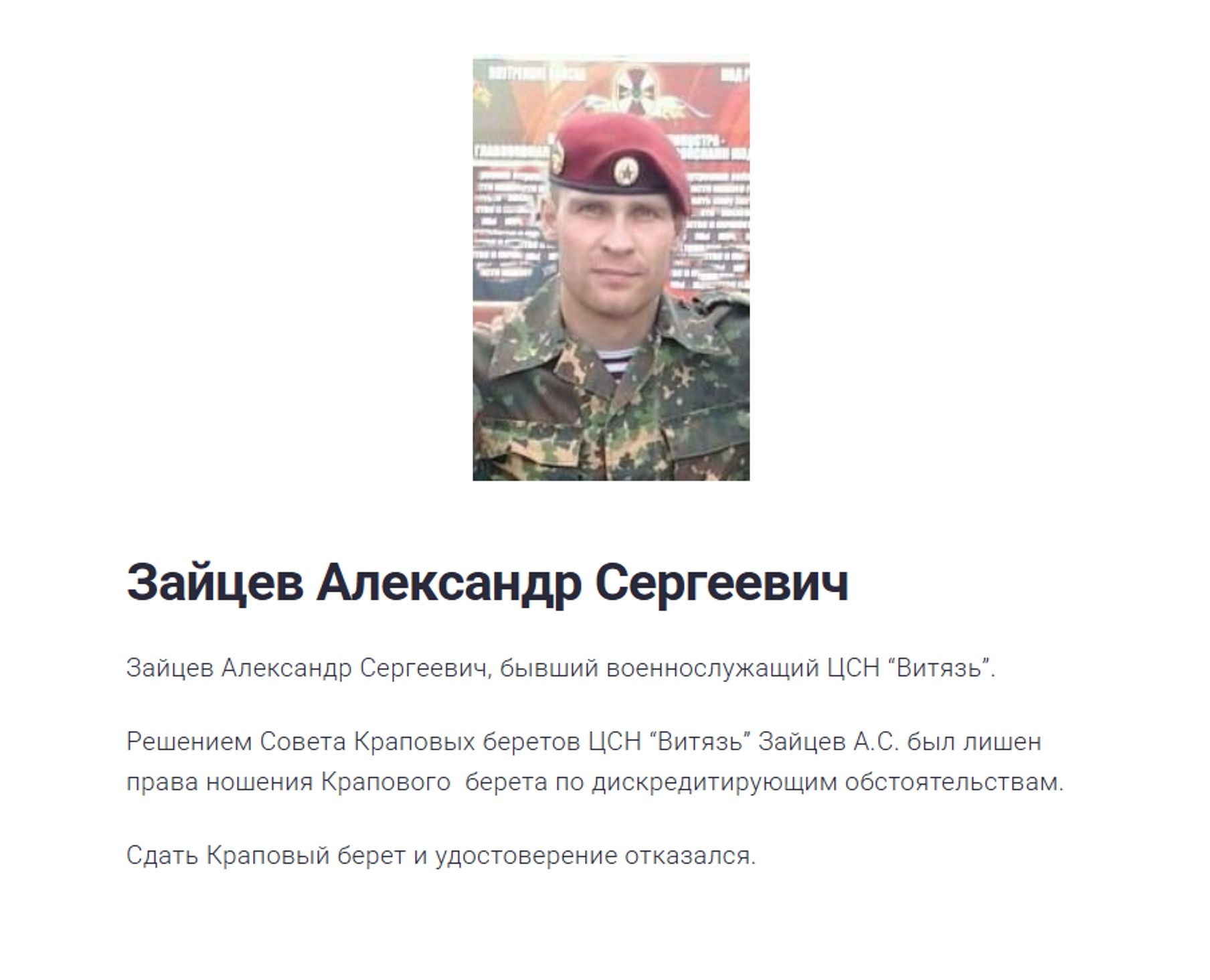
In his letter to Naryshkin, Lysyuk reported that SVR Captain Sergei Zaitsev was taking 30,000 ruble ($400) bribes from Rosgvardia servicemen in exchange for clearing their medical checks while promising them jobs in the Zaslon special-forces detachment. The general added that Zaitsev was also unlawfully receiving a salary bonus for a “Master of Sports in Kickboxing” title that he does not actually hold. The association’s council stripped Zaitsev of the right to wear the maroon beret and ordered him to surrender his ID, but he refused.
The highly secretive Zaslon unit is tasked with responding to threats against SVR facilities, protecting Russian diplomatic missions abroad, and escorting senior officials, SVR generals, Foreign Ministry leadership, and top managers of major Russian state corporations into conflict zones.
Previously, the unit recruited fighters from elite FSB special-forces groups — Alfa, Vympel, and Grad — but over the past three years it has begun taking in Russian National Guard servicemen. A mandatory requirement is mastery of various types of firearms and combat techniques along with possession of a maroon beret. Fighters are provided with housing near the SVR headquarters, and during foreign missions Zaslon operatives are paid in U.S. dollars.
As The Insider found, Zaitsev served in the Russian National Guard before joining Zaslon. He presents himself to others as something akin to the chief recruiter for the SVR. Wearing his maroon beret, he often takes seats on presidiums at patriotic events or gives talks to schoolchildren.
How Naryshkin responded to General Lysyuk’s letter remains unknown.
“Enlists contractors in exchange for kickbacks”
The Insider also obtained other anonymous letters, though these were sent not to Naryshkin but to the presidential directorate for civil service, personnel, and anticorruption issues. For example, one anonymous author notified the Presidential Administration that the chiefs of the foreign intelligence service were awarding state contracts “to their trusted contractors and receiving kickbacks.” According to the “well-wisher,” one such company is Kapital-Stroy 2000 LLC, which built a physical-fitness and wellness center with a gym and ice rink on the grounds of the SVR headquarters.
“The construction was carried out extremely poorly, with many defects, and as a result the building’s canopy collapsed and nearly killed people. But the criminal case was quickly hushed up,” the letter says.
As The Insider found, the collapse of the wellness center canopy occurred on Sunday, Feb. 6, 2022. If it had happened on a Monday instead, there almost certainly would have been casualties.
The building’s canopy collapsed, nearly killing people, but the criminal case was quickly hushed up
The founders of Kapital-Stroy 2000 are listed as Viktor Afanasyev and Dmitry Nazarov, both of whom live close to SVR headquarters. The SVR filed a claim against the builders in arbitration court for almost 20.3 million rubles ($264,000), four months after the incident, the company declared bankruptcy and refused to provide compensation for the damage it had caused.
It is worth noting that this is not the first time the SVR has awarded state contracts to organizations with poor financial indicators — or legal troubles. For example, in 2020 the intelligence service signed a state contract for the supply of encryption hardware with the Russian Corporation of Communication Equipment (RKSS), which is part of the Rostec structure. At the time, media outlets said RKSS would successfully replace foreign analogues as part of Russia’s import substitution drive. However, the company was struggling, and its general director, Yevgeny Melnik, was soon detained by the FSB for financial fraud. The court cases continue to this day.
In addition to the SVR, those affected by Melnik’s schemes include the FSB’s Logistics Directorate (military unit 55056) and several enterprises fulfilling defense contracts. As the arbitration court’s website shows, the SVR is acting as plaintiff and demanding the return of funds from several companies, including: 500 million rubles ($6.5 million) from the U.S.-sanctioned Penza Electrotechnical Research Institute over the purchase of equipment for confidential cellular communication; 185 million rubles ($2.4 million) from the Research Institute of Precision Instruments, whose deputy director Konstantin Yegorov was convicted of large-scale fraud in 2024; and 173 million rubles ($2.2 million) from St. Petersburg’s NP Volna plant, which is involved in the development and production of special-purpose communications equipment.
The court hearings are being held behind closed doors, yet NP Volna’s general director, Yevgeny Rylov, characterized the situation as commonplace: “These days few are able to fulfill state defense orders on time due to sanctions and difficulties with procurement and components.”
Prostitutes, drunk driving, and a skinhead from the SVR
Another anonymous letter sent to the Presidential Administration came from a disgruntled spy who, after failing to secure a posting at another Russian embassy and being expelled from Europe, reported on a colleague. (The figures mentioned are known to The Insider.)
“While serving as a career officer of military unit 33949 and as an adviser to the ambassador, K. S., together with the Rosoboronexport representative S. P., visit restaurants and drive vehicles while intoxicated, which could lead to accidents and damage our country’s image. While effectively on combat duty, these officers have repeatedly struck up acquaintances with dubious people and had sexual encounters with prostitutes, all of which the ambassador is well aware of,” the anonymous author reports.
Judging by the fact that their names still appear on the embassy’s website, the Presidential Administration paid no attention to this warning about the lively lifestyle of Russian spies in an Asian country. After all, Russian diplomats often get behind the wheel while drunk.
There have been around twenty such incidents in recent years. For example, in 2016 Moldovan police detained Rinat Anderzhanov, first secretary of the Russian embassy, who was speeding through the village of Molovata in Moldova in an embassy car, half-naked, and nearly ran down two pedestrians. When confronted by residents, the tipsy diplomat responded curtly: “Look at my license plates and drop the matter.” The following year, Viktor Pukhov, first secretary of the Russian embassy in Kyrgyzstan, ran a red light at high speed while under the influence in Bishkek and crashed into a Mercedes-Benz Sprinter passenger van. The van’s driver, Yevgeny Leksin, was killed.
In June 2024, a Russian diplomat caused an accident in Seoul. The responding police officer noticed a strong smell of alcohol coming from the driver, but the embassy employee, whose name was not disclosed, refused to undergo a medical examination and slipped behind the embassy gates.
Another anonymous whistleblower reported that the commander of military unit 28178 (SVR), Sergey Saranchin, offers the use of a service Audi to his relatives:
“In the SVR motor pool there aren’t enough vehicles, but Saranchin, without any operational need, assigns a personal driver and a service car to his wife and mother-in-law for trips to shops and markets. Recently this service vehicle was involved in an accident.”
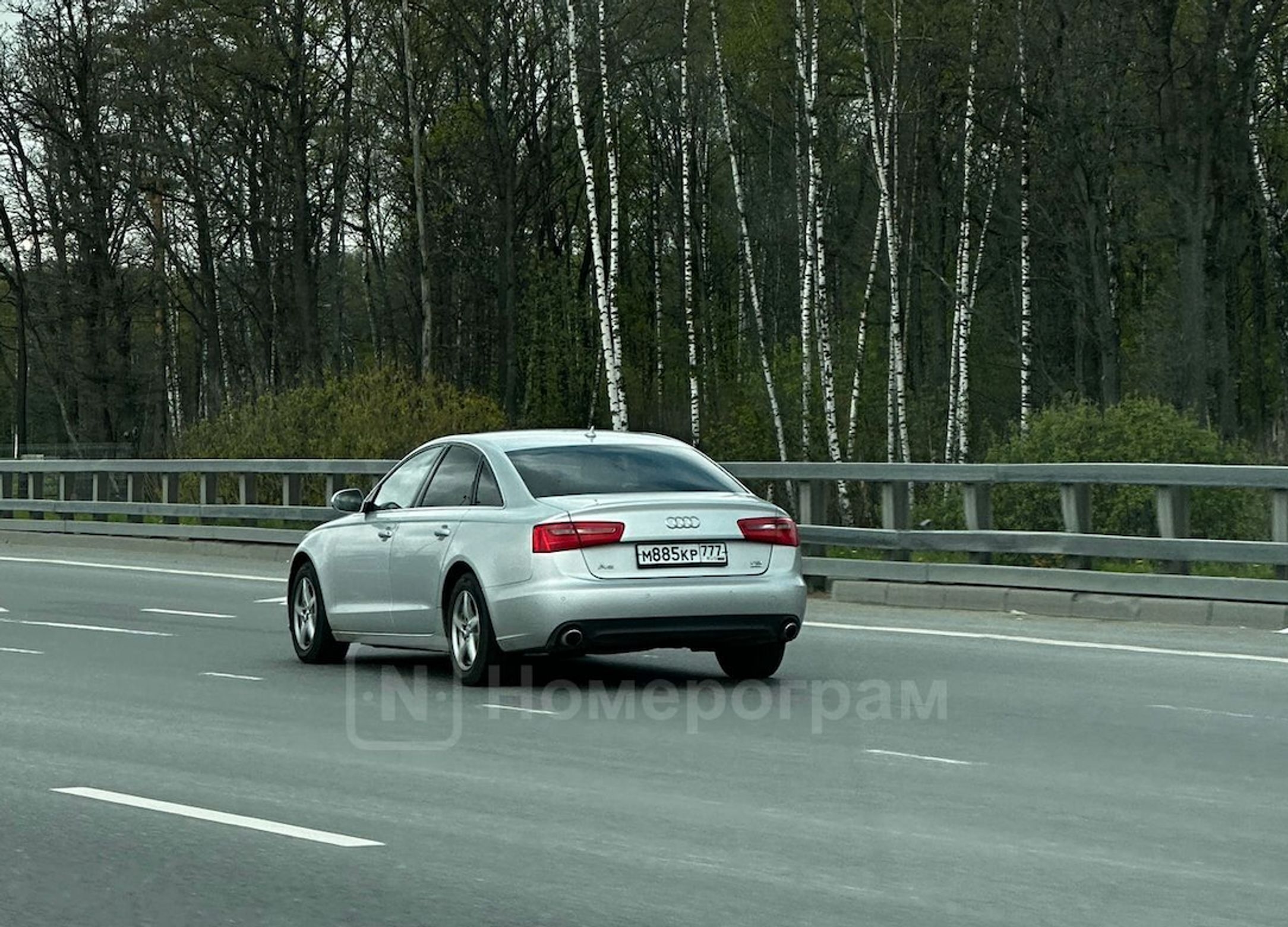
As The Insider confirmed, the car in question is a business-class Audi with the license plate M885KR777, registered to the SVR. It is equipped with a multichannel radio and a set of cover license plates. On Mar. 6, 2023, on Ostafyevskaya Street in Moscow, the “spy” car collided with a Kia Sportage driven by dentist Roman Yurtayev. The dentist was found responsible for the accident and the damage was assessed at 391,200 rubles ($5,080). However, the insurance company disagreed with the calculation, and the case went to arbitration court. (Incidentally, the Saranchin family also owns a Lexus with “AAA” plates, as well as an upscale apartment on Arbat at the former Khovansky–Bobrinsky estate.)
Another unnamed SVR author informed the Presidential Administration about the criminal past of one of his colleagues:
“Sergey Manayenkov is often sent abroad as a team leader. In his youth he was part of a skinhead gang and beat up students from African countries. Criminal cases were opened against him. How he passed the vetting process when joining the Service remains unclear.”
According to Interior Ministry reports, in March 2003 a student at Moscow School No. 1067, Sergey Manayenkov, beat up and robbed a graduate student from the Peoples’ Friendship University of Russia, Tanzanian national Boku Hyentu Christian. Manayenkov was soon detained by police, but because he was a minor, he was spared a prison sentence while still being placed on a special Interior Ministry registry. Manayenkov returned the stolen laptop and wristwatch to the foreign student. How and why SVR personnel officers overlooked these details is indeed unclear.