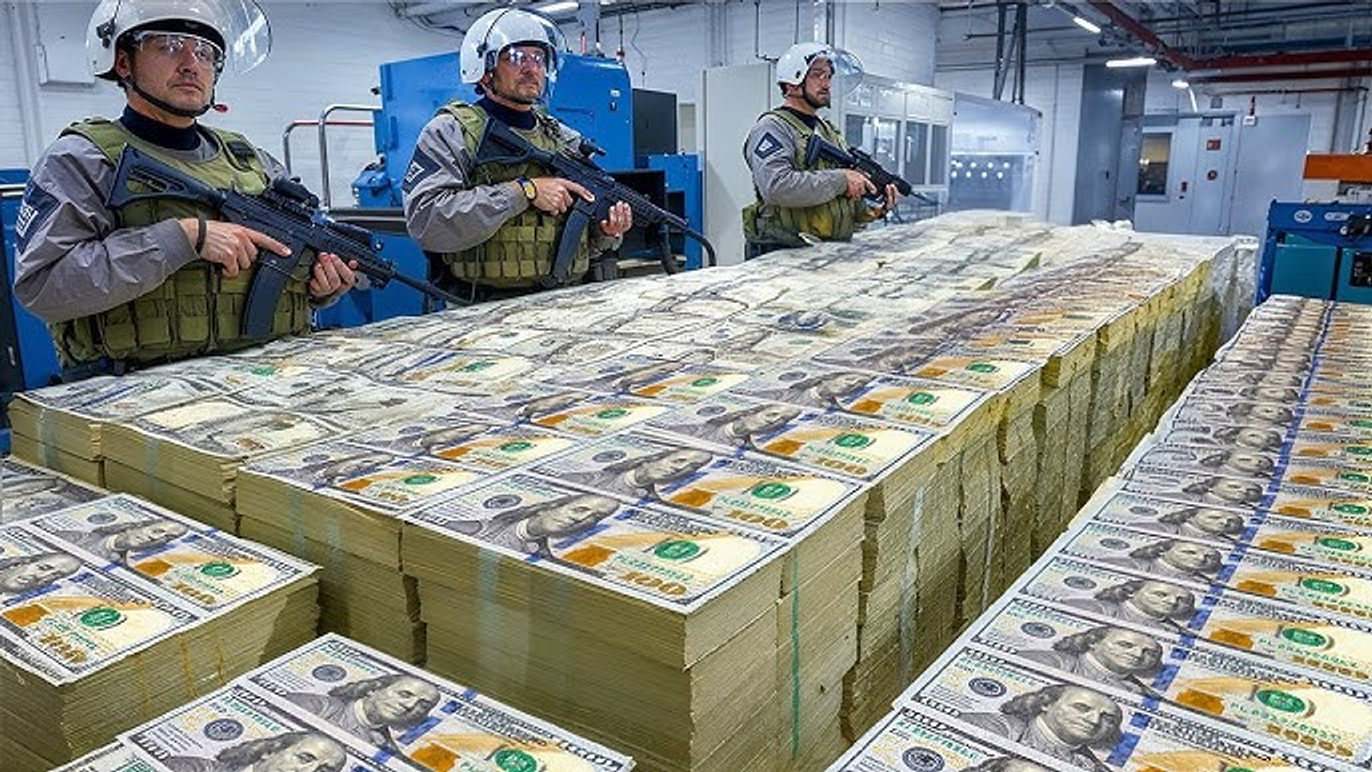
Donald Trump has launched an assault on the Federal Reserve, heaping criticism on chairman Jerome Powell while promoting “hawk-turned-hypocrite” Kevin Warsh for the post of America’s top central banker. This is not the first time the head of an executive branch has violated the principle that political leaders ought not to control the issuance of money — a responsibility that must belong to an independent institution.
Central bank independence does not guarantee protection from inflation or crises. But it does provide a healthier economic environment than one in which politicians gain direct control over the money supply. When such conflicts of interest do occur, a common outcome is hyperinflation — as in Venezuela, where under Nicolás Maduro prices rose three trillion-fold. When compared against a cross section of the world’s dictators, Vladimir Putin has been less interventionist than most when it comes to controlling the monetary printing presses. Now, however, his government and his country’s business elites are exerting increasing pressure on the Bank of Russia.
A U.S. system that has survived a century
The governance structure of the U.S. Federal Reserve was designed from the outset to prevent the institution from becoming a tool of the White House or the ruling party on Capitol Hill. The key role is played by the institution’s seven governors, each of which is appointed by the president to a 14-year term, with the consent of the Senate. The president officially has the authority to remove them on the basis of proven misconduct, but since the Federal Reserve was founded in 1913, no president has ever dismissed a governor — nor even attempted to do so.
Since the founding of the Federal Reserve in 1913, no U.S. president has even tried to remove a sitting governor
If a Fed governor does not leave office early and the Senate does not delay confirmation of the president’s nominee, appointments follow a strict schedule: January 31 of every even-numbered year. Thus, provided no one in the Fed leadership resigns or dies prematurely, a president serving a single term can replace only two of the seven governors.
A president can reward allies and punish opponents in two ways. First, when a governor’s term expires, that person can be reappointed to a new 14-year term — or not. Second, every four years the president designates one of the governors as Fed chair and another as vice chair. Naturally, any president chooses the governor most compatible with his or her agenda.
Still, regardless of who nominated them, a governor whose term has expired is almost always reappointed. Over the past 45 years, there have been only three exceptions (most notably, on January 31, 2006, President George W. Bush did not reappoint Alan Greenspan). Another precedent may soon be added to the list: at the end of January, the term of the governor in Seat No. 3, held by Stephen Miran, expired, and Trump nominated Kevin Warsh as his replacement. The Senate has not yet confirmed Warsh’s nomination.
At times, Fed governor seats can remain vacant for several years. For example, Seat No. 4 is held by current Fed Chair Jerome Powell. Under the normal schedule, appointments to that seat occur on January 31, 2000, 2014, 2028, and so on. Until 2006, the seat was occupied by Clinton appointee Roger Ferguson. After his resignation, President George W. Bush appointed Frederic Mishkin, but he too stepped down early, and from September 2008 to May 2012 the seat stayed empty. Only then did Barack Obama appoint Powell to fill the position through January 31, 2014.
Unlike Ferguson and Mishkin, Powell served out his full term and in 2014 was reappointed by Obama to a new 14-year term – through January 31, 2028. Although he will no longer serve as chair after May 2026, Powell will remain on the Board of Governors.
How the system is undermined
On Jan. 29 Trump announced the figure he wants to see replace Powell at the head of the Federal Reserve: Kevin Warsh. The situation is unusual given that chairs are typically selected from among the sitting governors. Powell, for example, served six years as a regular member of the Board before becoming chair. Janet Yellen was on the Board of Governors from 1994 to 1997, returned in 2010 as vice chair, and only later, from 2014 to 2018, led the institution herself.
Kevin Warsh served as a governor from 2006 to 2011 but resigned over disagreements with his colleagues in the Fed’s leadership. In Warsh’s view, they were issuing too many dollars to purchase mortgage-backed securities under successive rounds of “quantitative easing.”
Warsh has a reputation as an anti-inflation hawk. At one point, he was also the youngest governor in the Fed’s history, appointed at age 35 after a successful career on Wall Street.
Kevin Warsh was the youngest governor in the Fed’s history, having taken office at age 35.
Warsh can become Fed chair only if he first rejoins the Board of Governors. On January 30, Trump nominated him to Seat No. 3, replacing Stephen Miran. If the Senate confirms the appointment — which could happen at any moment — Warsh will immediately succeed Miran, and in May, he could then replace Powell.
There is nothing unlawful about this reshuffle. For the dollar, it could even be a good thing. However, the story has its ambiguities.
First, Trump is at odds with the current Fed leadership due to the fact that his demands for lower interest rates have been refused. To cut rates, the Fed can purchase securities on the open market, injecting newly created dollars into the economy. That, in effect, fuels inflation. It was precisely this policy that Warsh opposed in 2010–2011.
So why would Trump promote such a figure? As FT columnist Robert Armstrong writes, “fans tend to share his deep, long-held suspicion of quantitative easing; critics see him as an opportunist who dispensed with his hard-money views when they became a barrier to professional ascent.”
Armstrong goes on to summarize Warsh’s prescription as follows: “For more growth and less inflation, cut rates and shrink the Fed’s balance sheet.” But how can both be done at once? To reduce its balance sheet, the Fed would have to sell off the mortgage-backed securities and other debt instruments it has accumulated since 2008. That would drive down their prices, push up yields, and ultimately raise interest rates.
In his recent remarks, Warsh has blended his earlier hardline views with distinctly Trump-style populism:
“The Fed... should abandon the dogma that inflation is caused when the economy grows too much and workers get paid too much. Inflation is caused when government spends too much and prints too much. Money on Wall Street is too easy, and credit on Main Street is too tight. The Fed’s bloated balance sheet, designed to support the biggest firms in a bygone crisis era, can be reduced significantly. That largesse can be redeployed in the form of lower interest rates to support households and small and medium-size businesses.”
Large corporations — especially those working in the field of finance — do indeed benefit from Fed expansion, since funds flow through financial markets and the banking system. Leaders in that sector are the first to detect policy shifts and capitalize on them. However, these advantages cannot be shared with small businesses and ordinary people. A central bank is called “central” because it serves as a bank for intermediary banks, not for retail customers. And whoever the Fed supports, doing so increases its balance sheet. That is why there are doubts that Kevin Warsh, simply by lowering rates, could, in fact, ensure that households capture a greater share of the gains.
Second, Donald Trump has publicly threatened Fed officials with criminal charges and has attempted to remove them from office. This is no longer just another political spectacle but an overreach of presidential authority. The most telling case involves Lisa Cook, the first African American member of the Fed’s Board of Governors.
She took Seat No. 2 under Biden in 2022, and in 2024 he reappointed her to a new term through January 31, 2038. Cook holds a PhD in economics, specializing in the history and contemporary state of Russian finance. At the same time, she has been outspoken on social media as a supporter of the Democratic Party, including backing the idea that white Americans should pay reparations to Black Americans. When Lisa Cook was confirmed by the Senate, not a single Republican voted in her favor. The chamber split evenly, and her nomination passed only thanks to the tie-breaking vote of Vice President Kamala Harris.
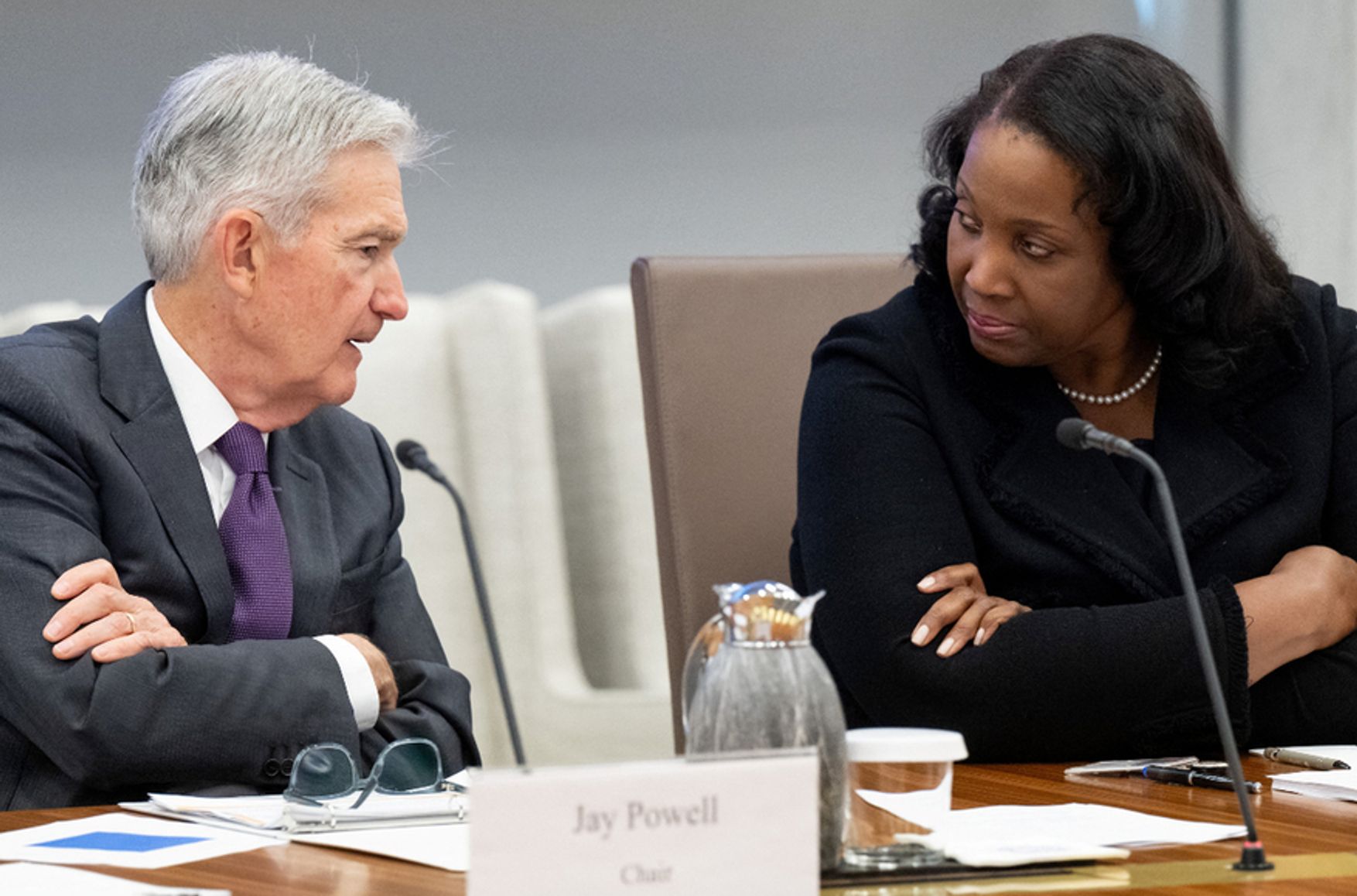
In August 2025, Federal Housing Finance Agency Director Bill Pulte claimed that Lisa Cook had committed mortgage fraud, alleging that in 2021 she had listed two different homes as her primary residence. A subsequent Reuters investigation concluded that the accusations were unfounded.
Shortly after Pulte’s statement, Trump demanded Cook’s resignation. She refused. Then, on August 25, Trump announced that he was firing Cook for “fraudulent and potentially criminal conduct.” It marked the first attempt by a U.S. president to remove a Federal Reserve governor “for cause,” which the law permits. The statute does not specify what constitutes cause, but practice has relied on a 1935 Supreme Court ruling stating that valid grounds include inefficiency, neglect of duty, or malfeasance in office.
Cook rejected the legality of the decision and immediately filed suit. Lower courts ruled that she could remain in office. The case reached the Supreme Court, which heard oral arguments on Jan. 21, 2026, and likewise declined to support Cook’s removal.
A final ruling has not yet been issued, but it is likely to go against the president. According to conservative Justice Brett Kavanaugh — whose narrow confirmation Trump helped secure in 2018 — allowing a president to dismiss a Fed governor by expanding the list of permissible grounds would “weaken or even undermine the independence of the Federal Reserve.”
Still, Trump is far from the first U.S. president to attempt to put pressure the Fed’s leadership. In 1965, Lyndon Johnson summoned Fed Chair William McChesney Martin to his ranch after Martin raised rates against the White House’s wishes. The president reportedly shouted at him: “My boys are dying in Vietnam, and you won’t print the money I need!” Martin was able, at that time, to defend the independence of his decisions. Then, ahead of the 1972 election, Richard Nixon exerted intense pressure on Arthur Burns (whom he himself had appointed) demanding easy money in order to stimulate the economy. In private conversations, Nixon reminded Burns that “the main thing is that we have to create the impression that the president of the United States…is looking after [America's] interests.” Nixon succeeded in securing lower rates, which boosted the economy before the election and fueled runaway inflation that took a decade to tame.
The letter and the spirit of independence
Because of the fact that the U.S. Supreme Court did not support Cook’s dismissal, Trump’s attacks on central bankers have so far amounted to little more than another largely symbolic scandal — one that has damaged the president’s credibility more than the Fed’s autonomy. Nevertheless, Trump continues to set a troubling example for executive authorities around the world, particularly in countries where constitutional checks and balances function less effectively than in the United States.
How resilient is central bank independence globally? The widely accepted academic definition of such independence includes four elements:
1. The governor is appointed by the central bank’s board of directors to a term longer than that of the head of the executive branch.
2. The government is not involved in decisions regarding central bank policy.
3. Price stability is legally defined as the sole or primary objective of the central bank.
4. The government’s ability to borrow from the central bank is limited.
Incomparable Banks
Attempts to measure how well these rules are observed sometimes produce paradoxical results. Frequently cited indices, such as those compiled by Davide Romelli, show that the formal level of central bank independence can be high in troubled countries and low in stable ones.
For example, the United States, Canada, Australia, Japan, Denmark, Norway, Singapore, Taiwan, and South Korea all receive relatively low central bank independence scores. Formally, their frameworks appear comparable to those of Iran, Vietnam, India, Pakistan, Brazil, Nigeria, Ethiopia, South Africa, and Belarus. Meanwhile, the United Kingdom, Sweden, Iceland, and New Zealand all fall into the middle range, along with Russia, China, the United Arab Emirates, Egypt, Mexico, and Thailand — along with Turkey and even Venezuela, both known for catastrophic inflation. At the top of the independence rankings are the central banks of the Eurozone and Switzerland, EU members Poland and Romania, but also Indonesia, Uzbekistan, Kazakhstan, and Ukraine.
Editor’s note (The Insider):
1. Error in D. Romelli’s data: the Fed chair may be removed not at the discretion of the executive branch, but only for nonpolitical cause.
D. Romelli’s research
2. Error in D. Romelli’s data: the Fed chair may be reappointed to a new term.
If one compares the central banks of the United States, the Eurozone, and Venezuela, the formal metrics suggest that the U.S. Federal Reserve is the most dependent on the government, while Venezuela’s legal framework appears nearly as robust as that of the European Union. Of course, genuine central bank independence is impossible under a dictatorship in which the judiciary does not function independently and extrajudicial coercion is common, but such nuances are not always captured in the models.
The Mechanics of an Inflationary Catastrophe
Among countries where inflation was continuously measured from 2000 to 2025 (something that was not possible in places such as Afghanistan, Eritrea, Somalia, or Syria) Venezuela experienced the most dramatic price surge: a three-trillion-fold increase that amounts to an average annual inflation rate of roughly 231%. By comparison, in Zimbabwe and Sudan price indices rose by a factor of “only” 11,000, for an average of 47% annually. During Nicolás Maduro’s rule alone (which started in 2013), the consumer price index grew by an average of 500% per year. In 2018, it soared by 65,000%, and inflation remained above 1,000% annually through 2021.
In the later years of Hugo Chávez’s (after 2007), inflation ran at roughly 20–30% per year. At the time the central bank was headed by Nelson Merentes, a prominent mathematician who had earned his doctorate with distinction in Budapest in 1991. After a decades-long academic career that saw him publish hundreds of papers on operator theory, nonlinear analysis, and differential equations applied to economic models, Merentes was entrusted by Chávez with a series of political posts: deputy minister, finance minister, minister of science and technology, finance minister again, and finally, beginning in 2009, head of the central bank (formally confirmed by parliament).
When Chávez died in 2013, new president Maduro returned Merentes to the Finance Ministry, then sharply intensified the populist tilt of economic policy. When annual inflation jumped to 40%, Merentes was then reappointed as central bank chief, while a general was installed as finance minister. Inflation reached 60% in 2014 and 120% in 2015. After that, official figures were no longer published.
In short, neither the central bank’s formal independence nor the academic credentials of its head mattered after the authoritarian regime had developed an appetite for printing money. As the public noticed the currency’s rapid depreciation and began shedding it at the first opportunity, demand for money fell, further accelerating inflation. To extract any benefit at all from issuing currency, the authorities decided to print money faster than it was losing value. Hyperinflation followed.
Neither the central bank’s formal independence nor the academic credentials of its head mattered once the regime developed an appetite for printing money
In January 2016, Maduro again replaced the finance minister, swapping out the general in favor of yet another professor of mathematical economics. Together with Merentes, he pursued the same course, only more aggressively, and by year’s end, inflation had reached 250% (though this was not officially acknowledged). In 2017, Maduro reshuffled the financial bloc once more, replacing the finance minister twice and the central bank chief three times. He also effectively dissolved the opposition-controlled parliament and convened a Constituent Assembly that was composed solely of members of the ruling party. From then on, it was this body that confirmed the appointment of the central bank chair. As a result, actual inflation exceeded 430%, prices were subject to controls, and goods disappeared from store shelves.
Nelson Merentes ultimately ruined his career with a failed currency reform that replaced old banknotes with new ones, triggering violent unrest in the capital. Yet even under these conditions, Romelli’s independence index of the Central Bank of Venezuela did not decline, instead remaining higher than that of many stable democracies (including the United States, the United Kingdom, Australia, and Japan).
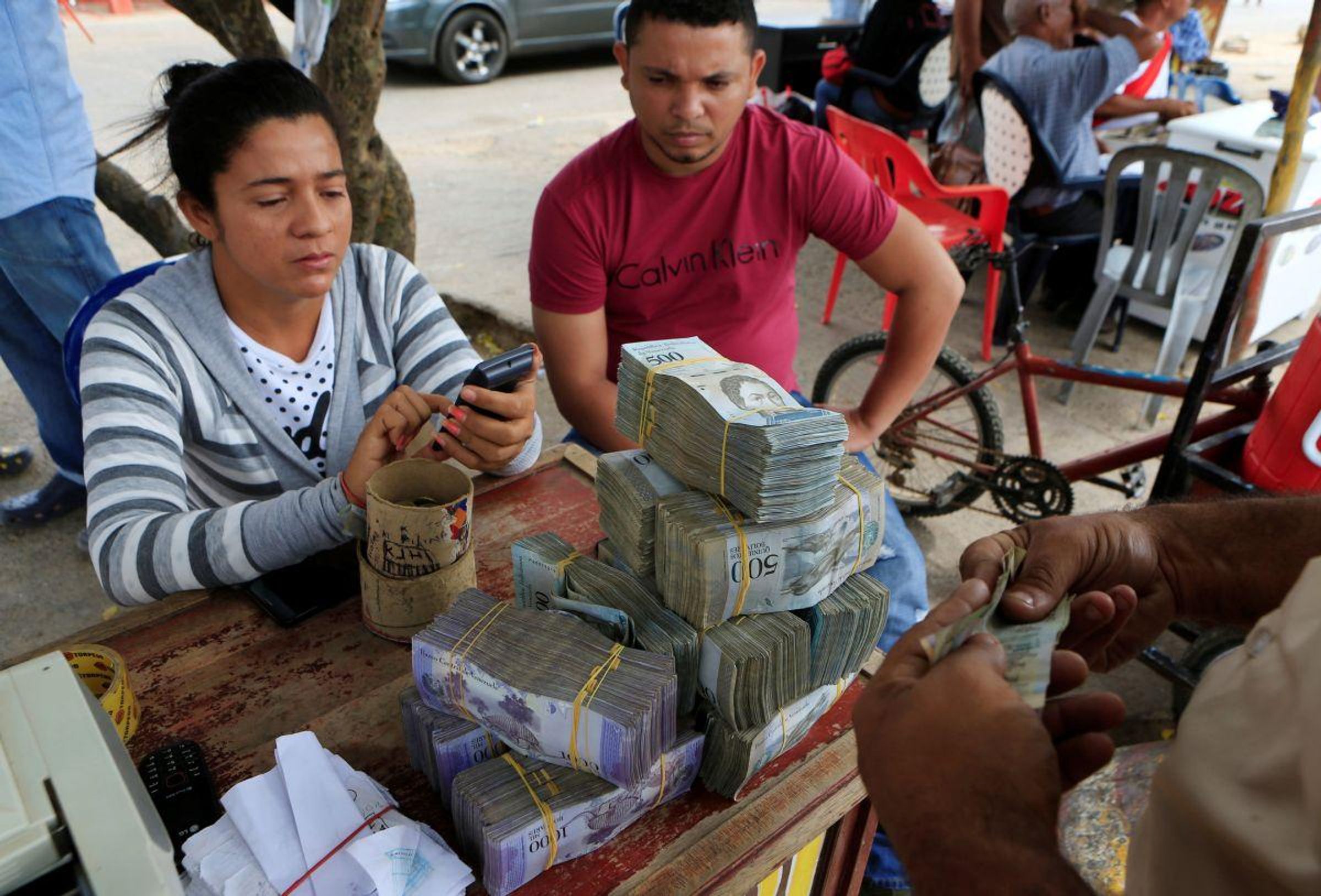
In a system where no one’s rights are truly protected, the letter of the law is meaningless. If “independent” courts and parliaments, out of fear of the executive, submit obediently, central bankers will do the same. One can legislate lifetime tenure for them, but they will “voluntarily” resign whenever the head of state or government demands it.
Better than Nigeria, worse than Cameroon
Over the past 10 years, official inflation in Russia has averaged 6.5% per year, and over the entire period since 2000, it has averaged 9.7% annually — not catastrophic, but hardly a strict policy either. As such, contemporary dictators can be roughly divided into three groups: “worse than Putin,” “like Putin,” and “better than Putin” (with the middle category falling in the band ranging from 5% to 15%).
Inflation is significantly higher than Russia’s in Venezuela (682%), Sudan (55%), Iran (42%), Myanmar (28%), Turkey (25%), Argentina (16%), and Angola (16%). The only democracy among these is Argentina, where public anger over inflation brought to power the radical hard-money advocate Javier Milei. The rest are inflationary dictatorships more akin to Maduro’s Venezuela.
Inflation has remained more or less at Russia’s level in Uzbekistan, Kazakhstan, Belarus, Pakistan, Bangladesh, Algeria, Kenya, Uganda, and Tanzania. One might agree that curbing prices during wartime has become an economic ideology of Putin’s regime. Yet a caveat is needed: by global standards, Putin is far from the most “anti-inflationary” dictator — he is a middle-of-the-road figure.
Curbing prices during wartime has become an economic ideology for Putin, but he is far from the most “anti-inflationary” dictator in the world
Moreover, there are nondemocratic countries that maintain inflation rates several times lower than Russia’s: China, Vietnam, Cambodia, Saudi Arabia, the United Arab Emirates, Jordan, Cameroon, Niger, Mali, and Burkina Faso. A number of the poorest African nations appear on this list thanks to the franc zone. After gaining independence from France, they did not introduce their own national currencies. Today, some of them use the West African franc, issued by the Central Bank of West African States (Dakar, Senegal), while others use the Central African franc, issued by the Bank of Central African States (Yaoundé, Cameroon).
Both currencies were once tightly pegged to the French franc and are now pegged to the euro. As a result, their inflation rates mirror Europe’s, typically no more than 3% per year. In these countries, dictators clearly understand what drives prices upward, and they prudently avoid taking such actions. The cost is the absence of “sovereign monetary policy.”
And if one were to search the globe for the world’s most financially prudent dictator, it would not be Xi Jinping or the monarchs of the Persian Gulf, but Cameroon’s president Paul Biya. He has been in power since 1982 and recently turned 93. Over the past 25 years, inflation in his country has averaged 2.9% annually. The central bank serving this Central African state is managed by a supranational institution bound by treaty to the European Union. It is an example worth noting not only for Putin, but for Trump as well.